Specimens
Drawn the way a monograph plate is drawn: the parts named first, the marks second.
Scenes
Rooms, fields, tables and skies — a place, with the light in it, held on one sheet.
Ideas
Each began as a single word or phrase — desperation, a paradox, the global economy — and found its own picture.
Systems
One rule, repeated until it becomes a picture. Nothing in these is drawn twice.
Sheets
Drawings that borrow another discipline’s format — the engineering plan, the launch plate, the legend strip.
Studies
Marks following a feeling rather than a subject: a line that wanders, a shoal that will not settle.
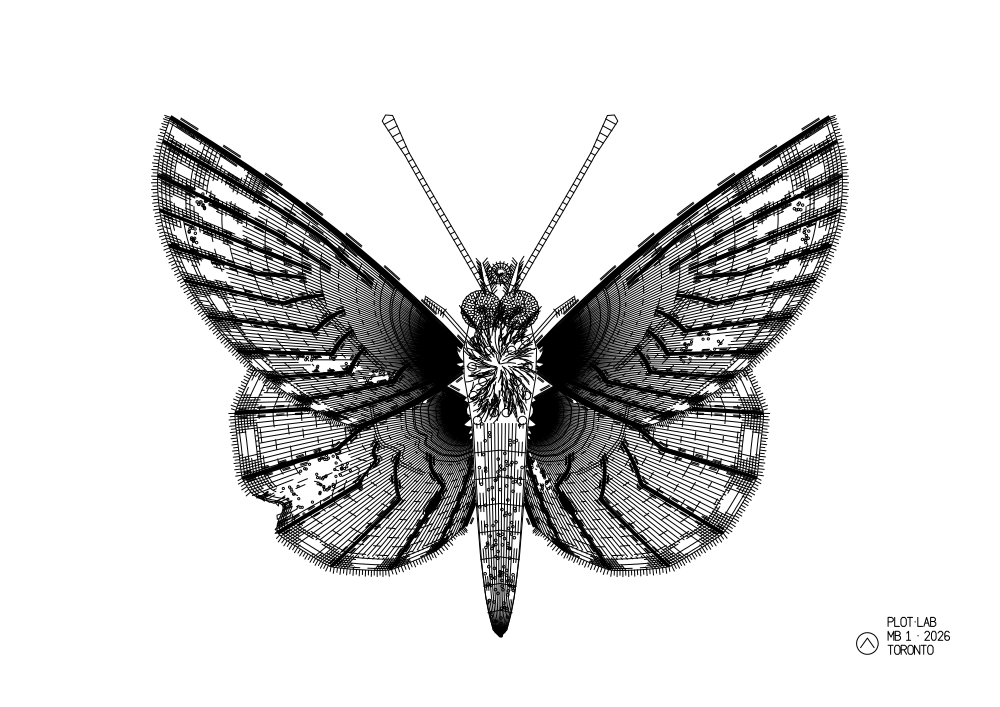
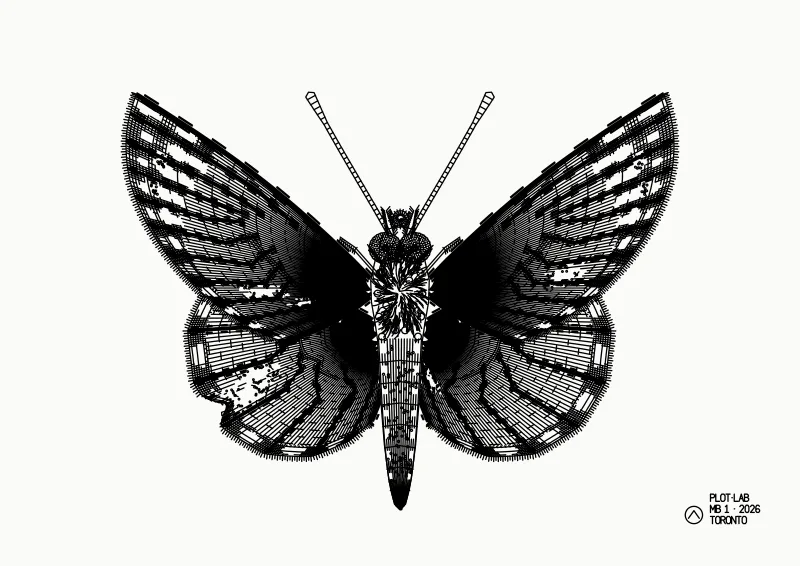
The two wings are built from the same rules but not copied from one another, so they match the way a real pair does: closely, never exactly. The body is the darkest thing on the sheet, as it is on the insect.
About 44 m of line, drawn in about 20 minutes.
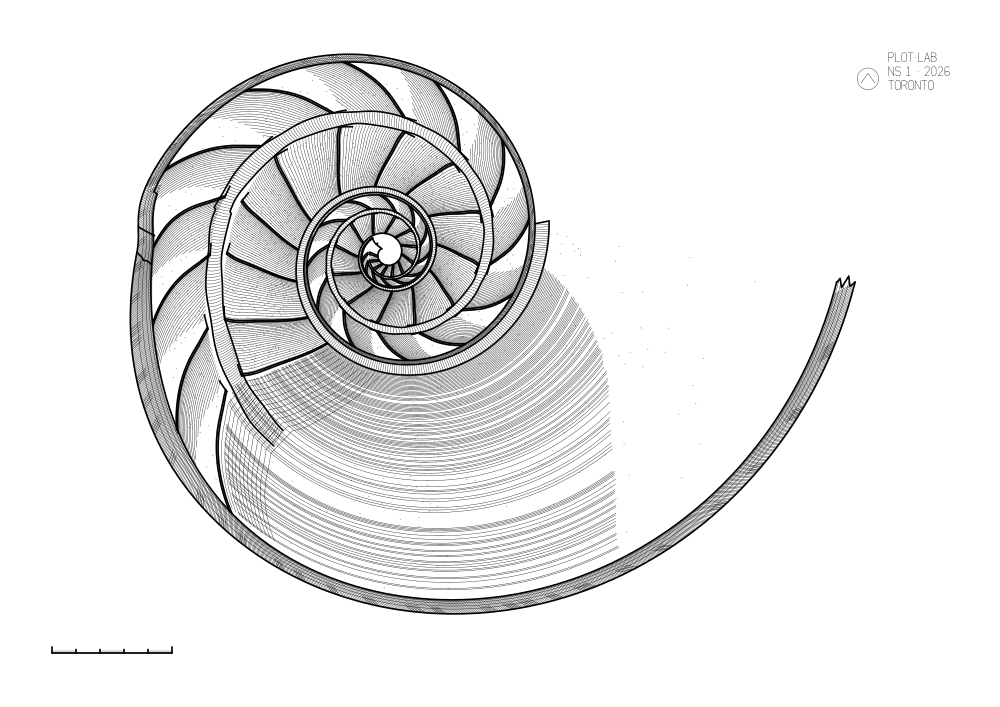
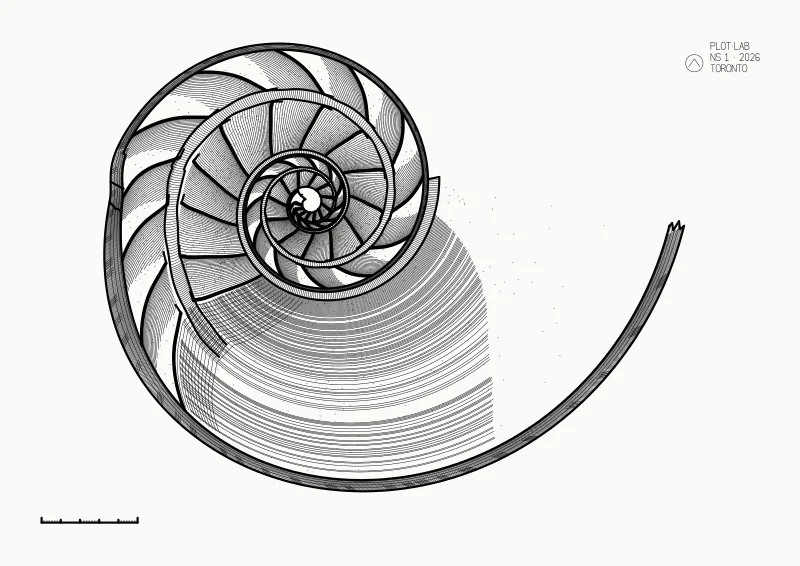
The spiral grows by the same factor on every turn, which is what the animal does. Two pens: a fine one for the nacre lines, a heavy one for the cut edge.
About 39 m of line, drawn in about 18 minutes.
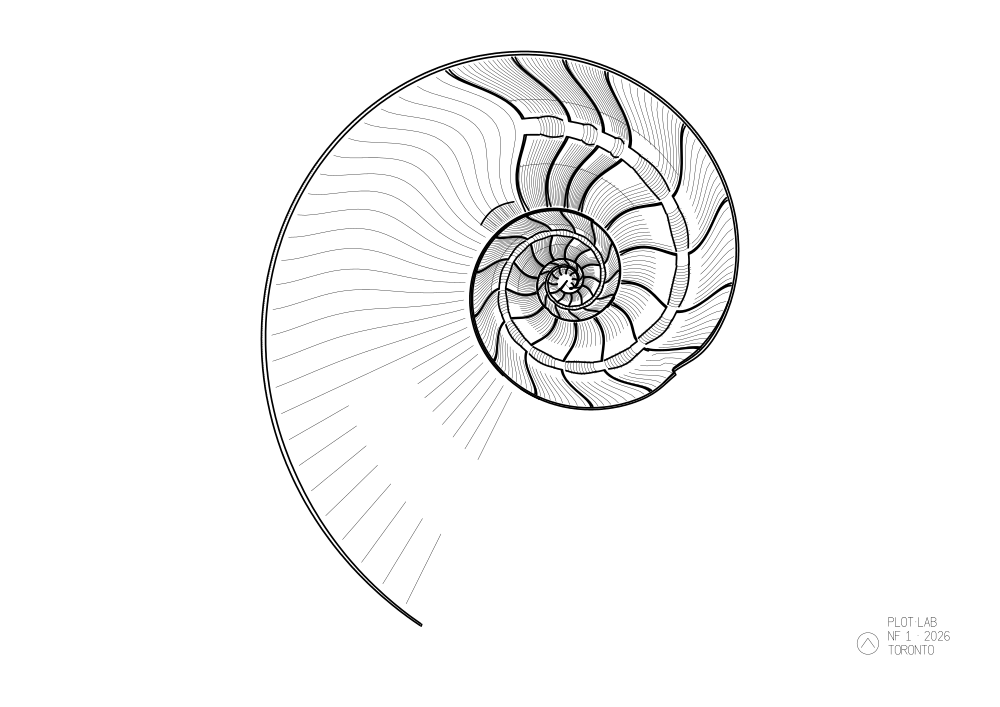
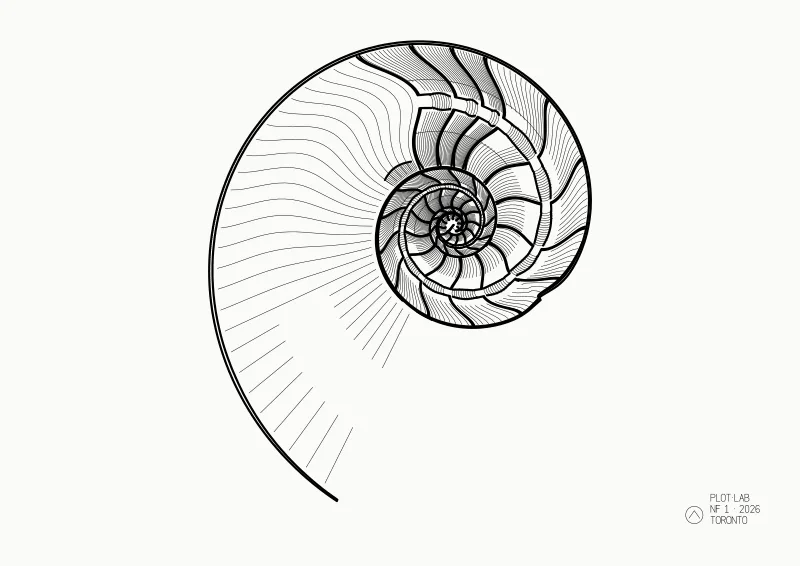
The lightest of the three nautilus plates. Most of the sheet is left white, so the shape of the spiral does the work.
About 11 m of line, drawn in about 5 minutes.
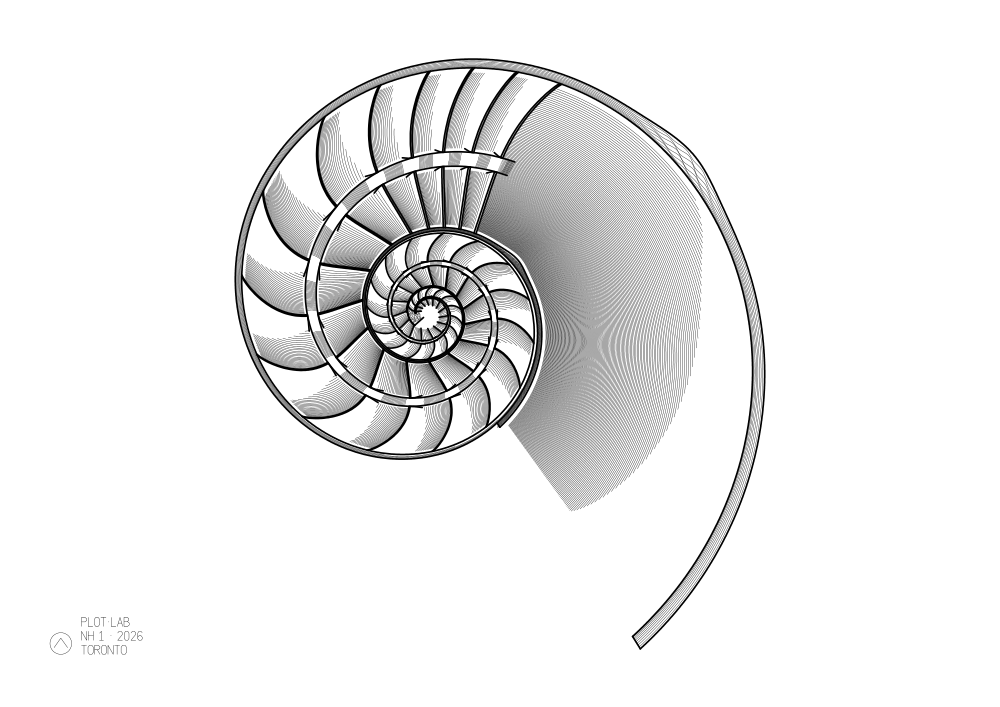
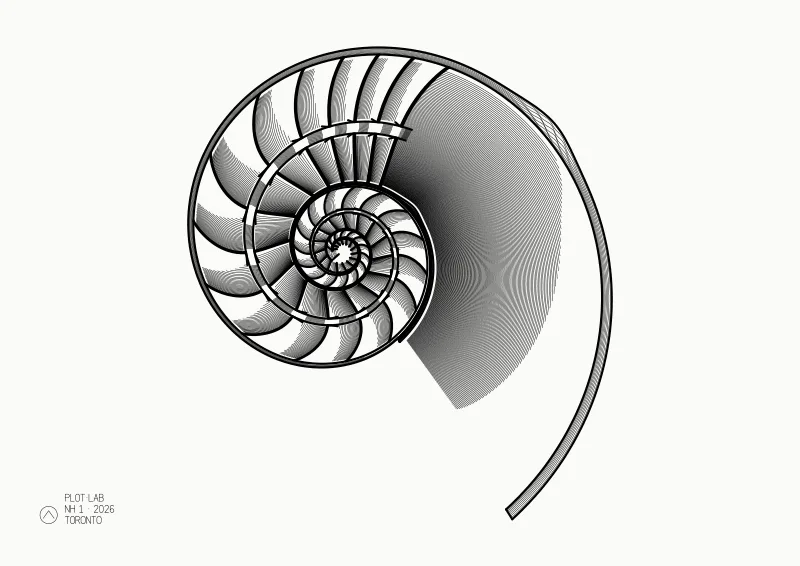
The heaviest nautilus: the hatching on the outer wall is packed so tight it reads as tone. The longest of the three to draw.
About 32 m of line, drawn in about 15 minutes.
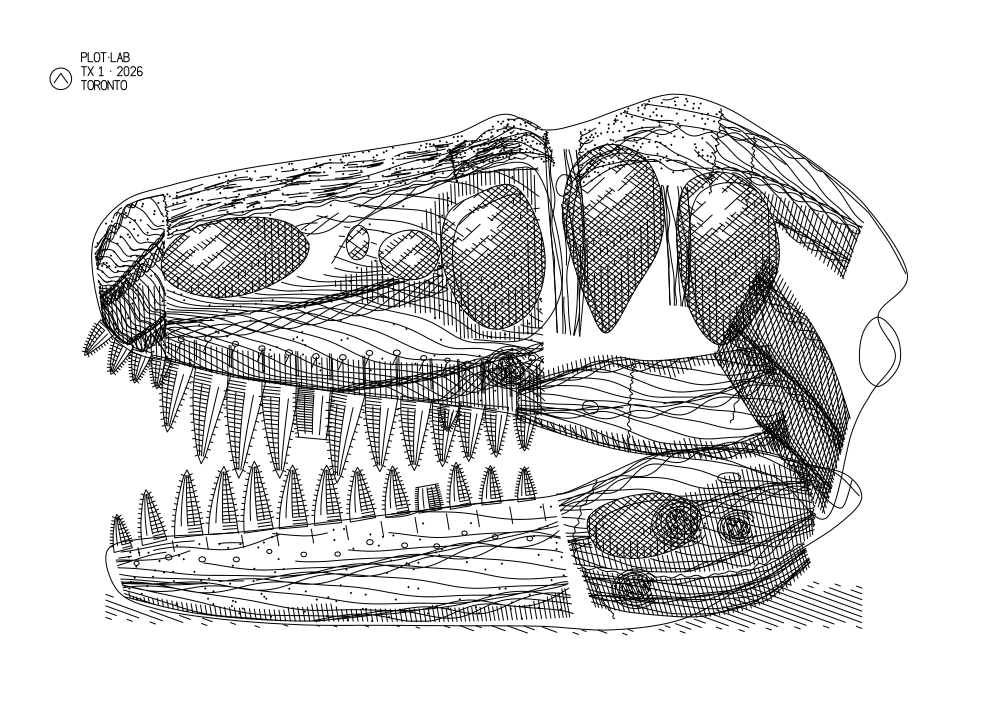
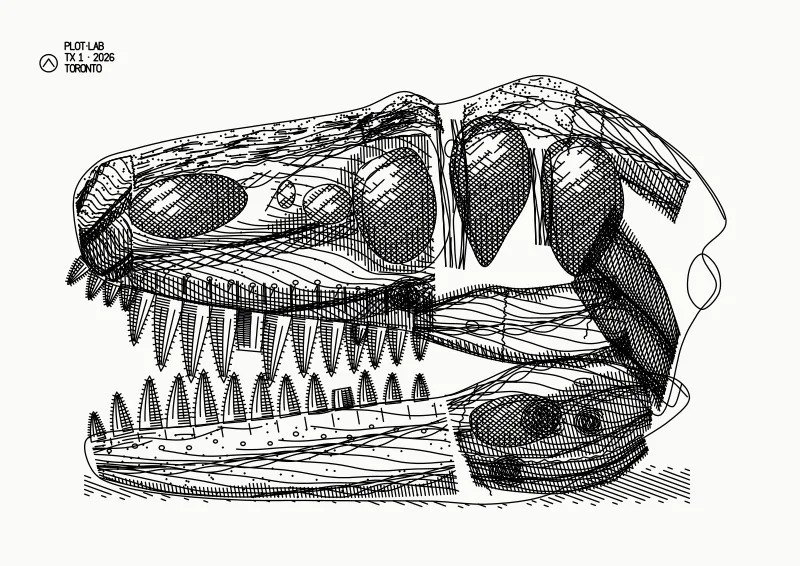
Every opening in the bone is hatched in its own direction, so the skull reads as a hollow object rather than a silhouette. The teeth are drawn one by one, each a little different.
About 38 m of line, drawn in about 17 minutes.
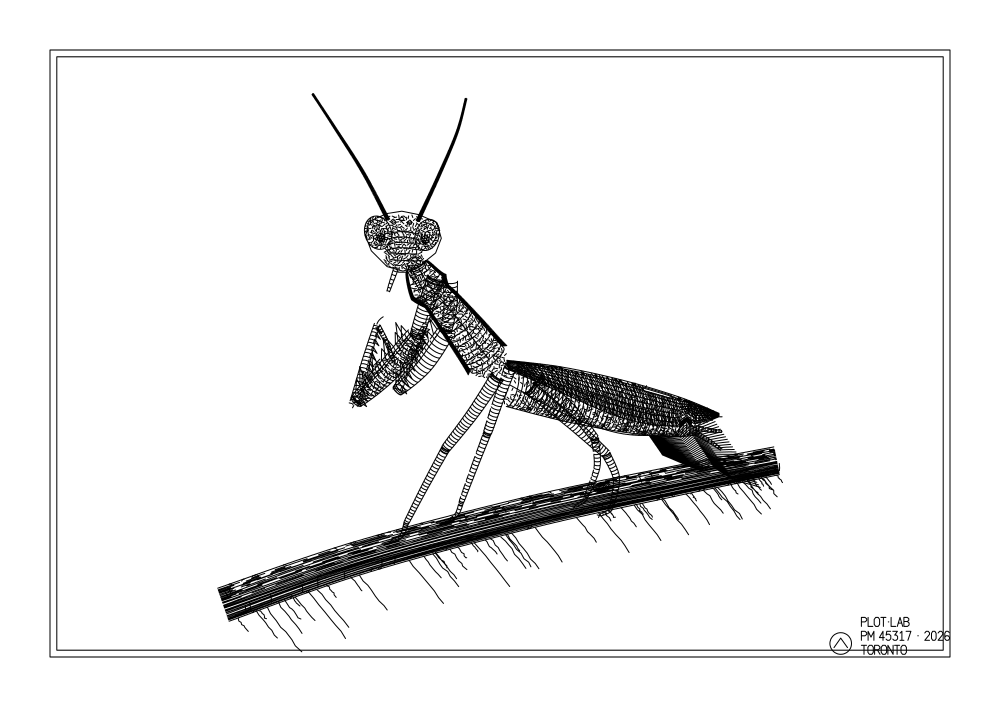
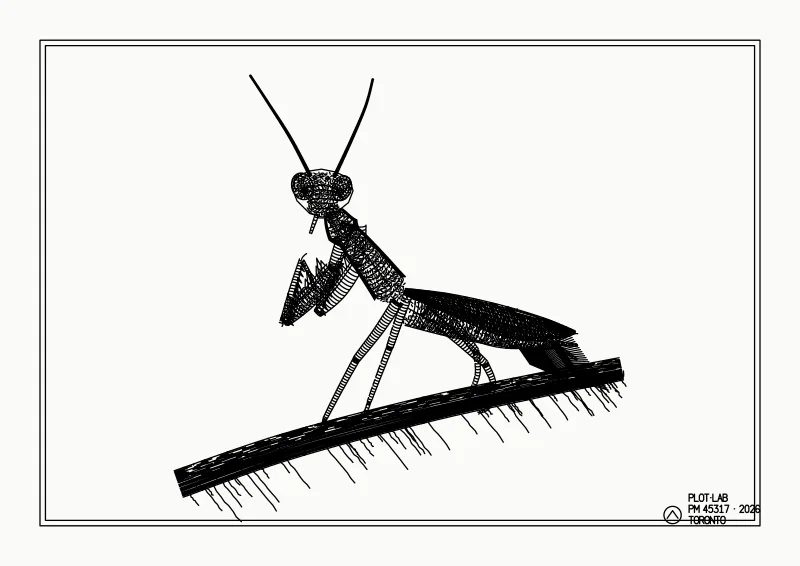
The branch is drawn with the same care as the animal — bark, a fork, a broken twig — so the mantis stands on something rather than floating over a line.
About 16 m of line, drawn in about 7 minutes.
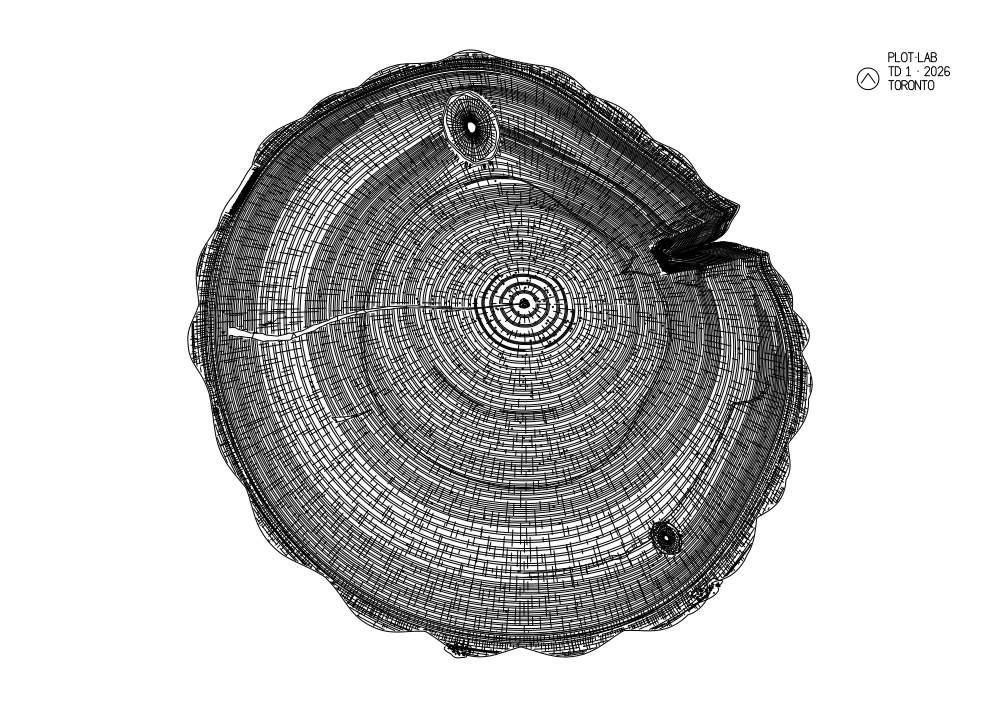
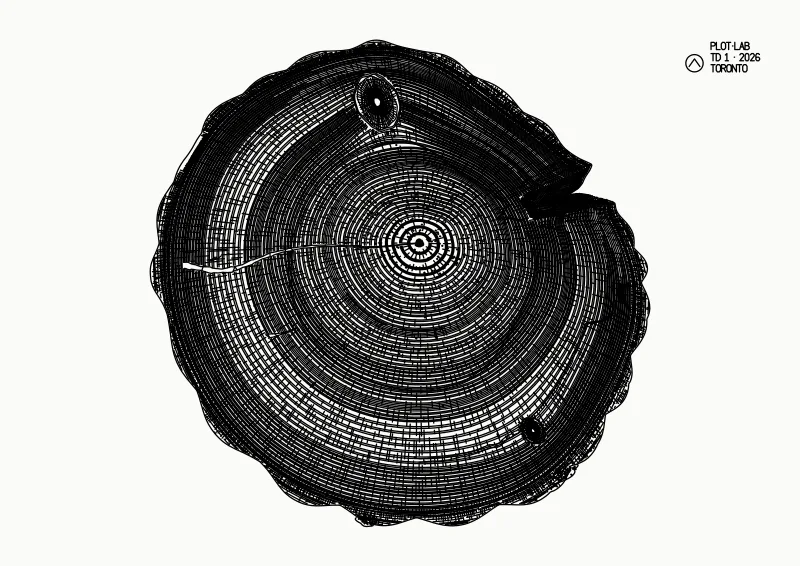
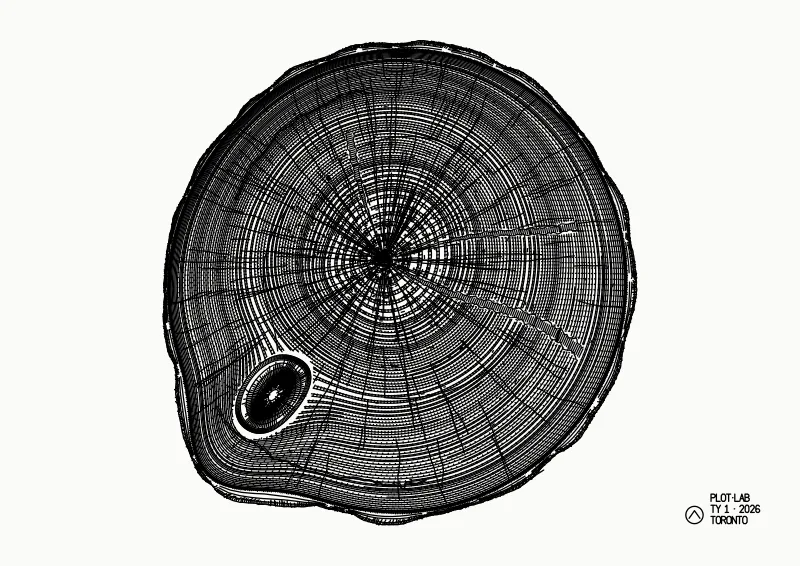
The heart of the tree sits off centre, so the rings are wider on one side than the other — the record of a lean. The cracks follow the grain outward the way drying wood actually opens.
About 55 m of line, drawn in about 25 minutes.
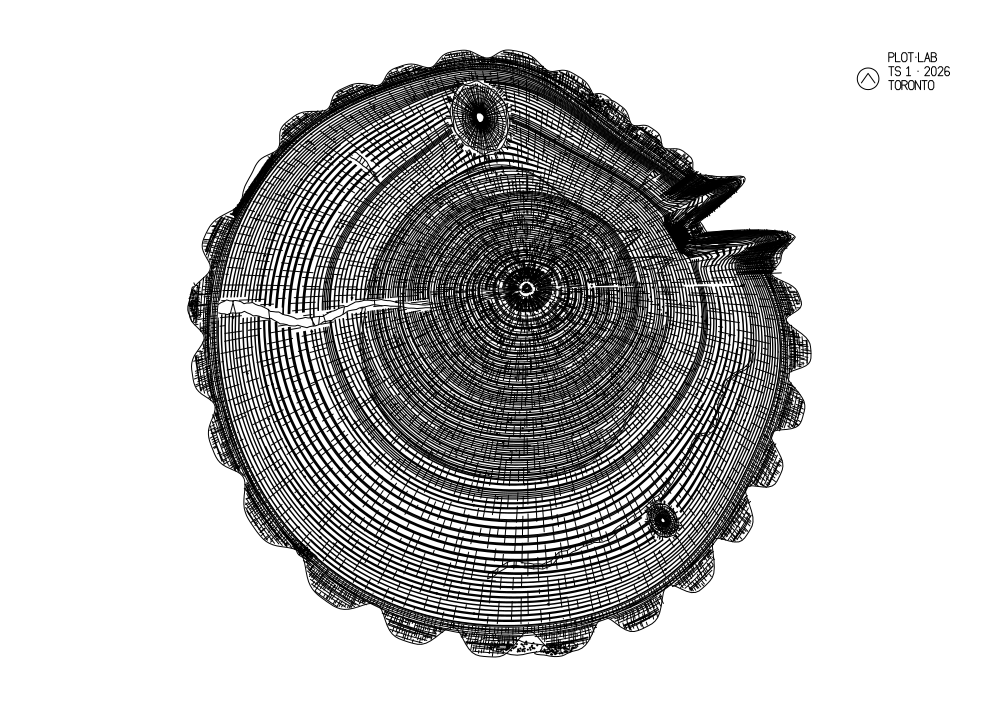
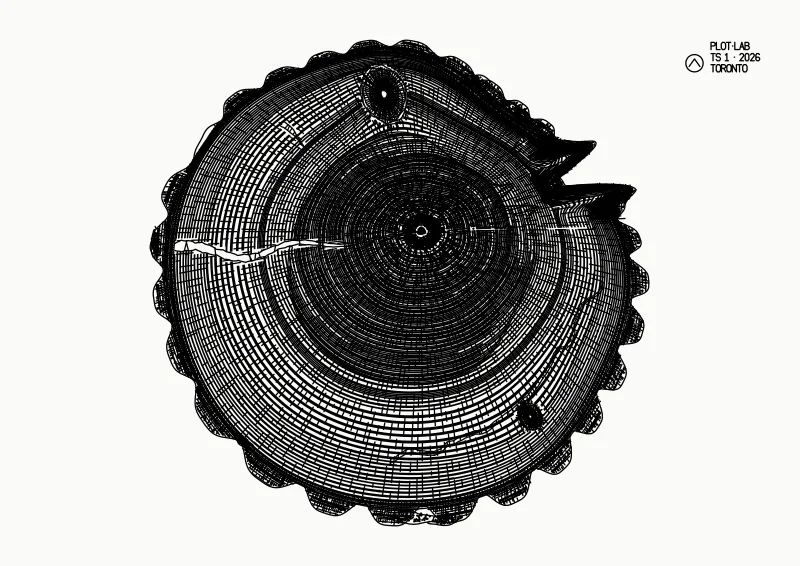
The rings crowd toward the bark and open near the heart, as they do in a tree that grew fast when young. The split runs along the grain, and the rings bend into it.
About 74 m of line, drawn in about 34 minutes.
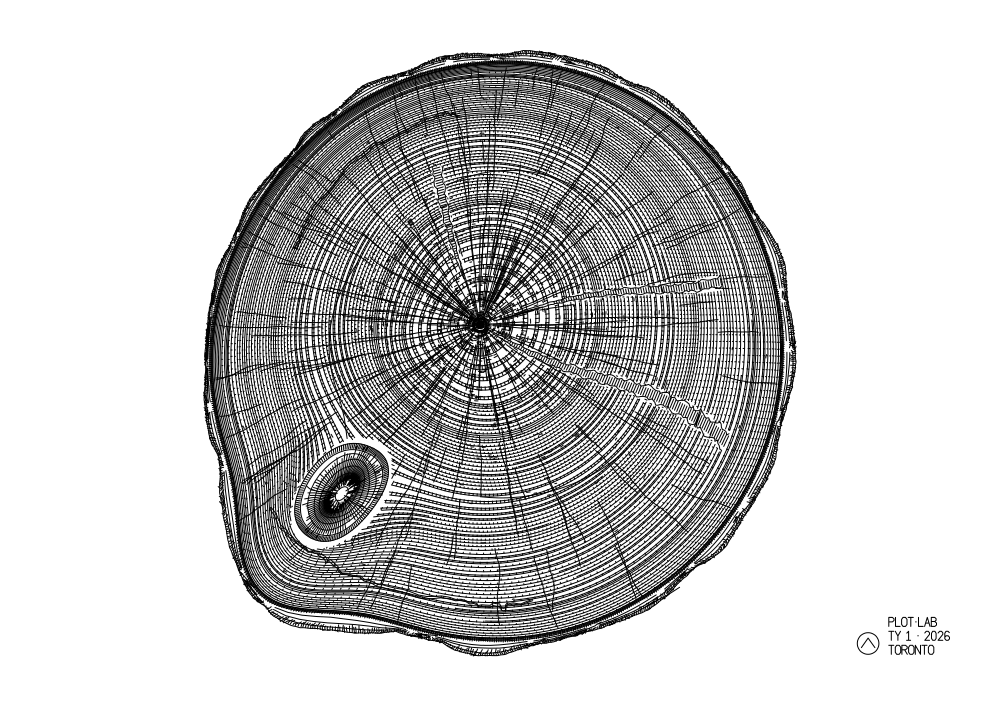
Drawn with the lightest touch of the three sections. The rings are so close that the eye reads them as a grain rather than as lines.
About 47 m of line, drawn in about 22 minutes.
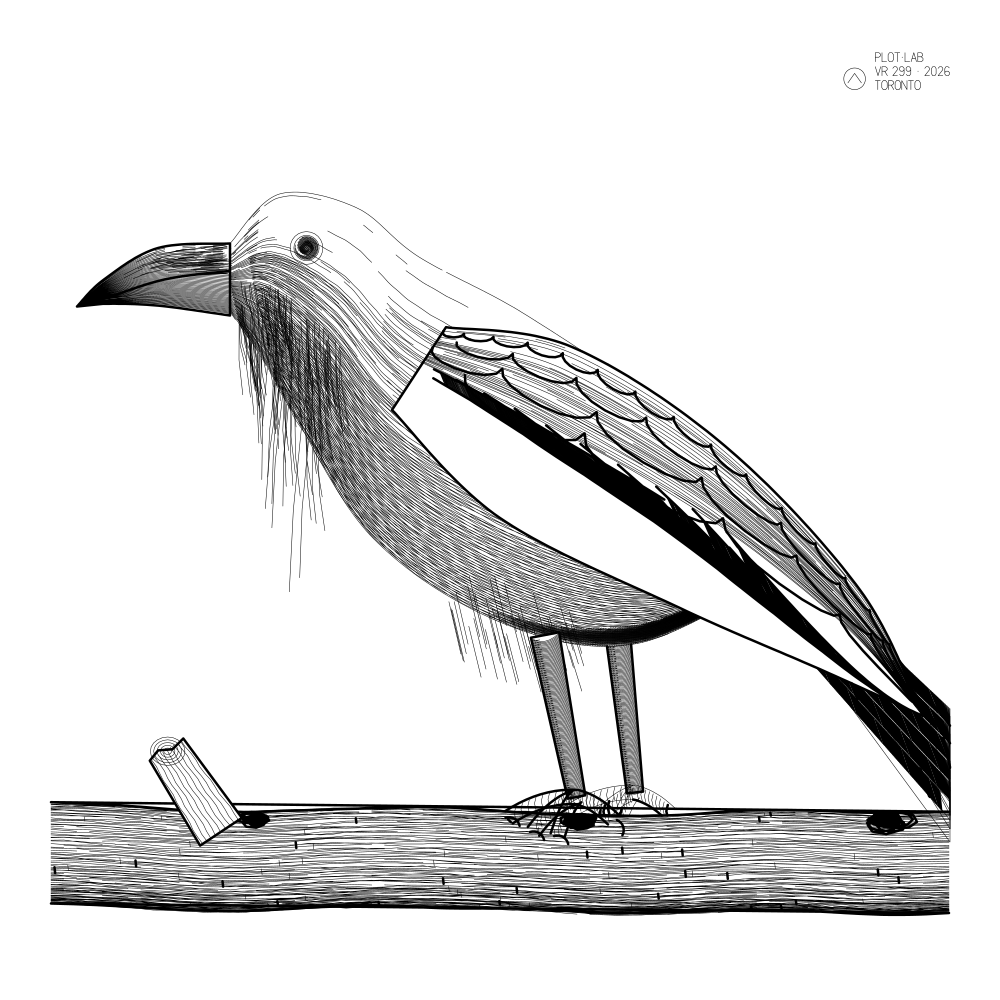
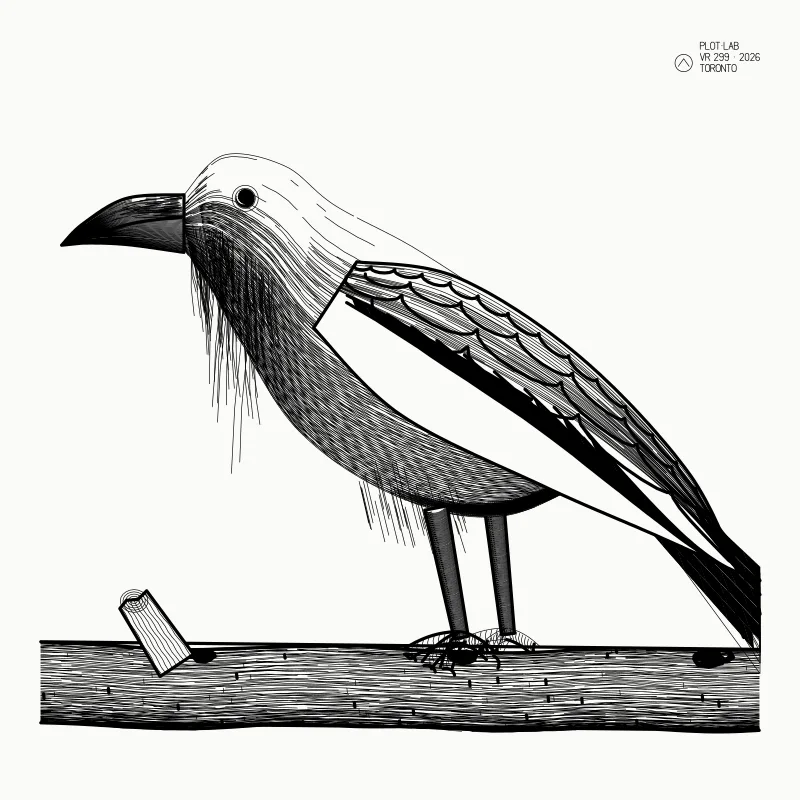
The bird is shaded with strokes that run the way feathers lie, so the wing reads as overlapping plates and the breast as down. The plank is drawn with its grain.
About 60 m of line, drawn in about 28 minutes.
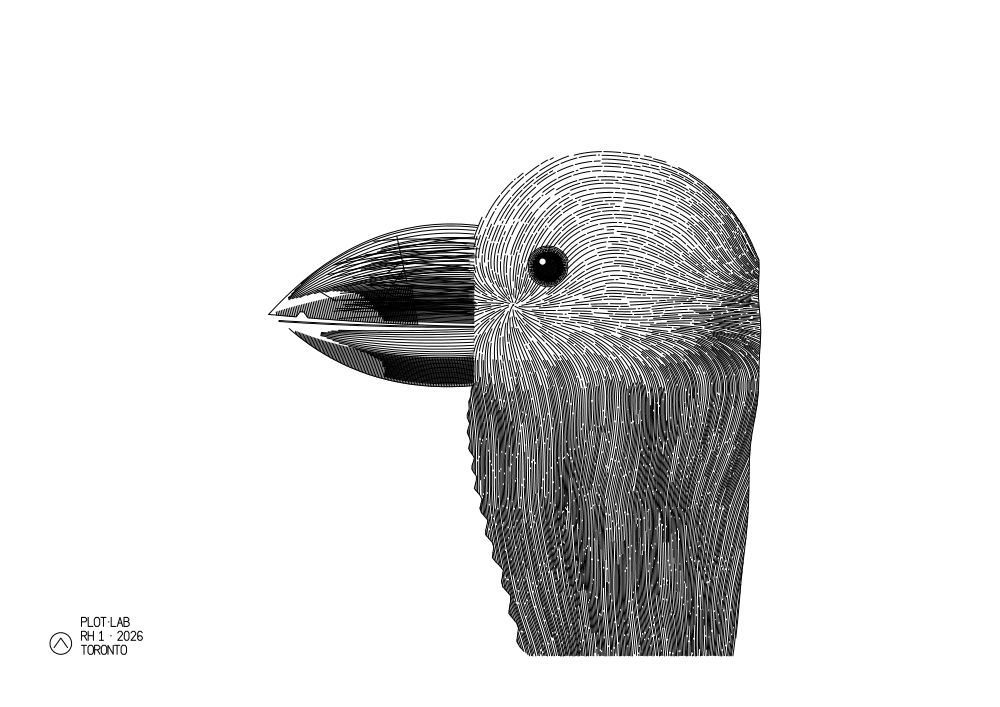
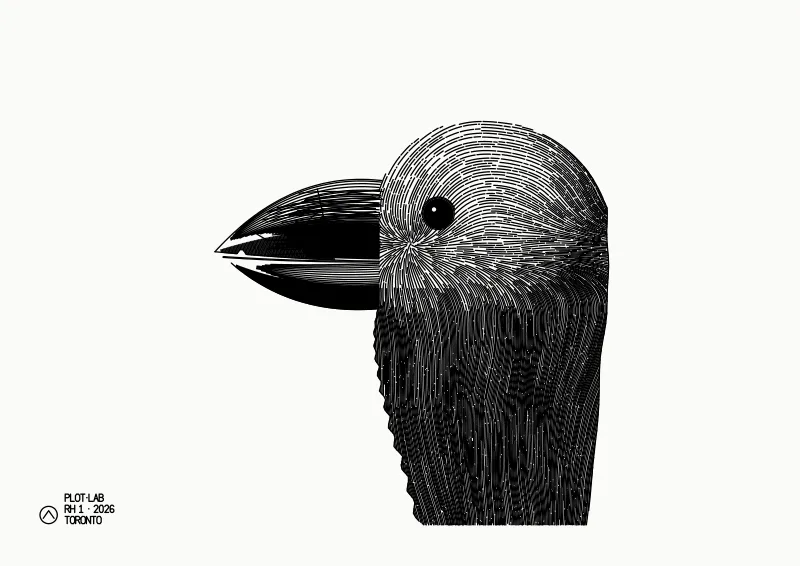
Thousands of short strokes, each following the lie of a feather, thin out toward the light and thicken toward the neck. The eye is the only solid black on the sheet.
About 27 m of line, drawn in about 13 minutes.
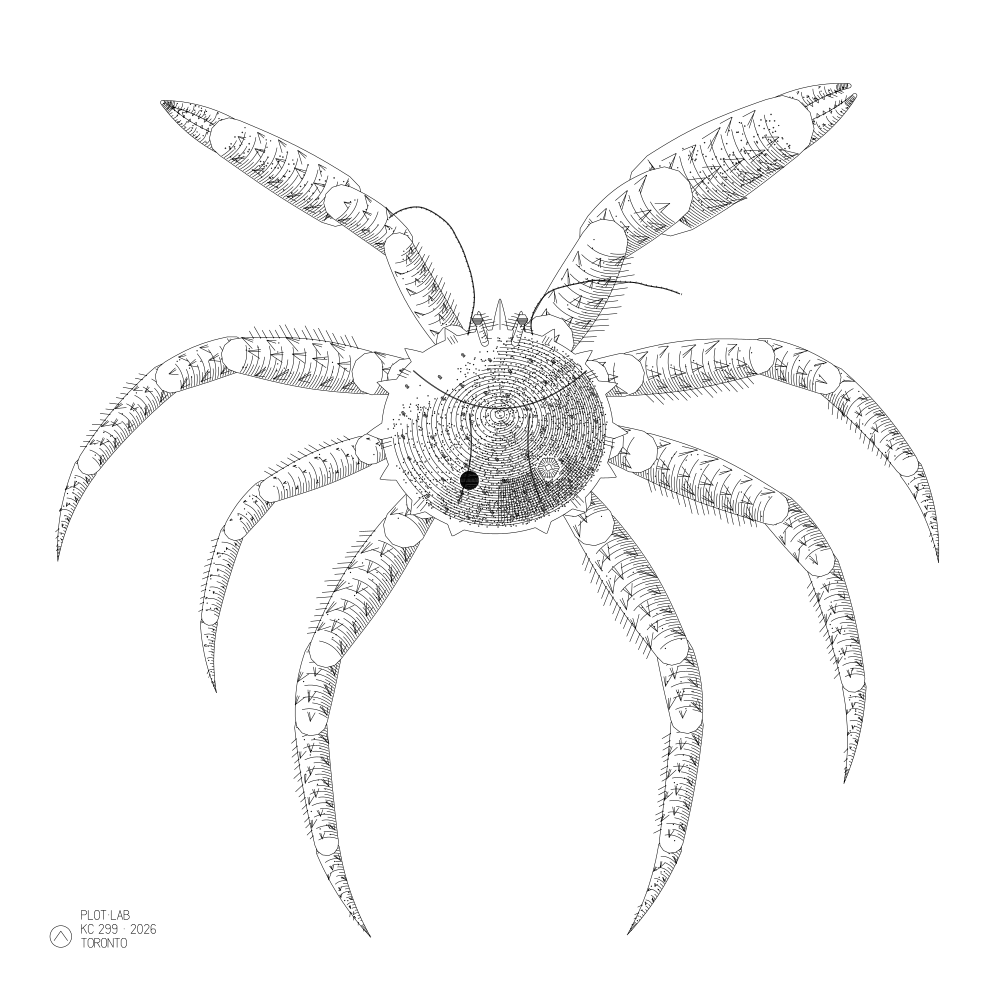
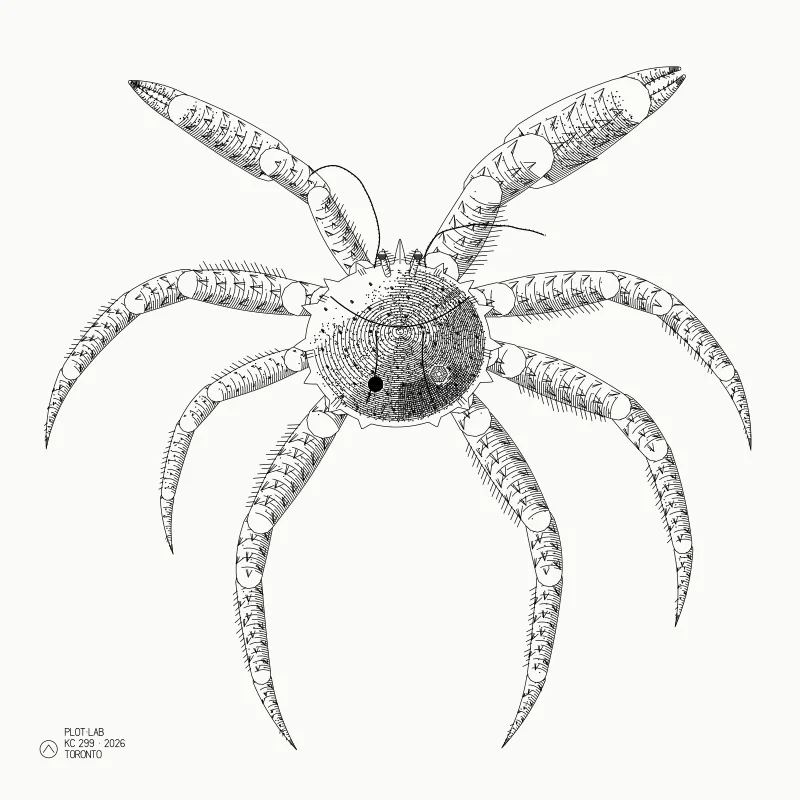
The shell is stippled and the legs are hatched along their length, so the two textures read differently under the same pen. The legs are not symmetrical, because a crab’s are not.
About 13 m of line, drawn in about 6 minutes.
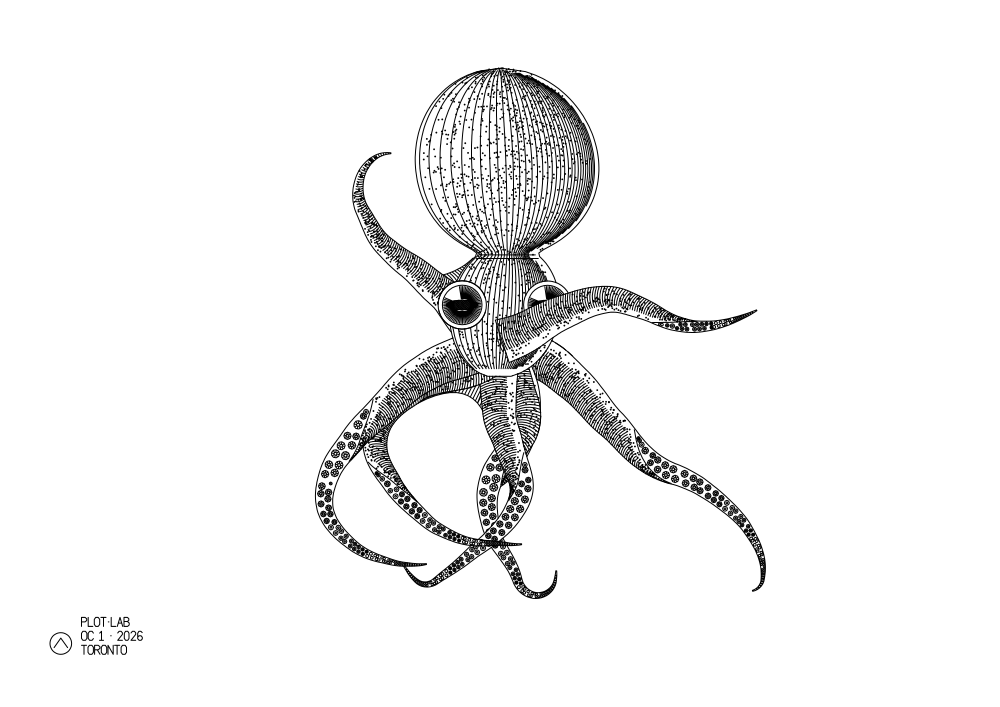
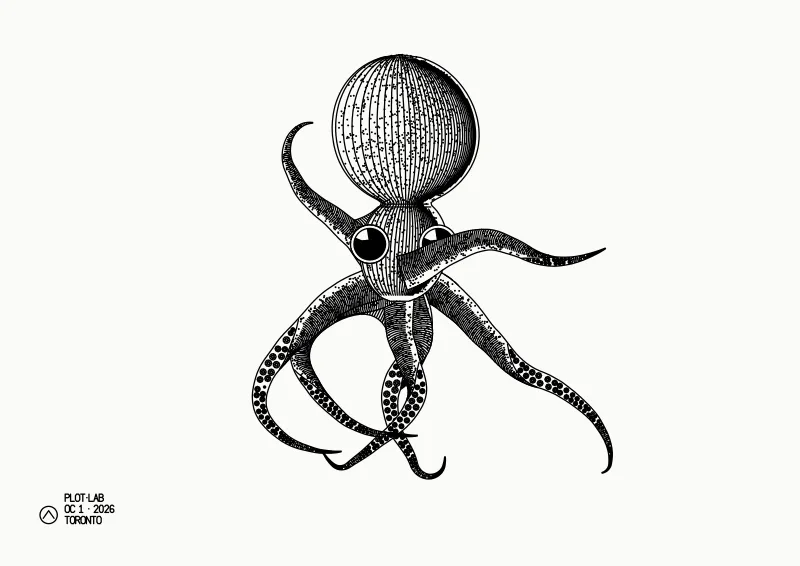
The mantle is drawn with long curved strokes that follow its shape, and the arms taper by having fewer lines, not thinner ones. Two pens, the second for the suckers.
About 11 m of line, drawn in about 5 minutes.
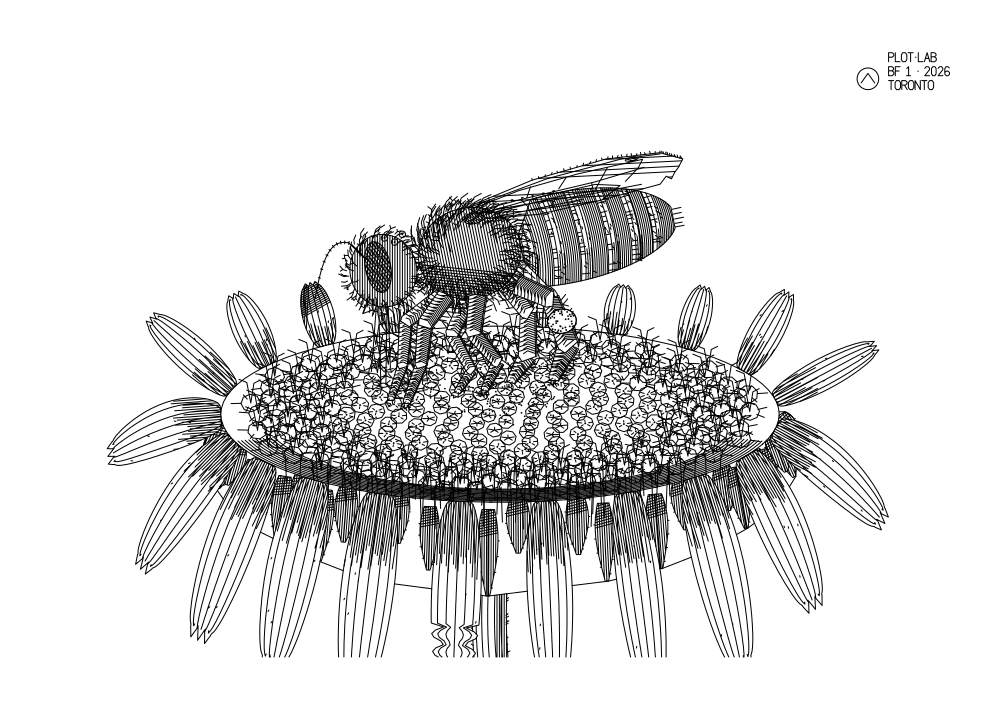
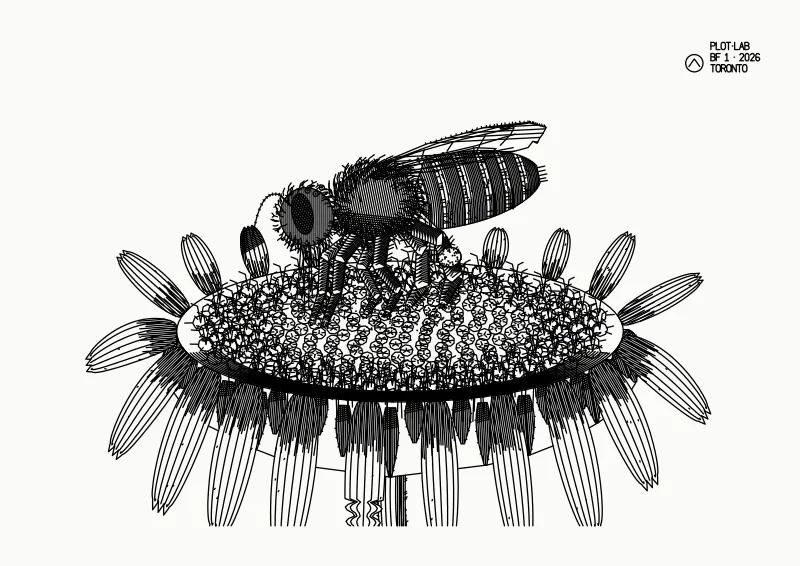
The petals are drawn with strokes along their length and the flower’s centre as a field of dots. The bee is the busiest thing on the sheet, and the sheet keeps clear around it.
About 32 m of line, drawn in about 15 minutes.
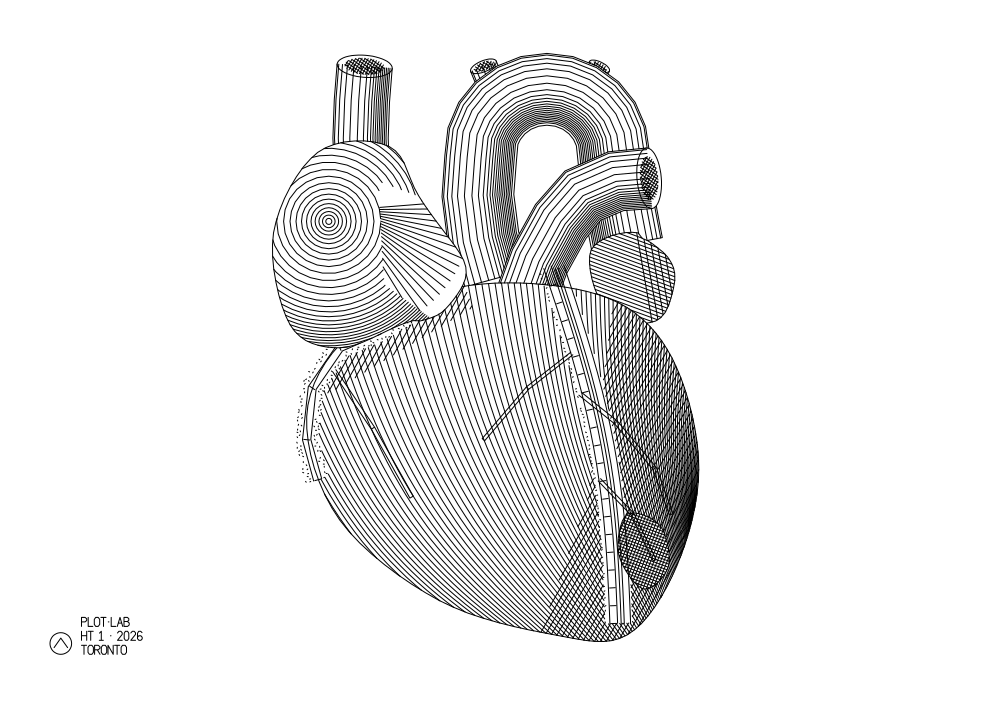
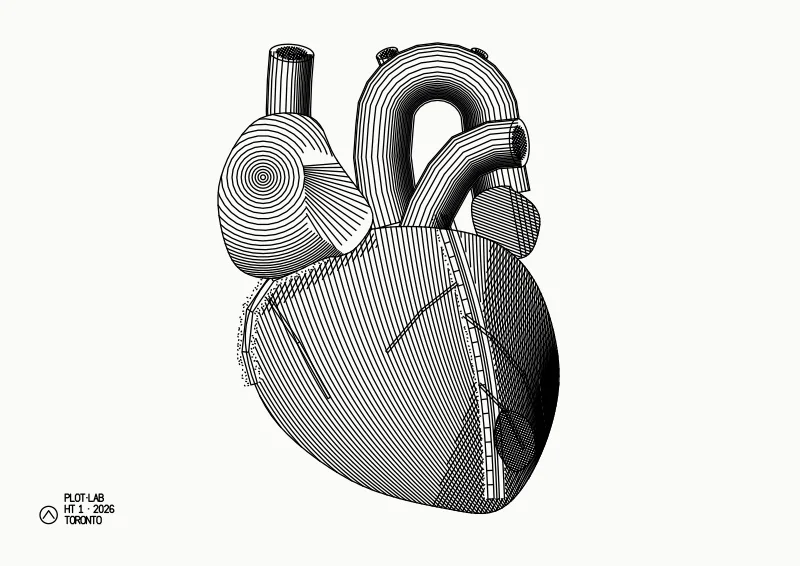
The vessels are hatched around their curve so they read as tubes, and the muscle is shaded with strokes that follow its grain. One pen, and a lot of restraint.
About 17 m of line, drawn in about 8 minutes.
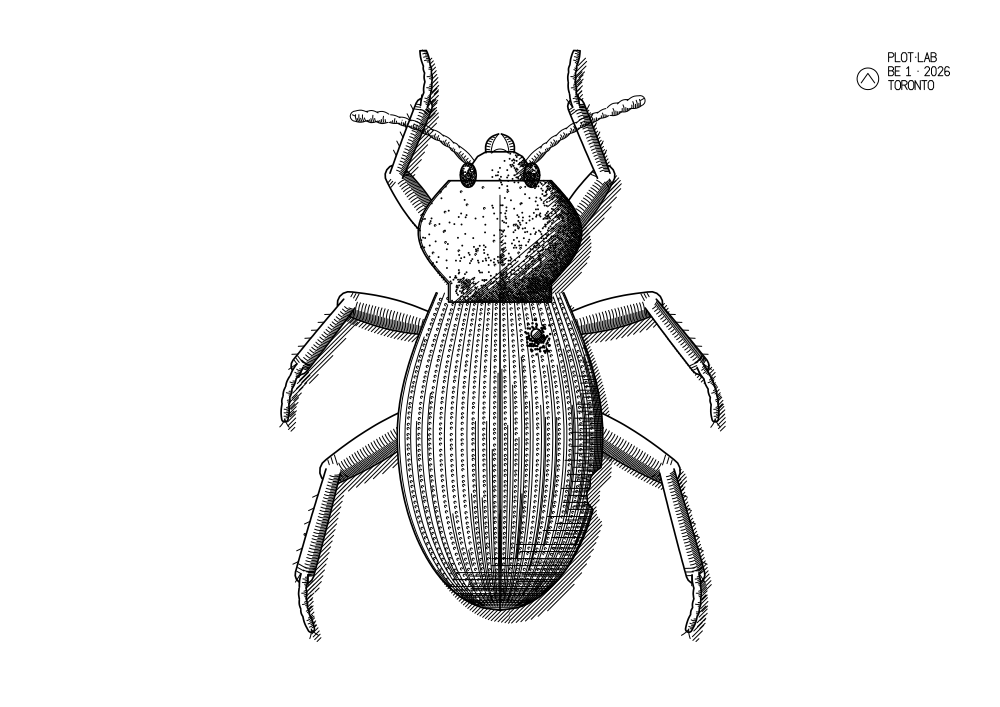
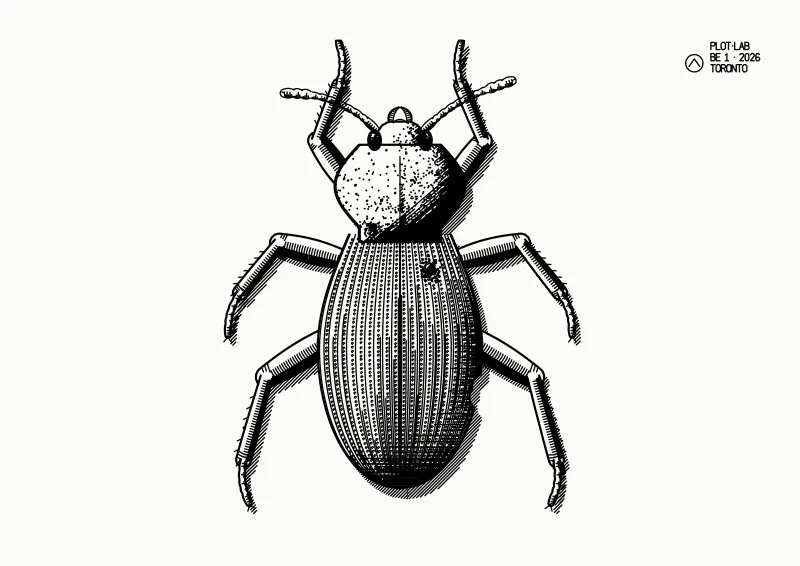
The wing cases carry rows of fine grooves and the thorax is dotted, so the two surfaces read as different materials. Three pens, the heaviest for the outline.
About 14 m of line, drawn in about 6 minutes.
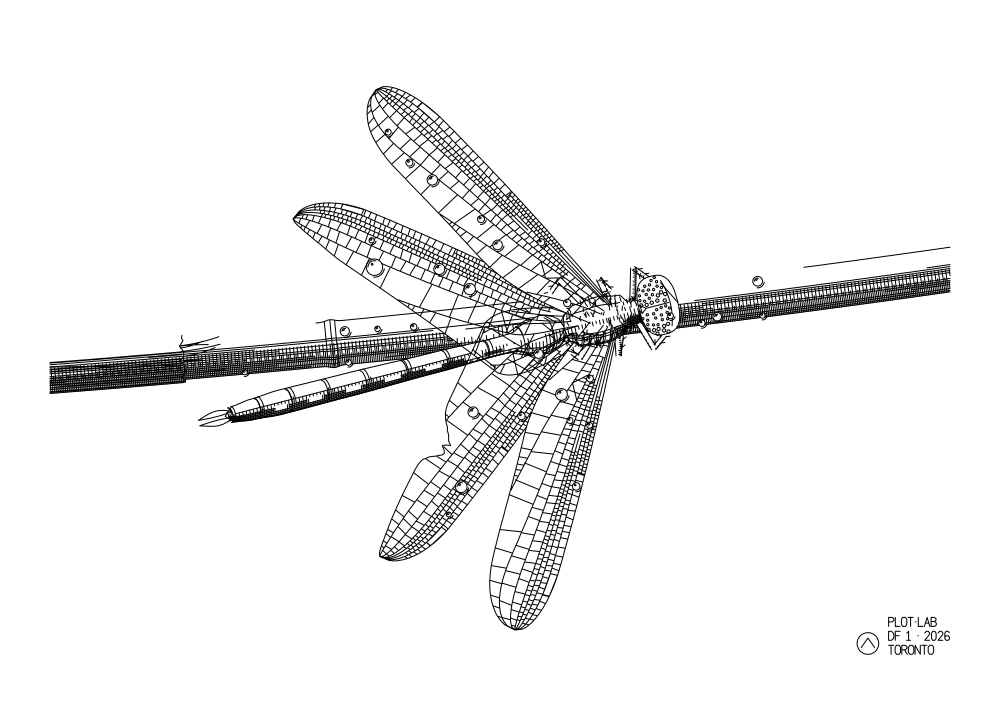
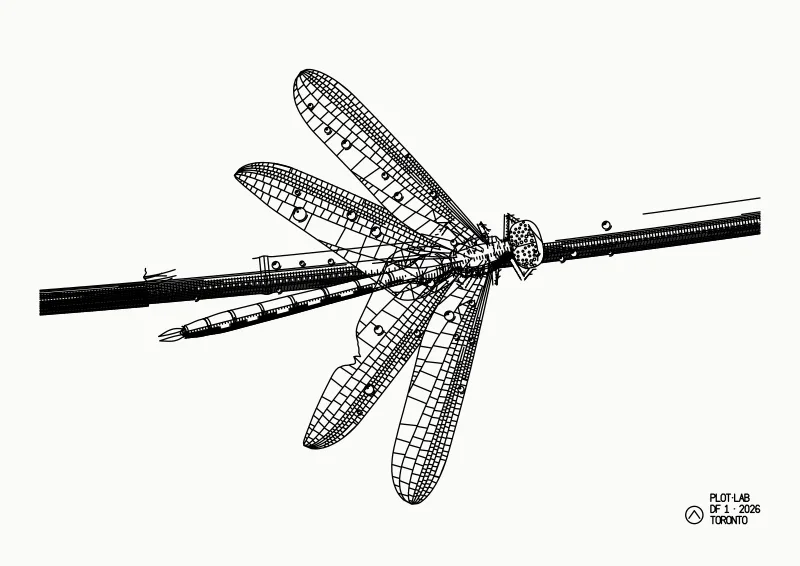
The wings are drawn as their veins only, cell by cell, so they stay transparent; the reed is the one solid line on the sheet. Most of the paper is left empty on purpose.
About 13 m of line, drawn in about 6 minutes.
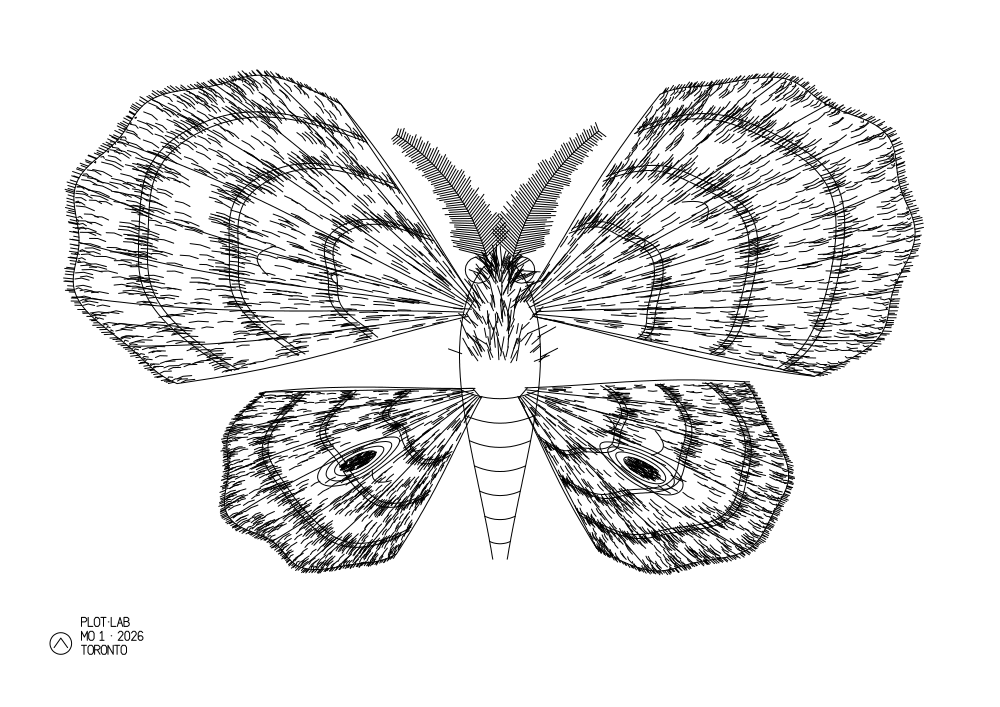
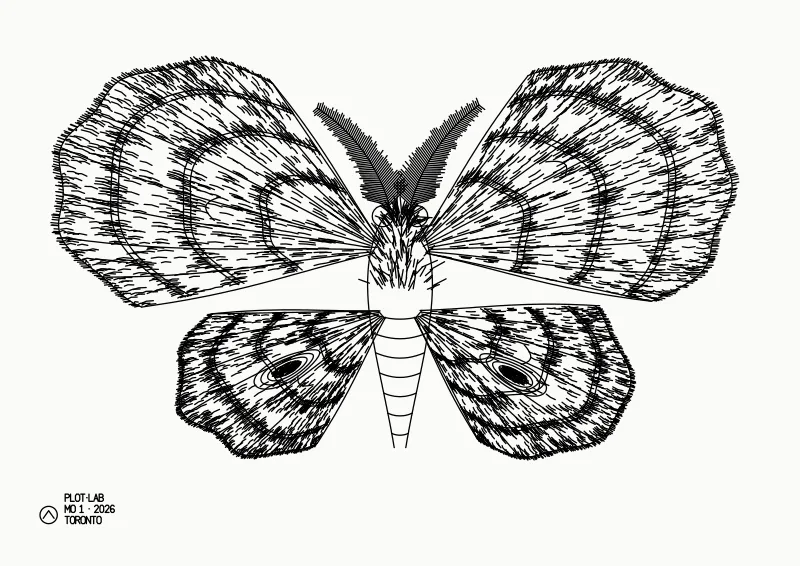
The two sides are drawn separately rather than one being a mirror of the other, so they match the way a real moth matches: closely, and never exactly.
About 26 m of line, drawn in about 12 minutes.
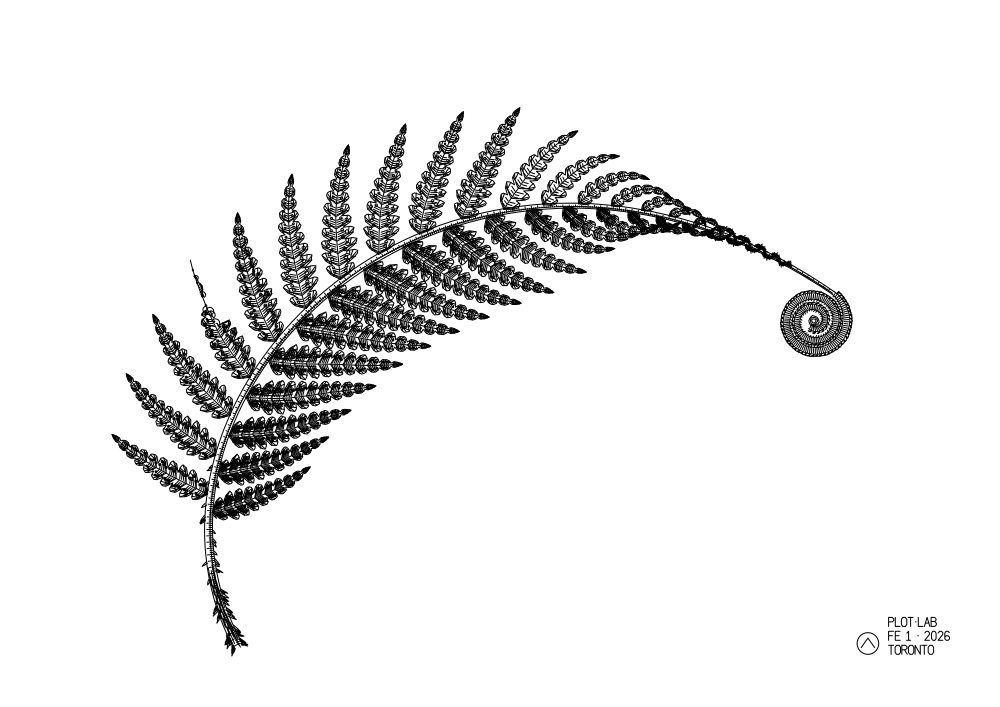
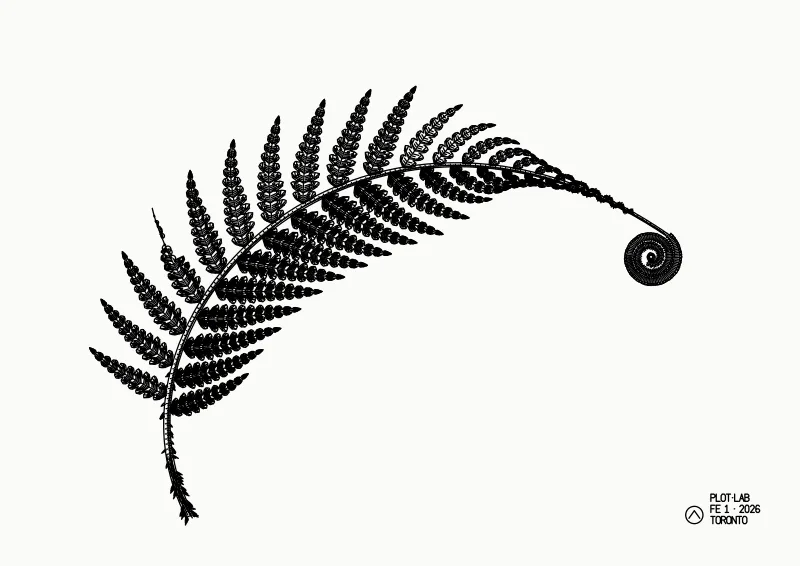
Each leaflet is drawn with its own veins, and the leaflets shrink toward the tip until the coil takes over. One pen, one frond, and the sheet around it.
About 21 m of line, drawn in about 10 minutes.
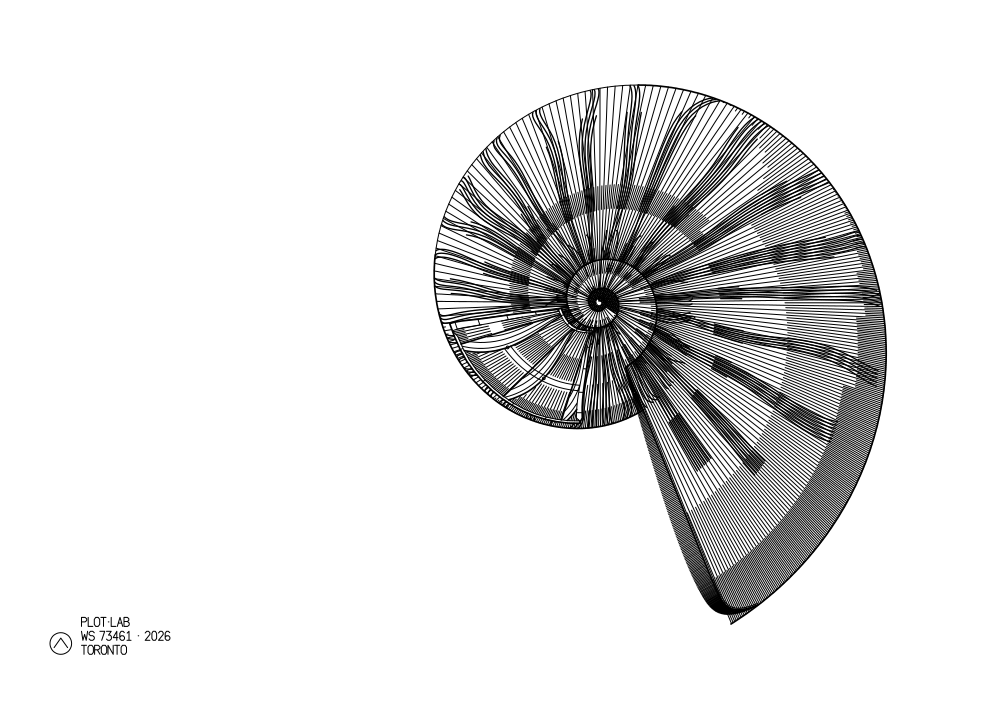
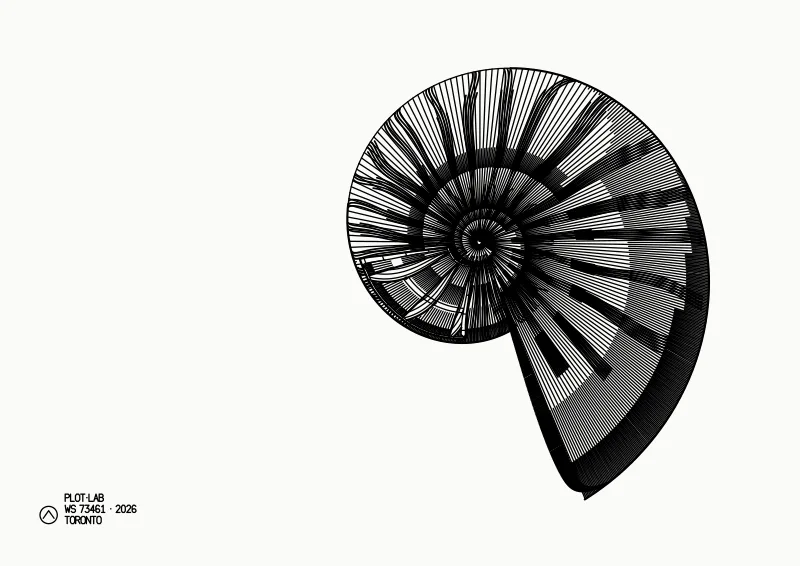
The ribs fan outward and are hatched in alternating bands, so the shell reads as ridged rather than smooth. A companion to the cabinet in Wunderkammer.
About 23 m of line, drawn in about 11 minutes.
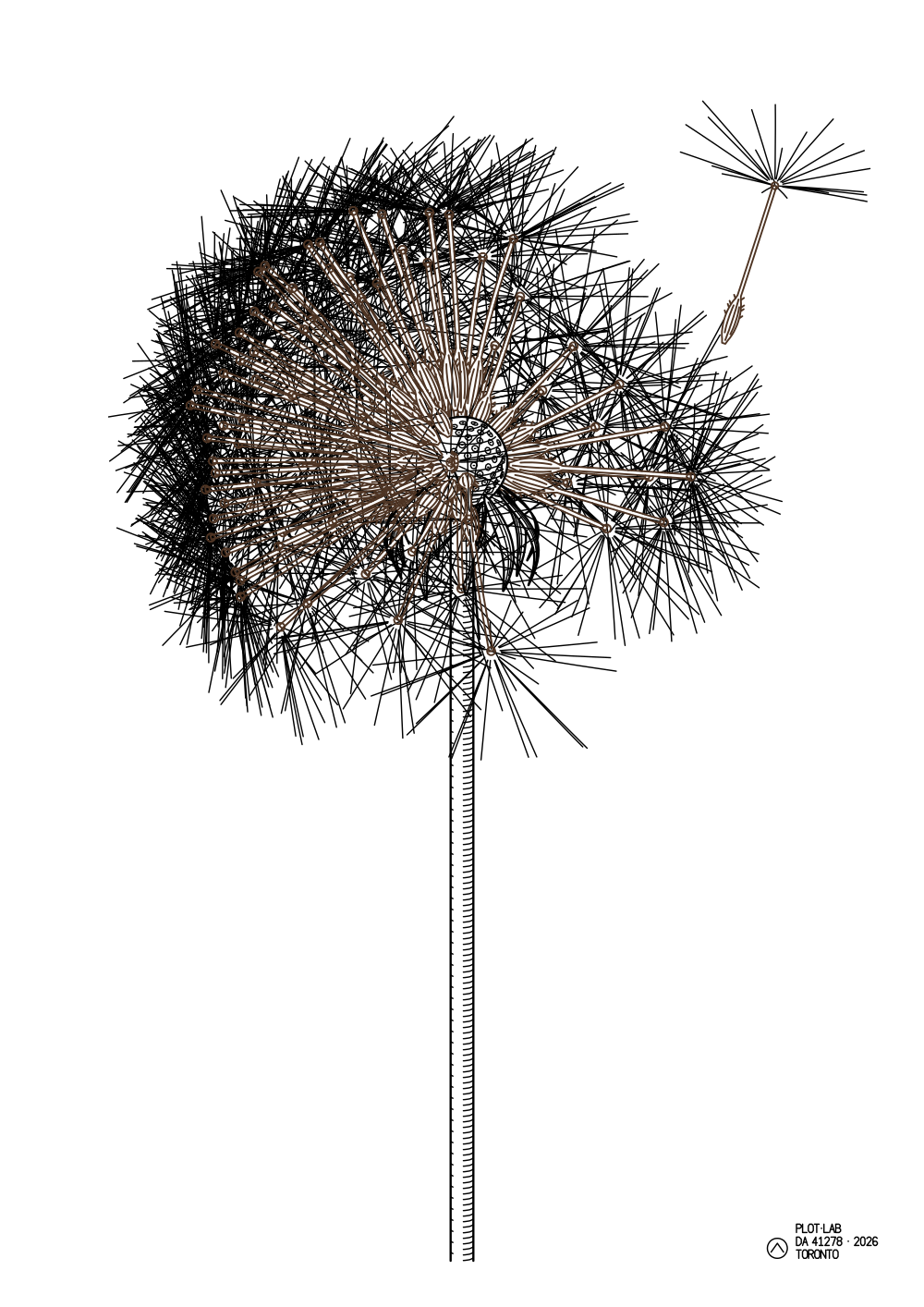
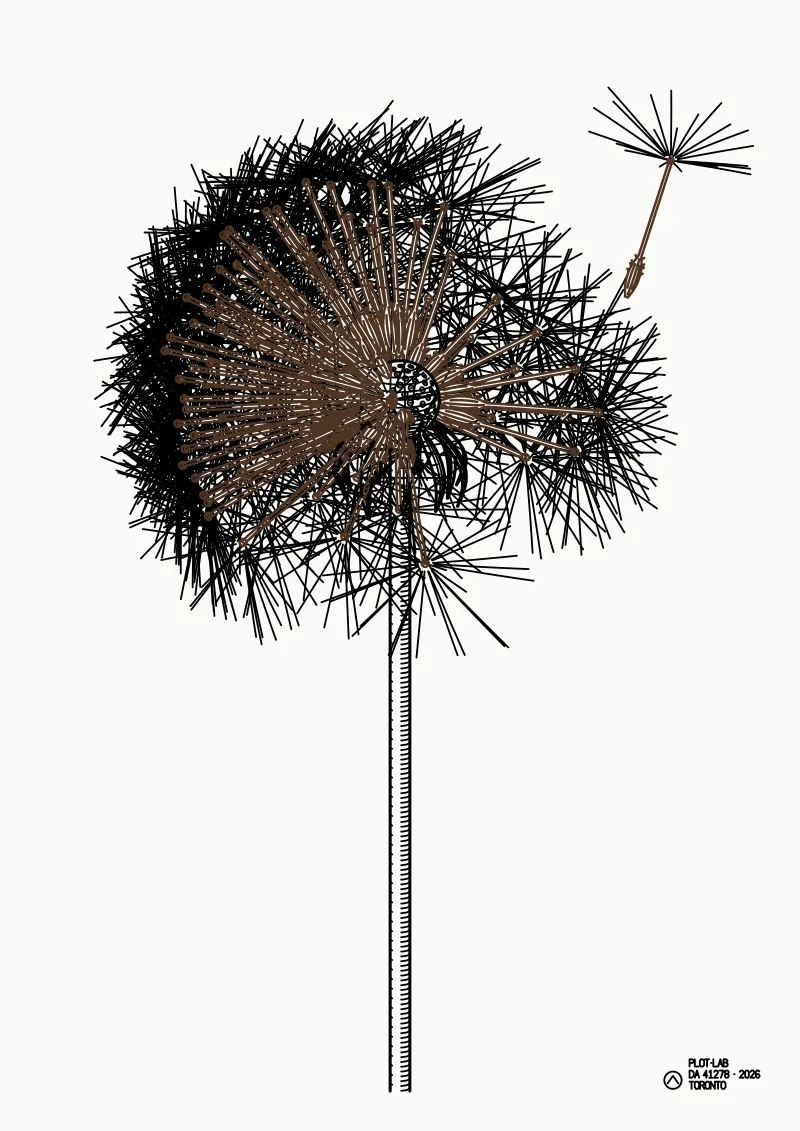
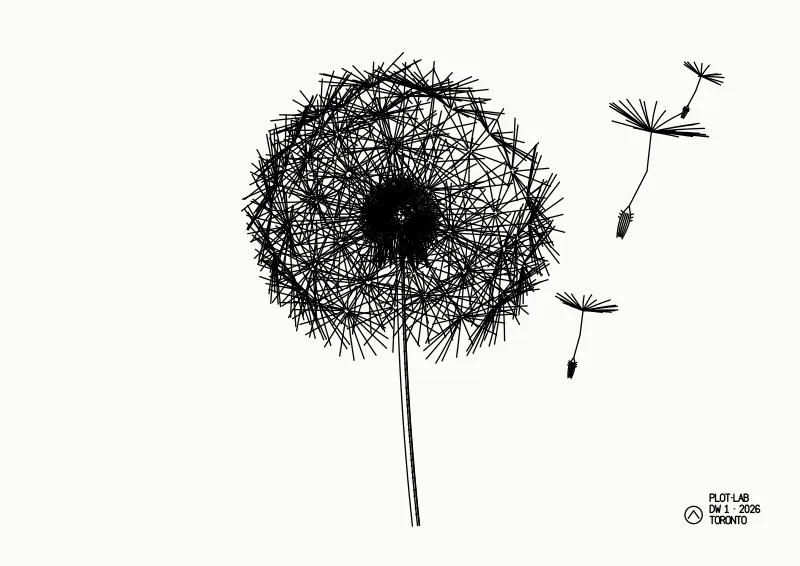
Two inks: black for the fine hairs of each parachute and for the stem, brown for the seeds themselves, the only part of the plant that carries pigment. Three pens, the heaviest for the outline of the stem.
About 41 m of line, drawn in about 19 minutes.
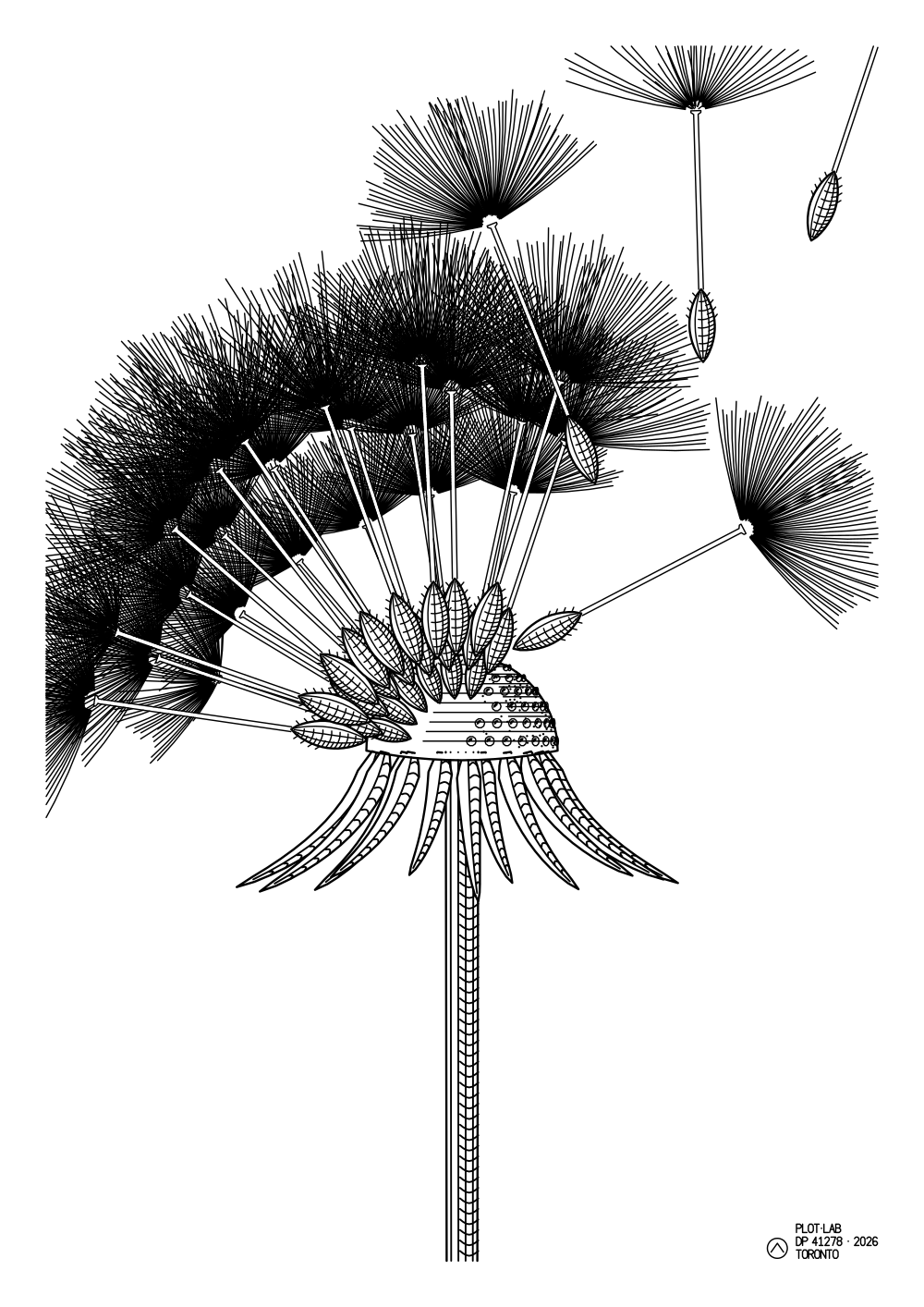
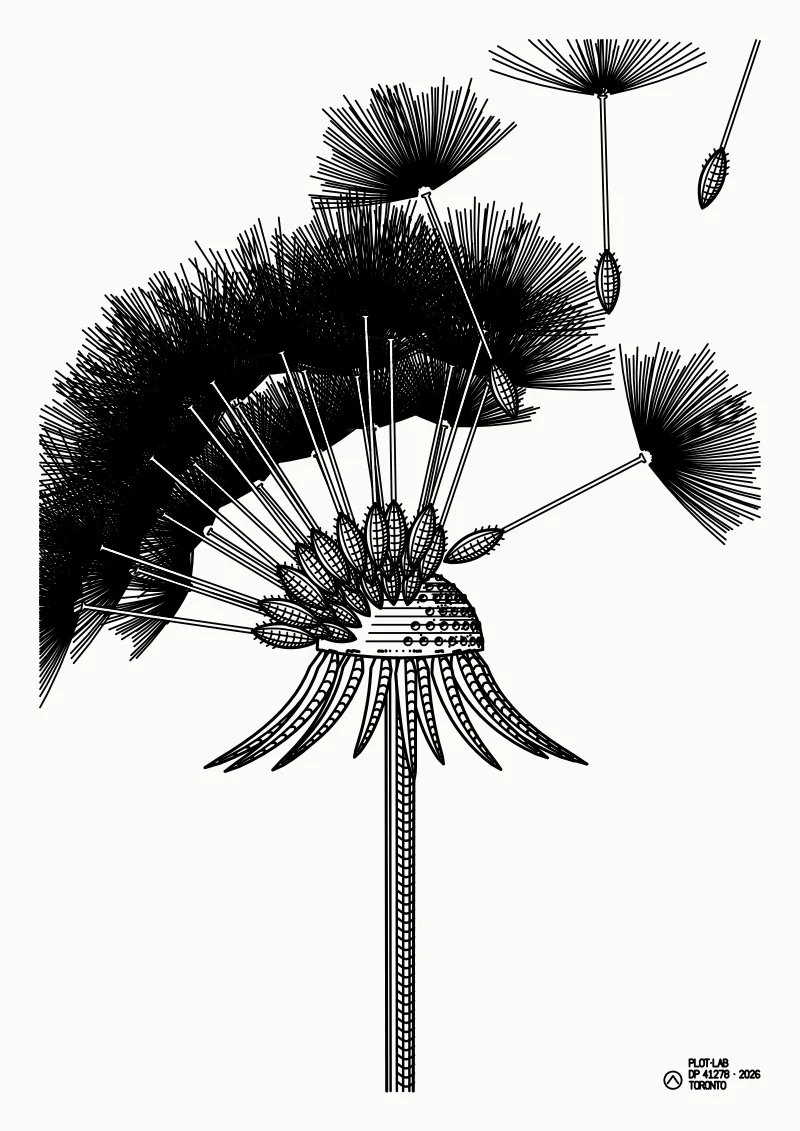
A companion to the Dandelion Clock, drawn to explain rather than to float. Black for the ripe seeds and their parachutes, olive for the living bracts and stem, the only green left on the plant. Three pens, the heaviest for the near edges where the seeds overlap.
About 48 m of line, drawn in about 22 minutes.
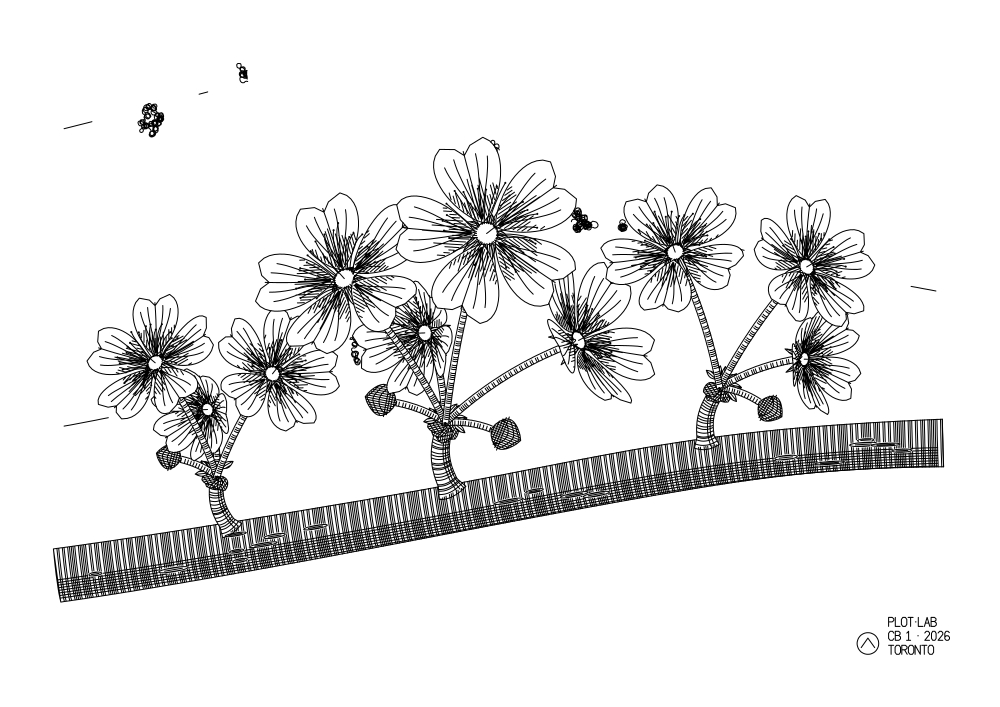
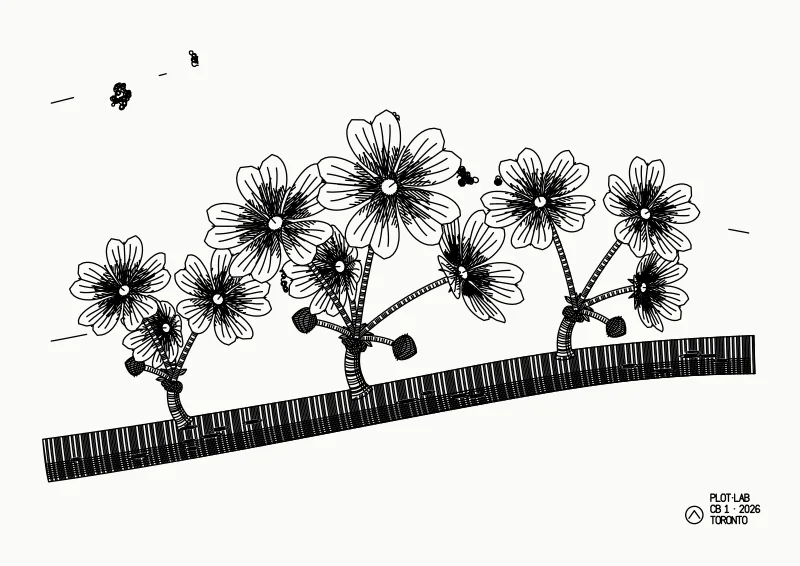
The pen draws each flower's real parts — hypanthium, reflexed sepals, notched petals, stamen ring — and the lenticelled bark of the twig they spring from. The background branch is atmospheric, not botanical.
About 22 m of line, drawn in about 10 minutes.
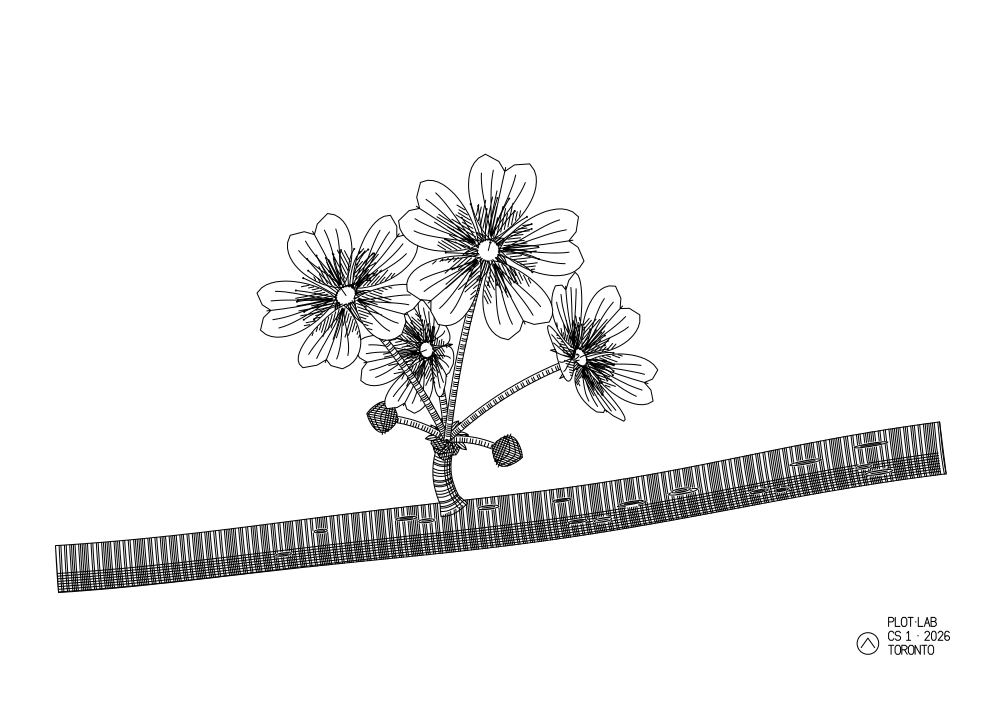
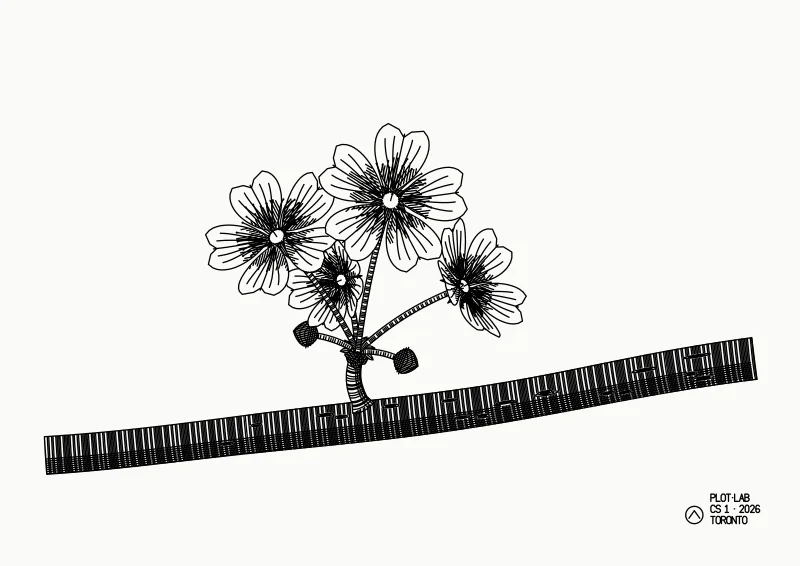
A companion to the Branch plate, drawn from the same spur but without the revision that added a subtle background. The lightest of the two cherry sheets.
About 15 m of line, drawn in about 7 minutes.
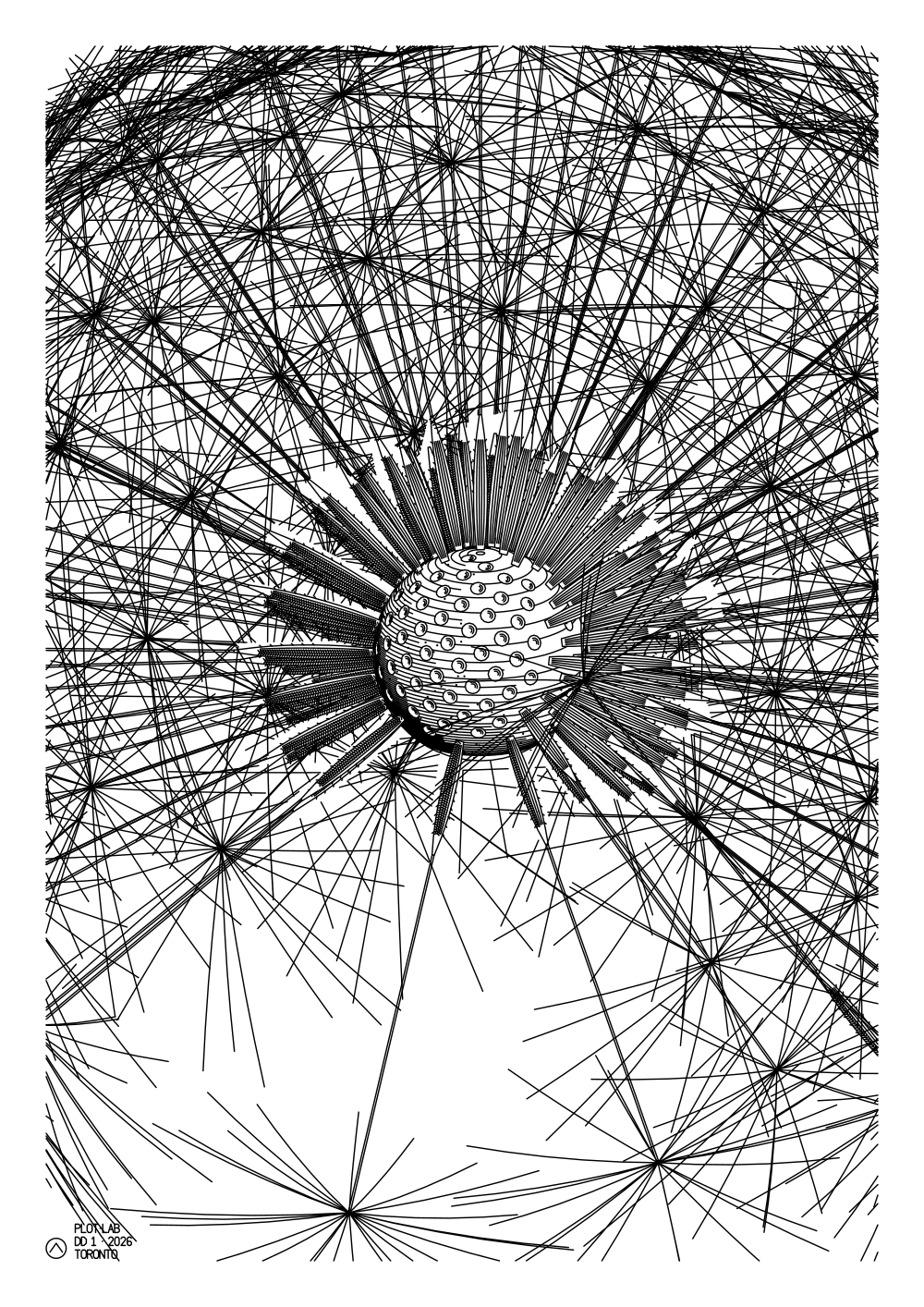
Portrait format. The mid-dispersal moment gives the drawing its event. Pen hatching states each barbellate bristle and the ribbed spindle of every achene.
About 71 m of line, drawn in about 33 minutes.
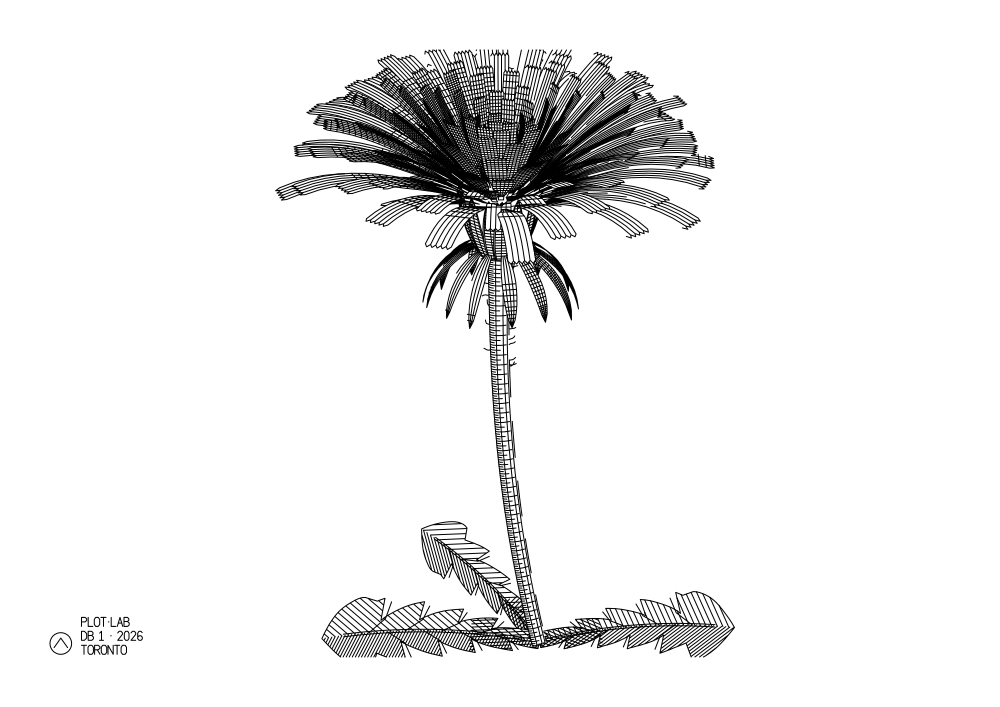
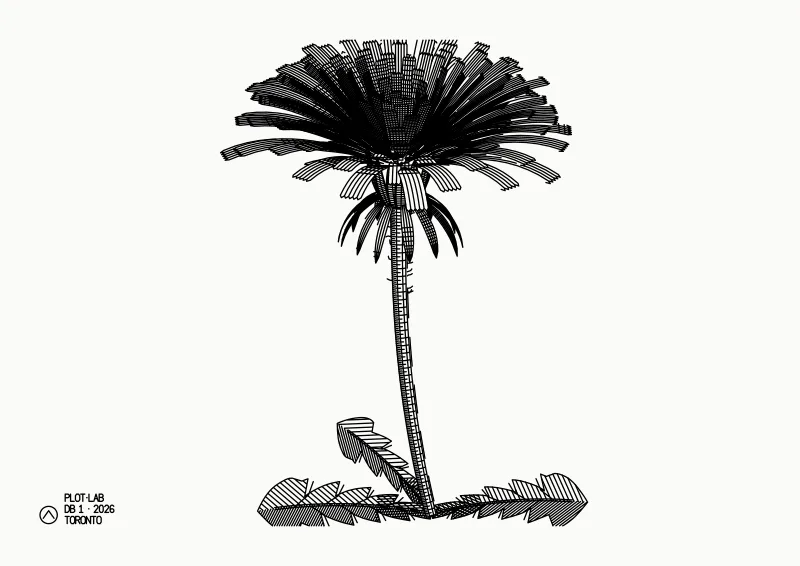
Three outer ligules on the front-left are grazed short by a slug, ragged at the edge. The hollow scape bends by phototropism toward the light and descends to a rosette of runcinate leaves.
About 20 m of line, drawn in about 9 minutes.
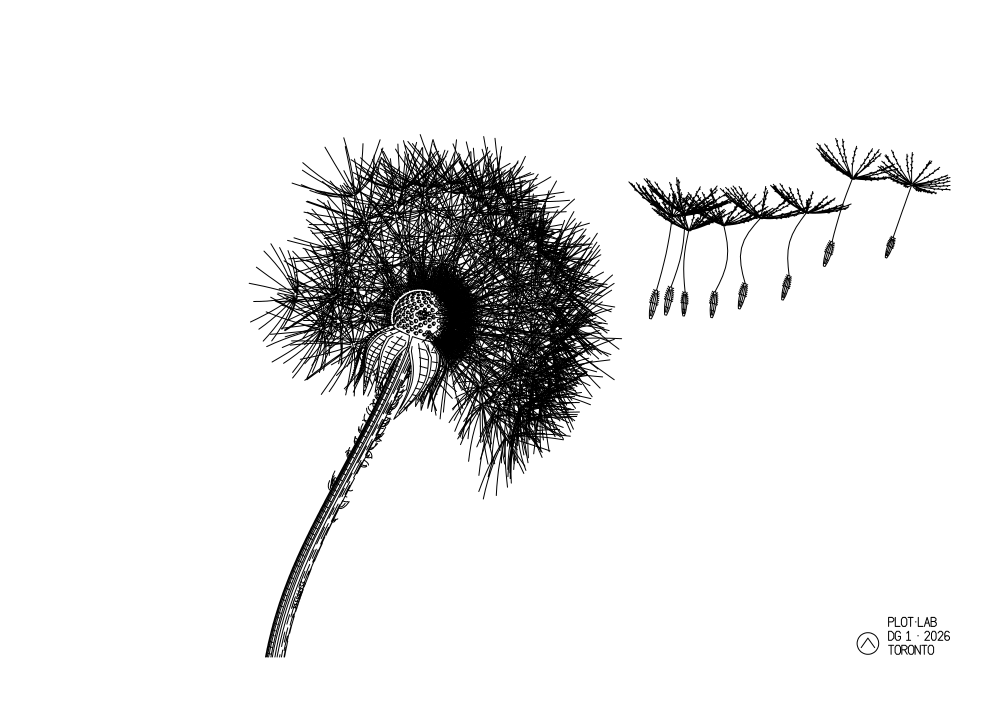
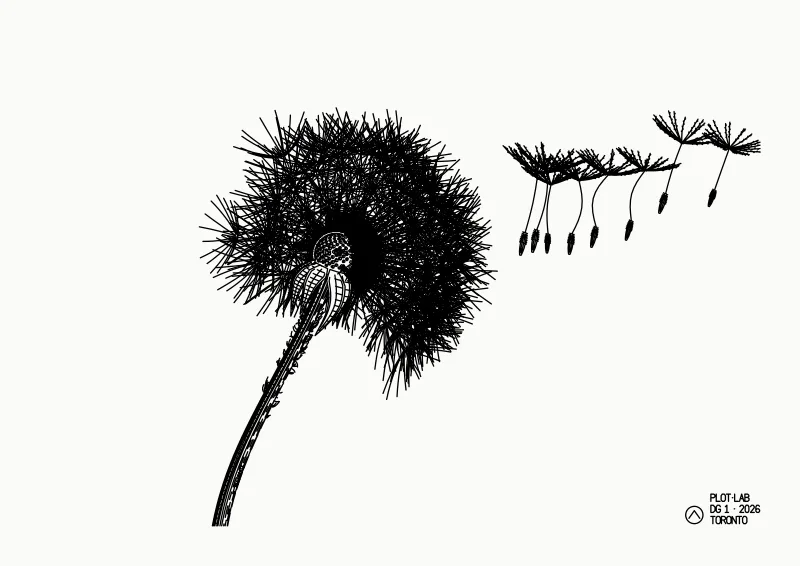
The achenes are ribbed spindles on their beaks, each pappus an umbrella of barbellate bristles. Hard side light from the right shades the intact globe's inner filaments.
About 33 m of line, drawn in about 15 minutes.
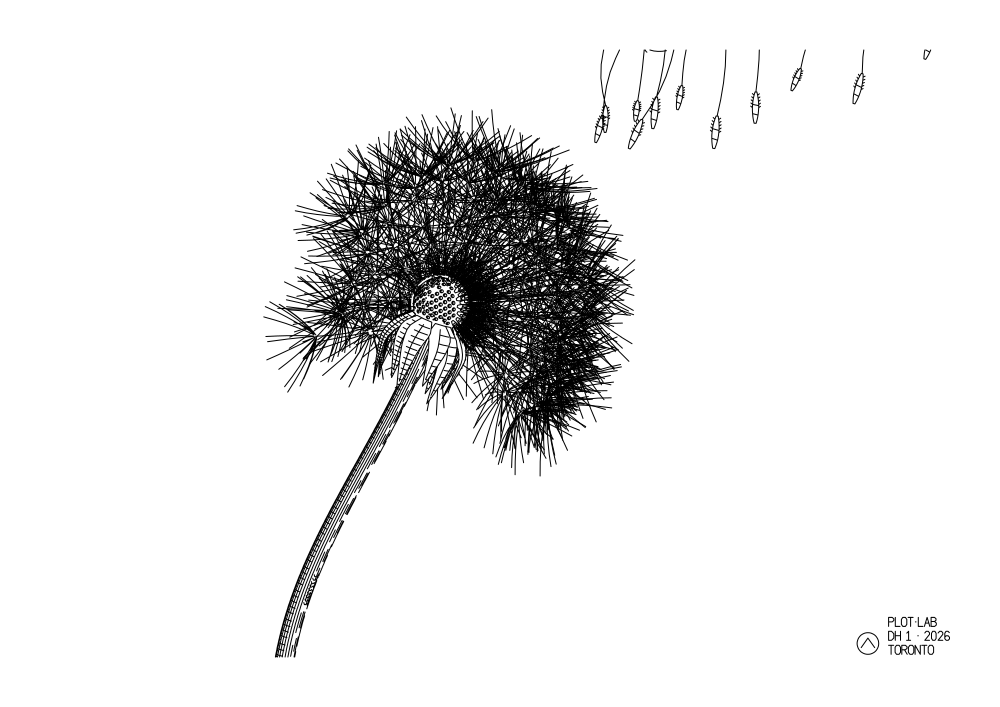
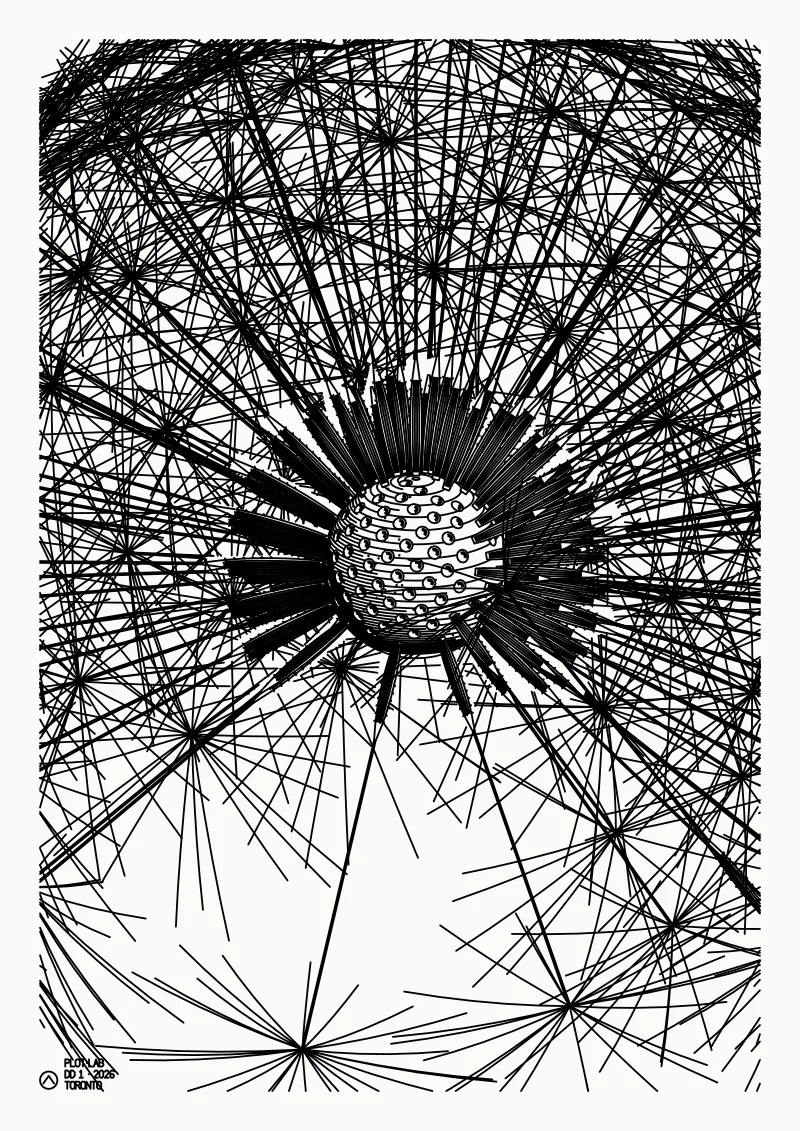
The boundary where filaments end and open air begins is where the eye lands. The drifting seeds thin out toward the upper left, leaving the paper open.
About 28 m of line, drawn in about 13 minutes.
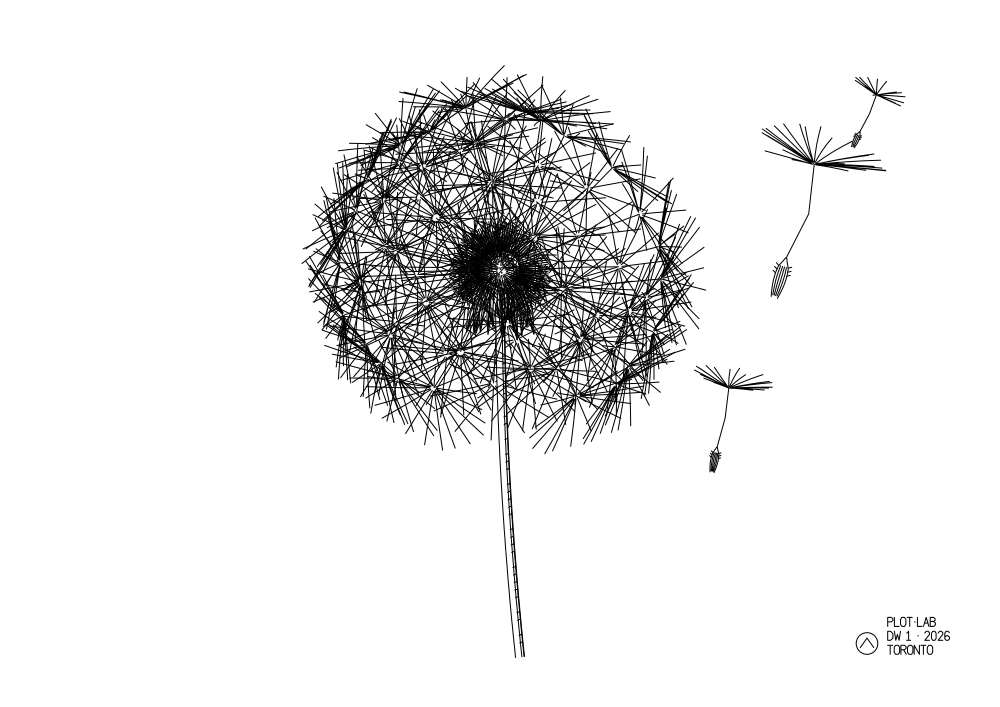
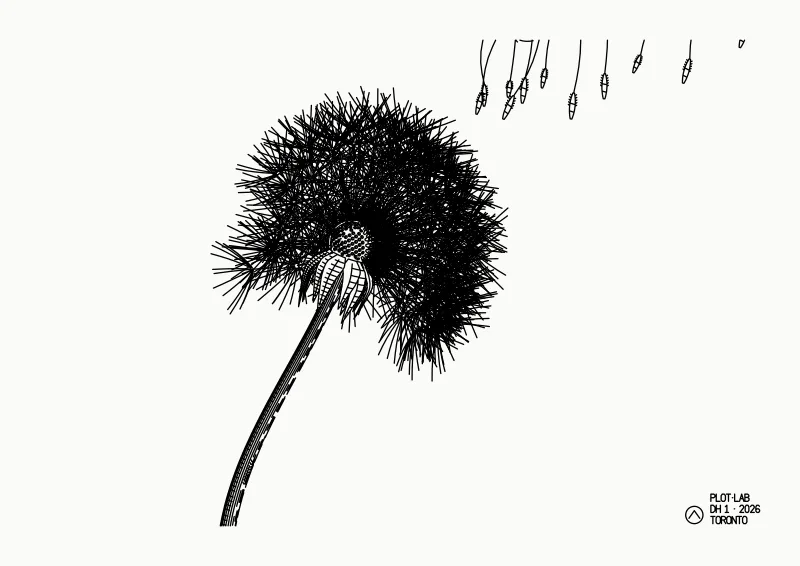
A gentler composition than the fuller heads: the seeds are spaced widely enough that each pappus reads on its own against the white of the paper.
About 21 m of line, drawn in about 10 minutes.
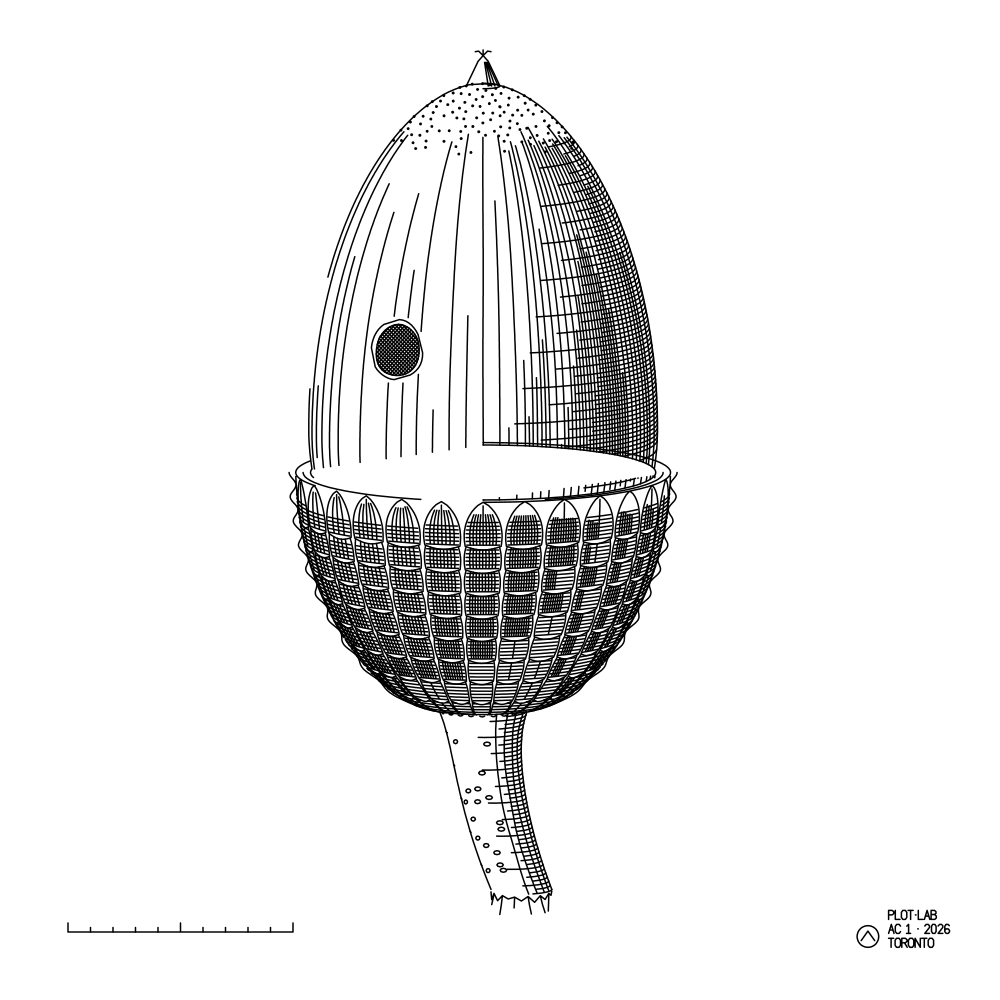
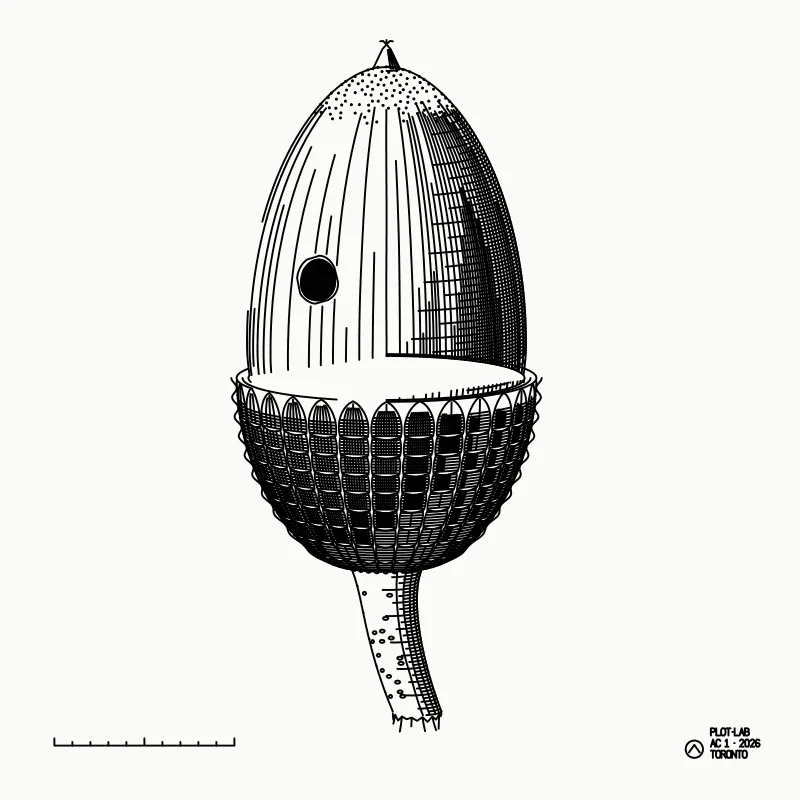
A scale bar sits beside it, as on a printed plate. The cap is the densest part of the sheet; the nut is drawn in long curves that follow its shape.
About 11 m of line, drawn in about 5 minutes.
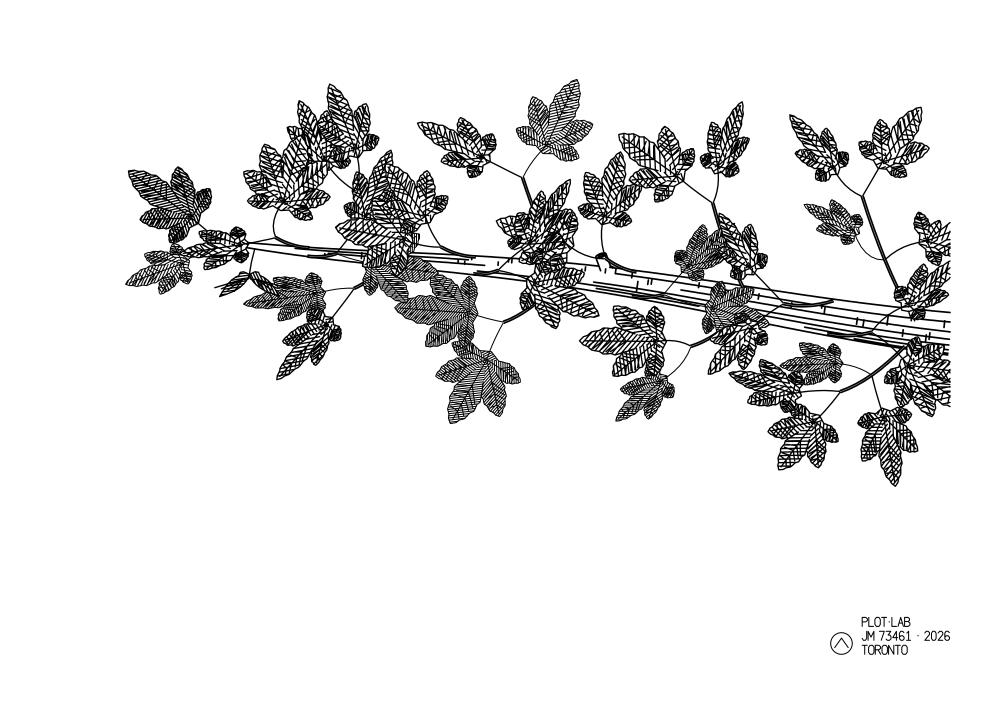
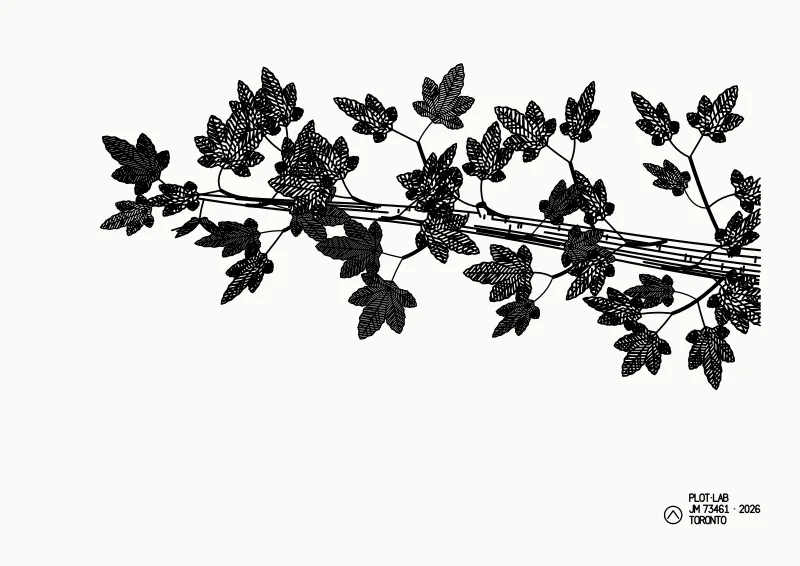
Three pens: the finest for the veins, a heavier one for the edges of the leaves, the heaviest for the branch itself.
About 20 m of line, drawn in about 9 minutes.
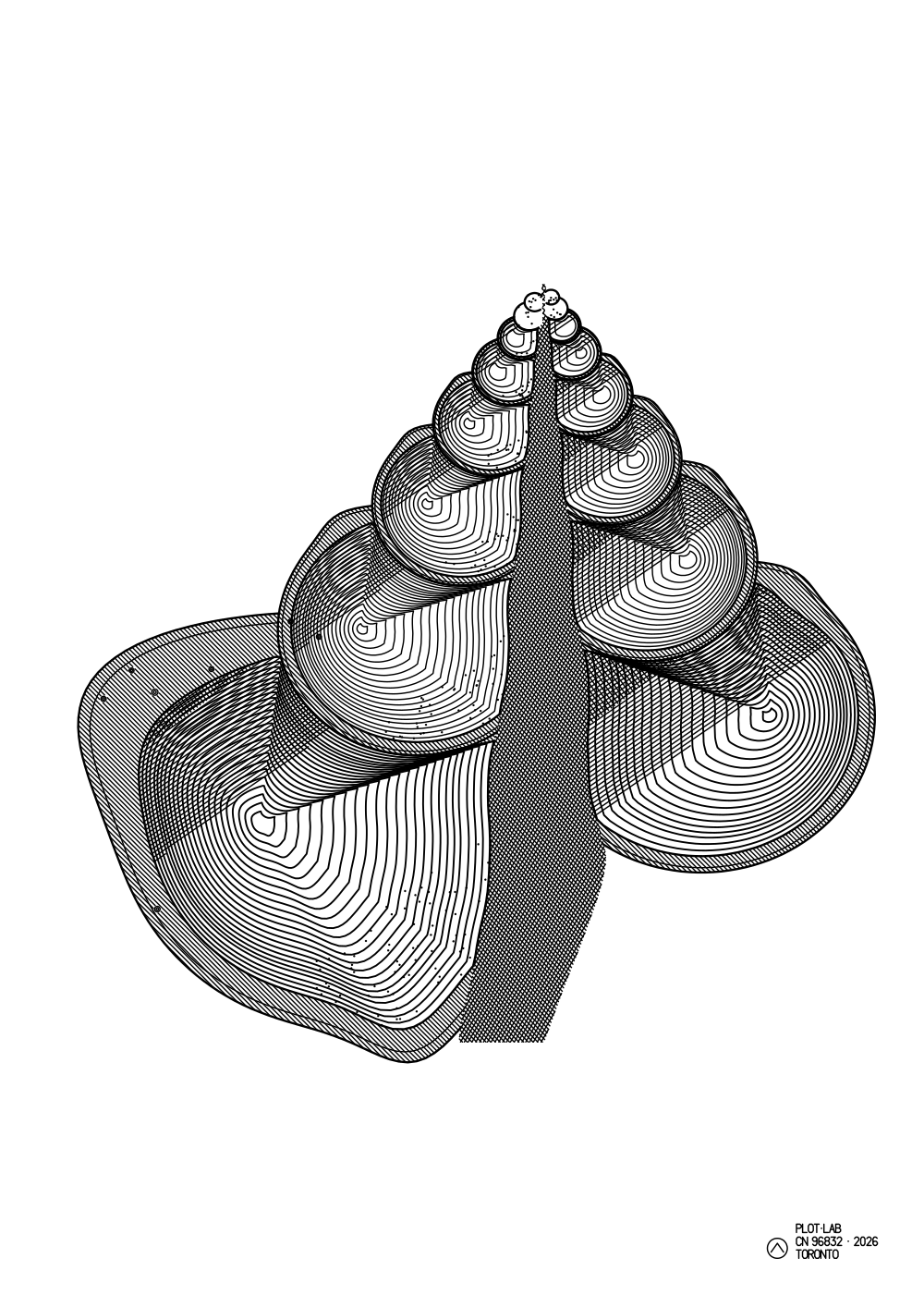
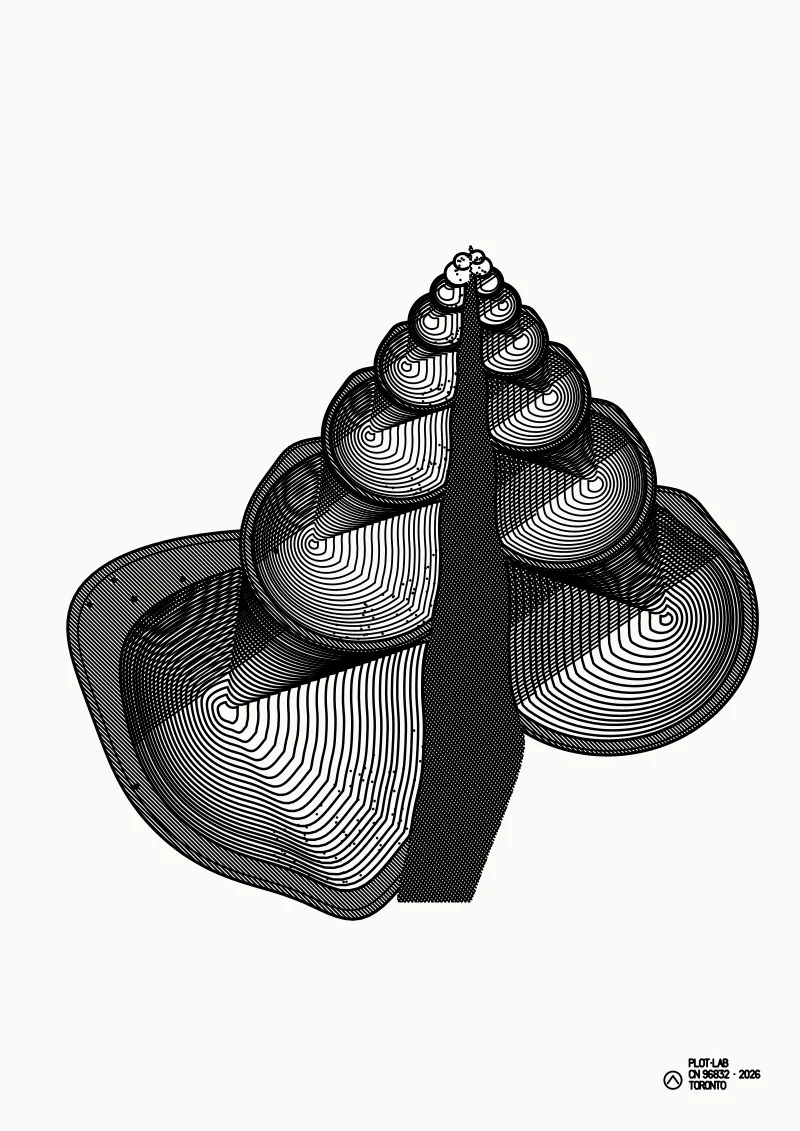
The hatching follows the turn of each whorl and closes up where the shell turns away from the light, so the form comes from line alone.
About 29 m of line, drawn in about 13 minutes.
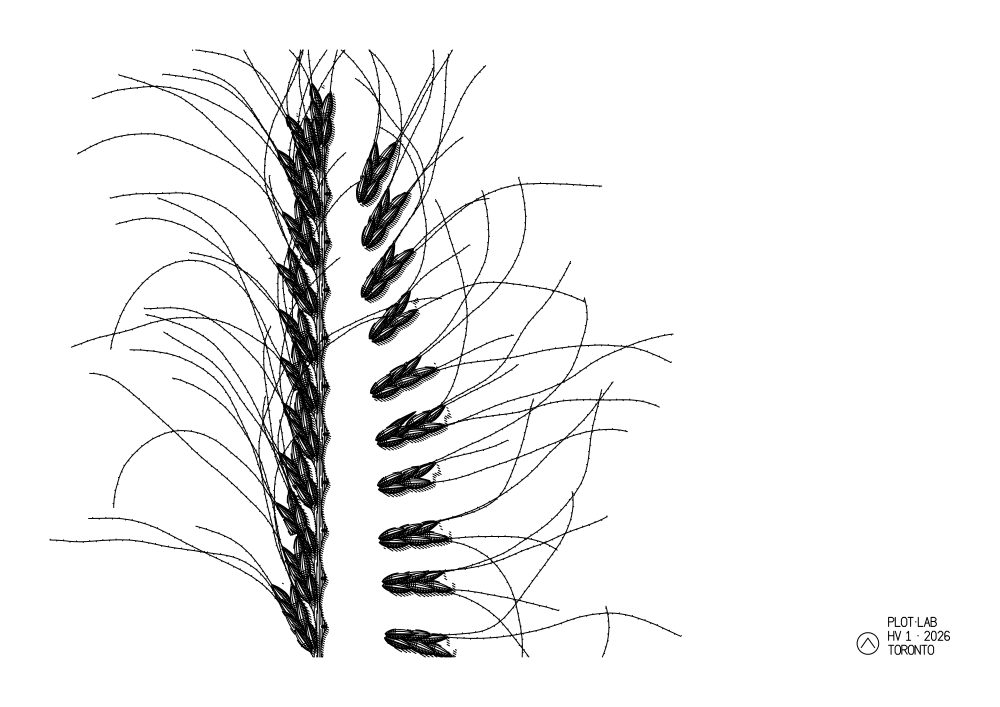
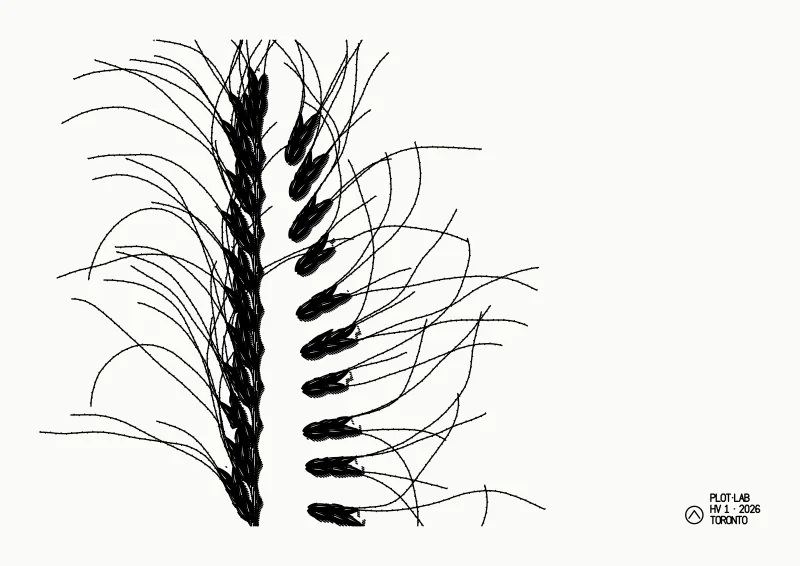
Each grain is drawn as its own small husk, and the awns sweep out past them in single strokes, as fine as the pen allows.
About 17 m of line, drawn in about 8 minutes.
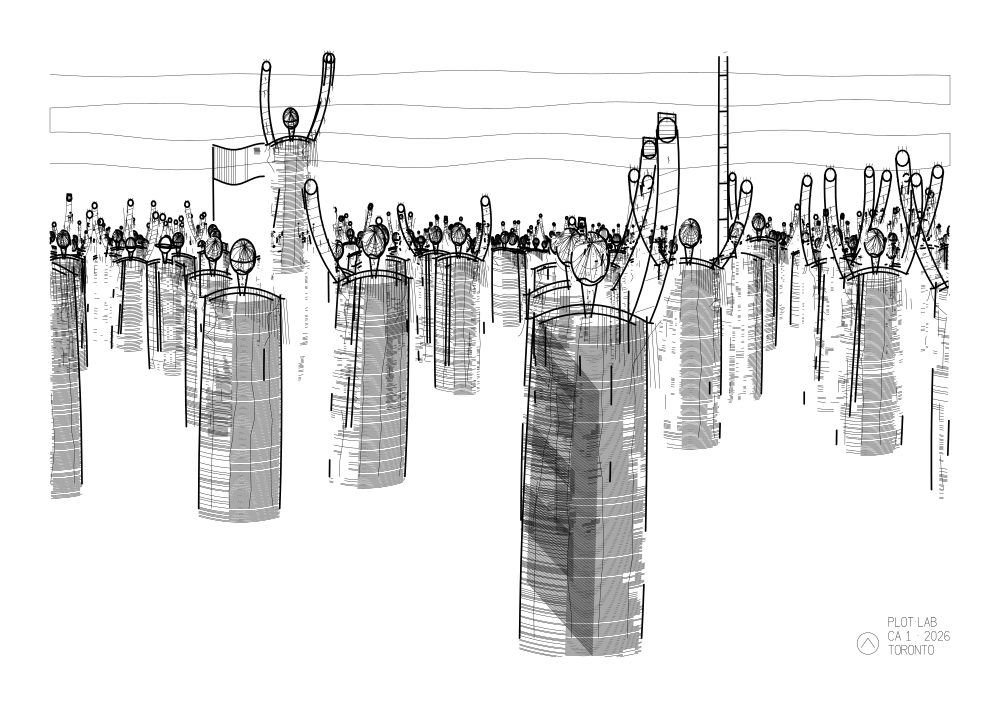
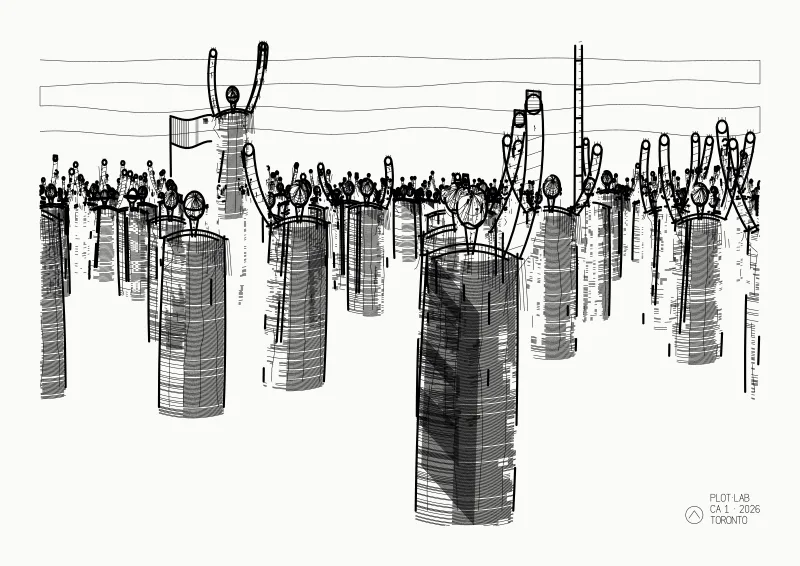
The nearest figure is drawn with hundreds of strokes and the farthest with three, so the depth comes from how much ink each one gets. Two pens, the fine one for the distance.
About 57 m of line, drawn in about 26 minutes.
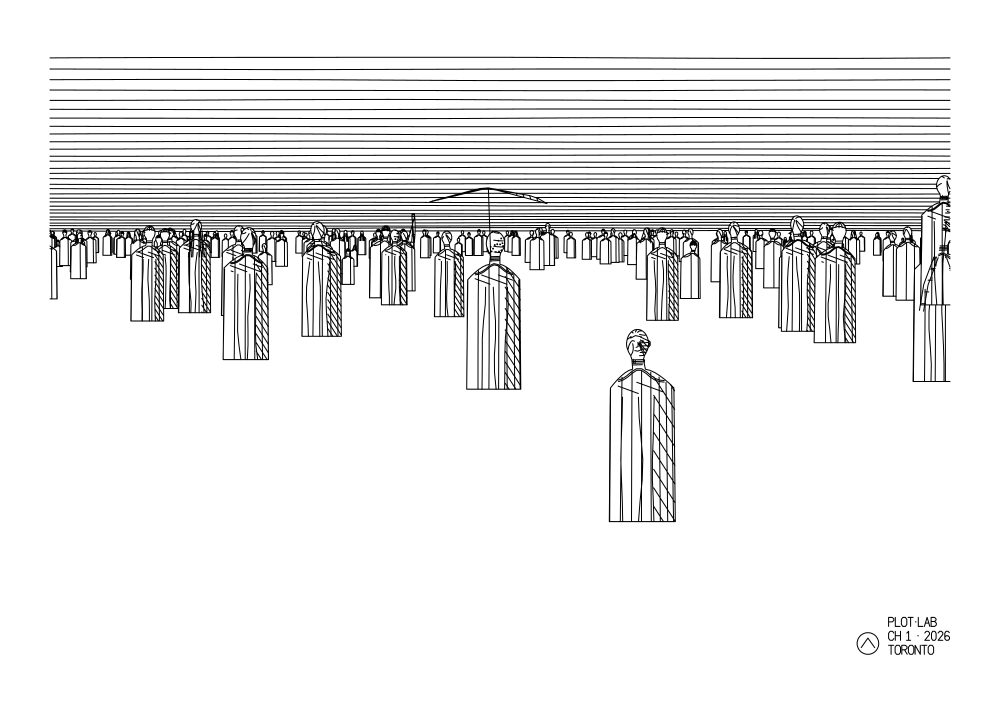
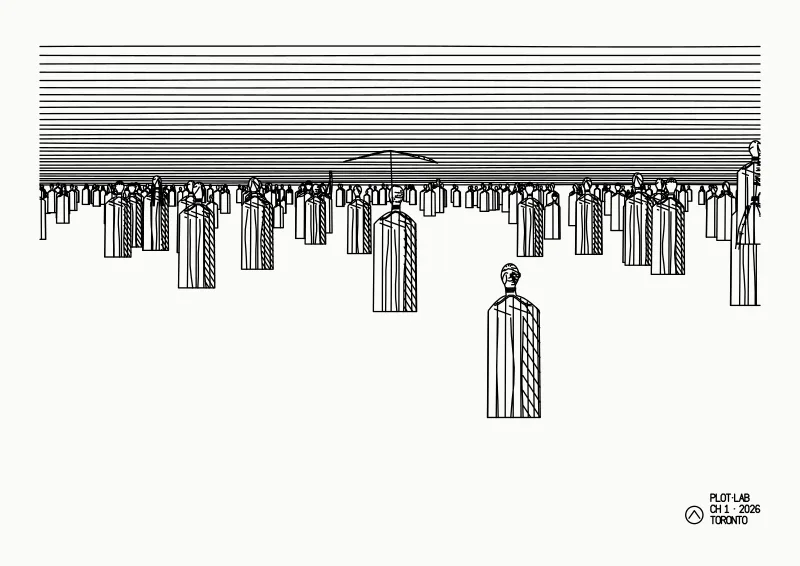
The figures are drawn at eye level, so heads line up along the horizon however far away they are — the rule that makes a crowd look like one.
About 17 m of line, drawn in about 8 minutes.
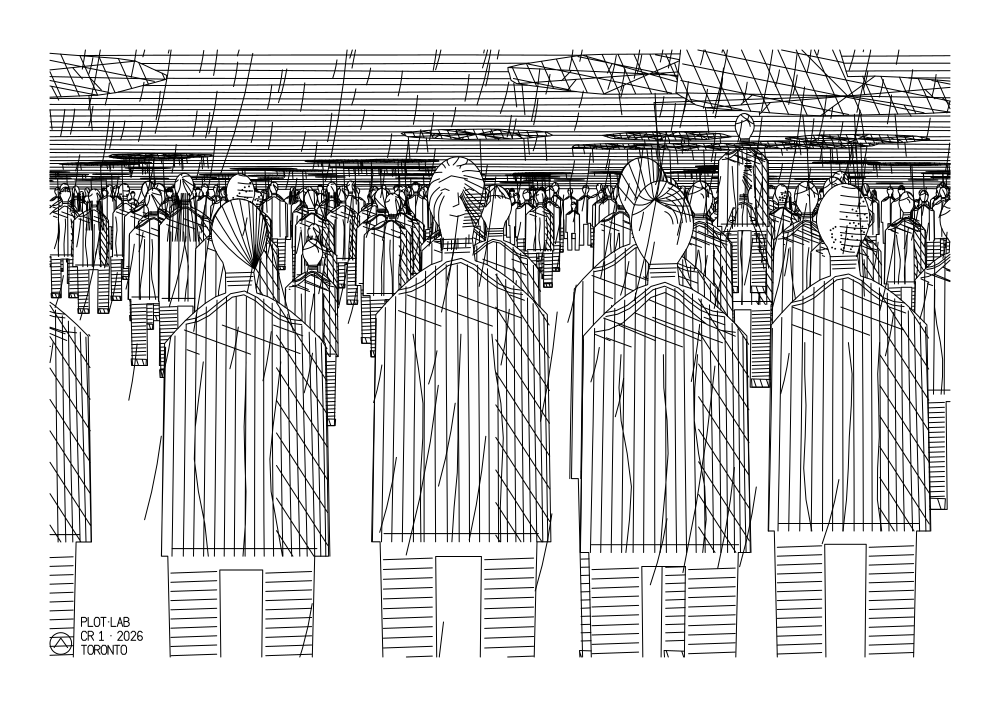
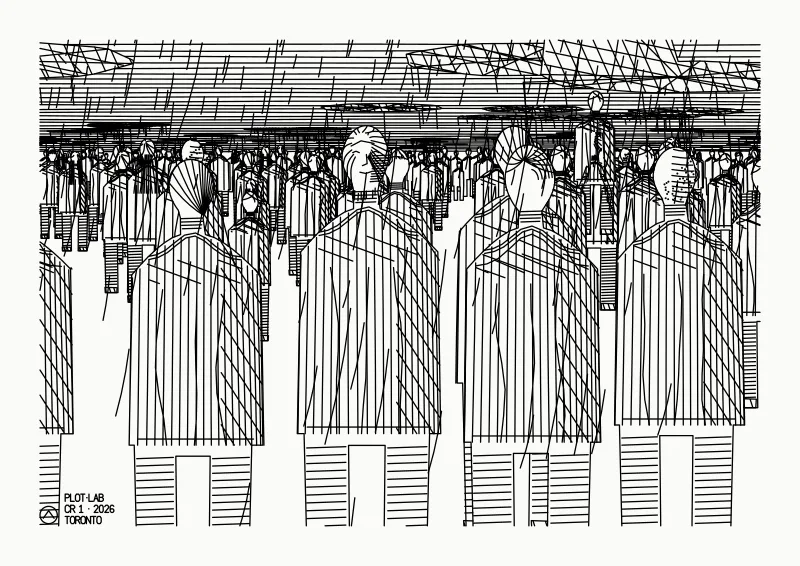
Every figure hides part of the one behind it, and the rain is drawn as short slanting strokes across all of them. The claustrophobia is in the overlap.
About 40 m of line, drawn in about 18 minutes.
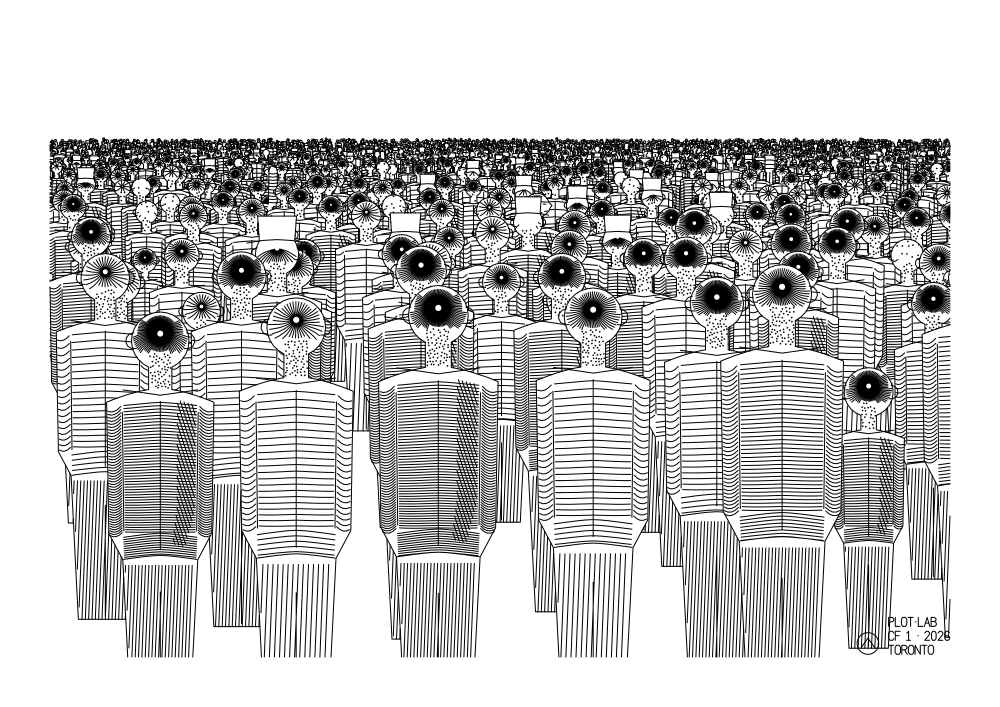
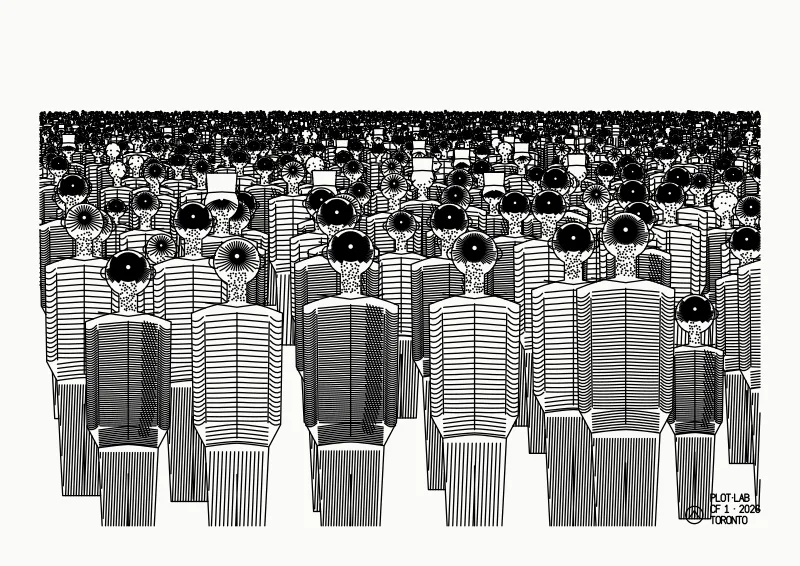
The densest of the crowds, and the darkest sheet in the shop. The eyes are the only solid marks; everything else is hatching that thins with distance.
About 50 m of line, drawn in about 23 minutes.
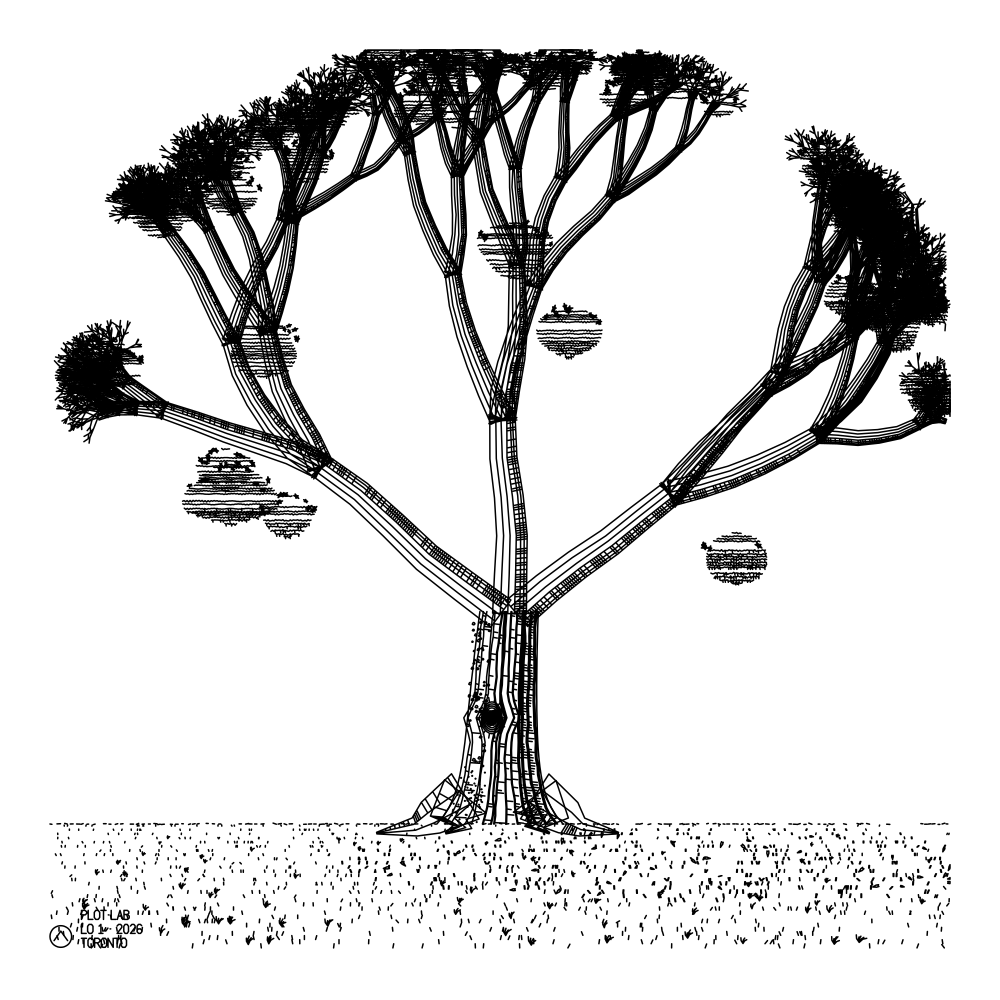
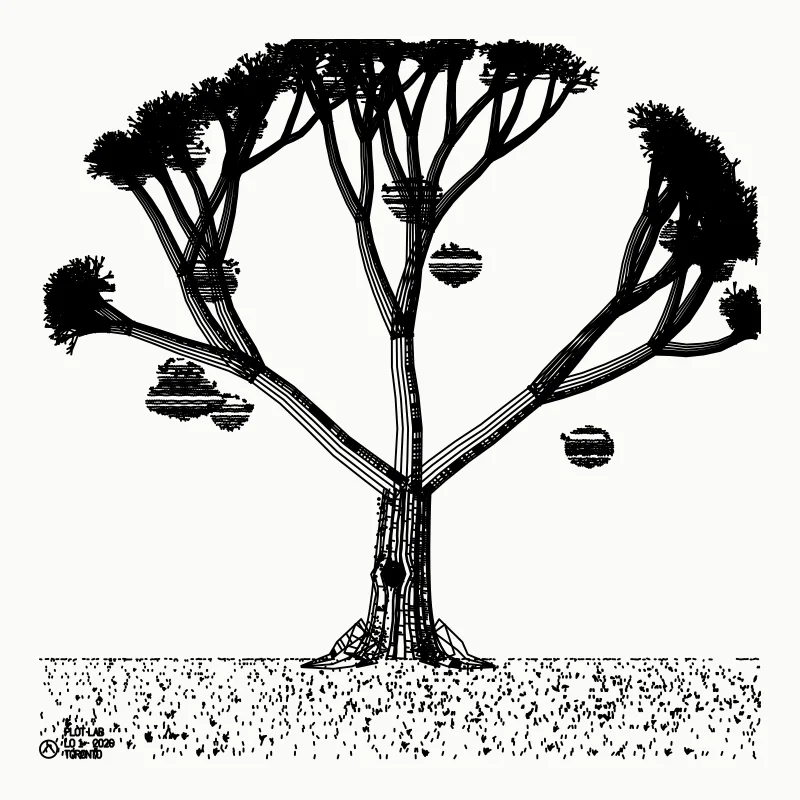
The clumps of leaf are drawn as dense scribbles and the branches as clean lines between them, so the tree reads as mass and structure at once.
About 44 m of line, drawn in about 20 minutes.
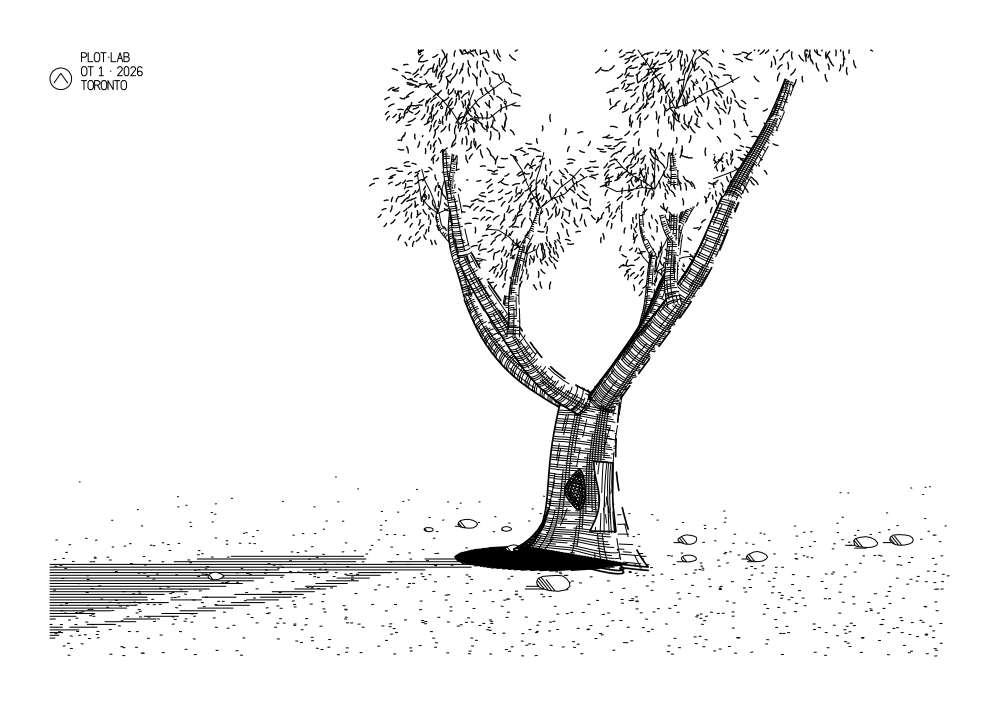
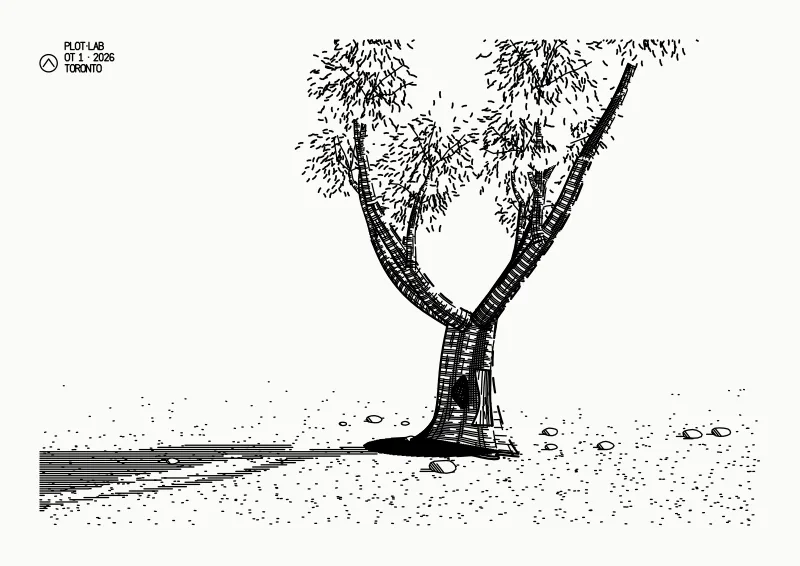
The leaves are short paired strokes, the trunk is drawn with its twist, and the ground is stippled so the shadow reads as the only dark shape.
About 12 m of line, drawn in about 6 minutes.
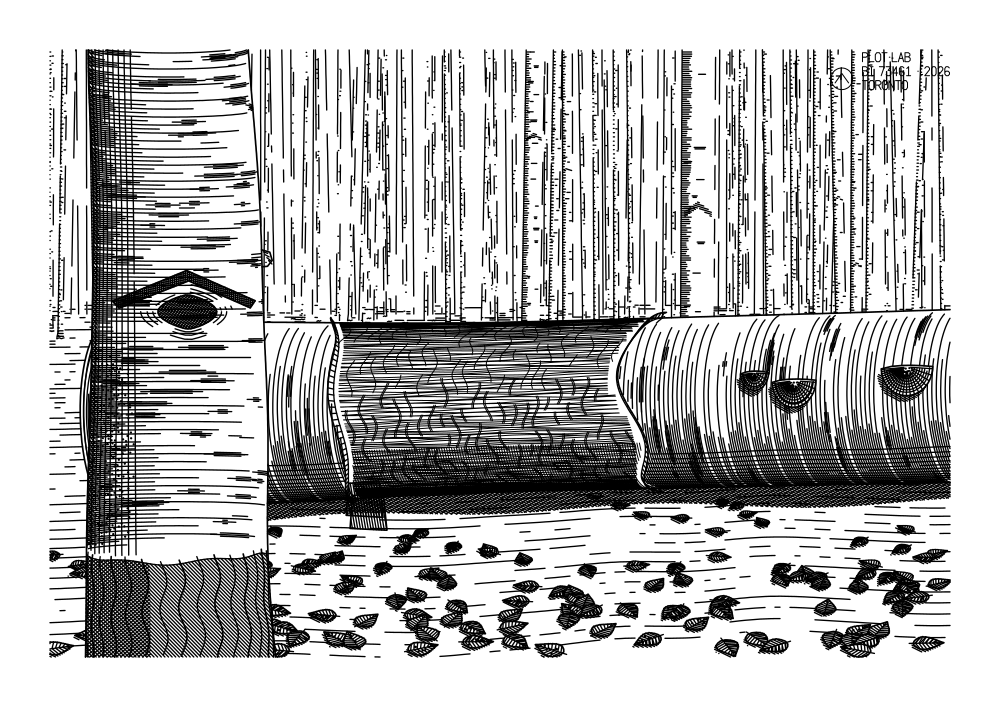
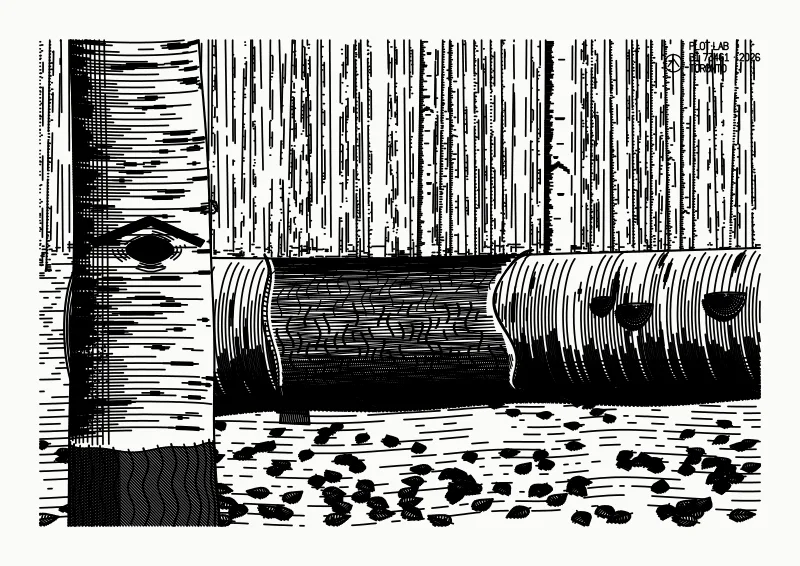
The bark is drawn as short horizontal ticks that get sparser with distance until the far trunks are nearly blank paper. Three pens.
About 54 m of line, drawn in about 25 minutes.
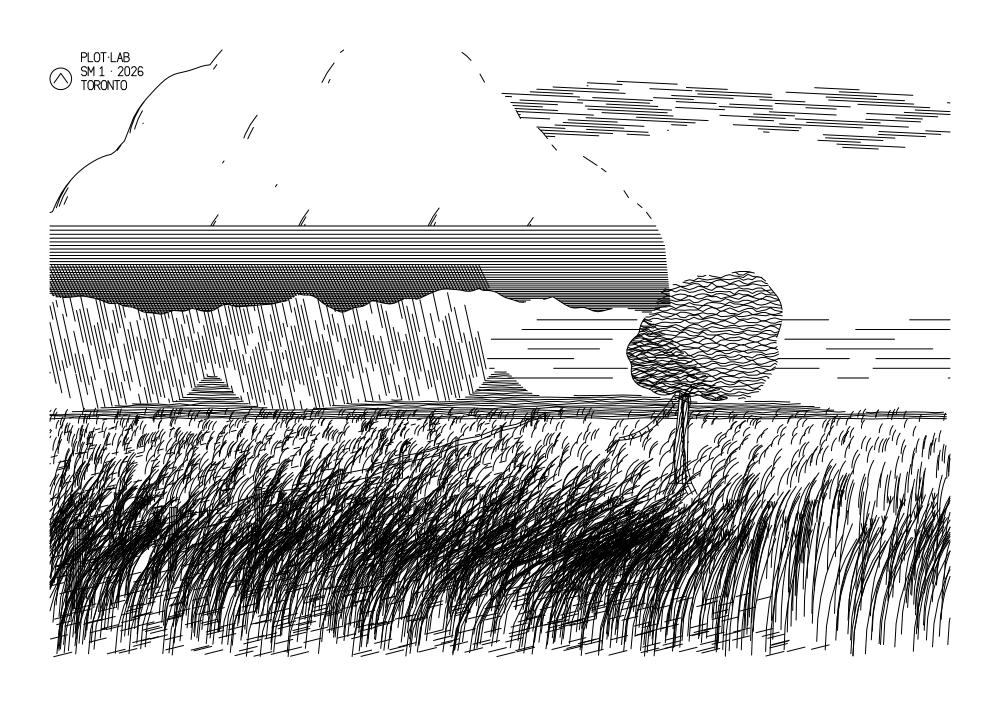
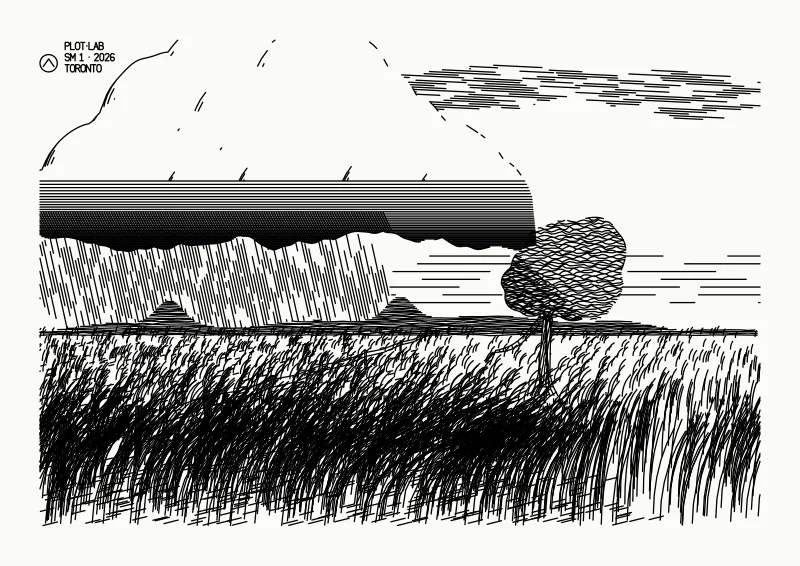
The grass is thousands of leaning strokes and the rain is straight ones; between them, the tree is the one thing drawn with an outline.
About 62 m of line, drawn in about 29 minutes.
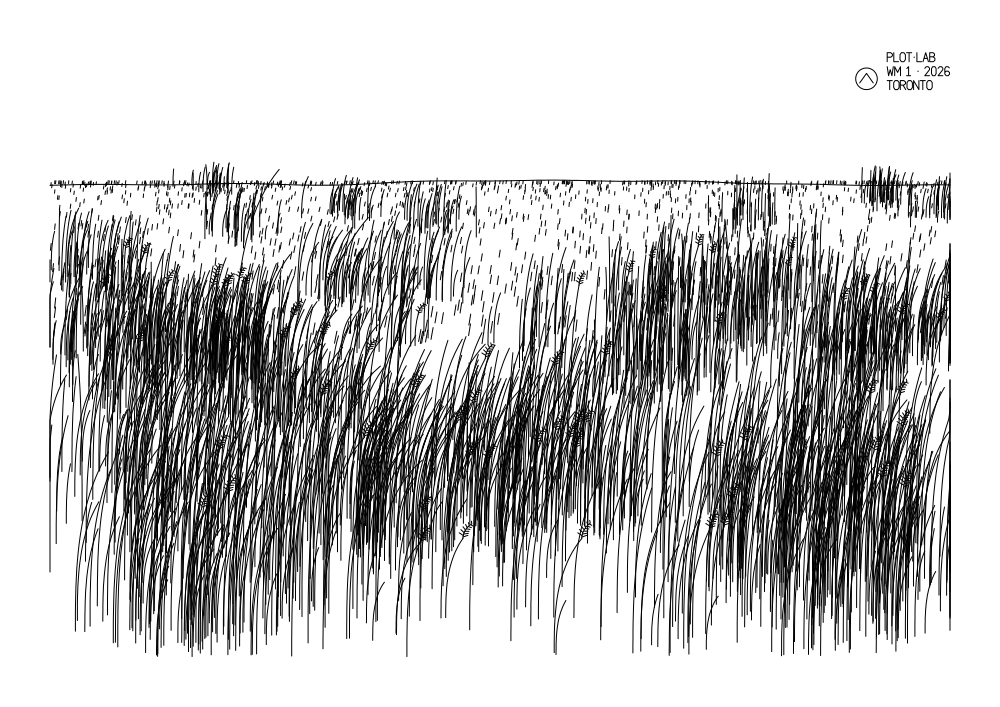
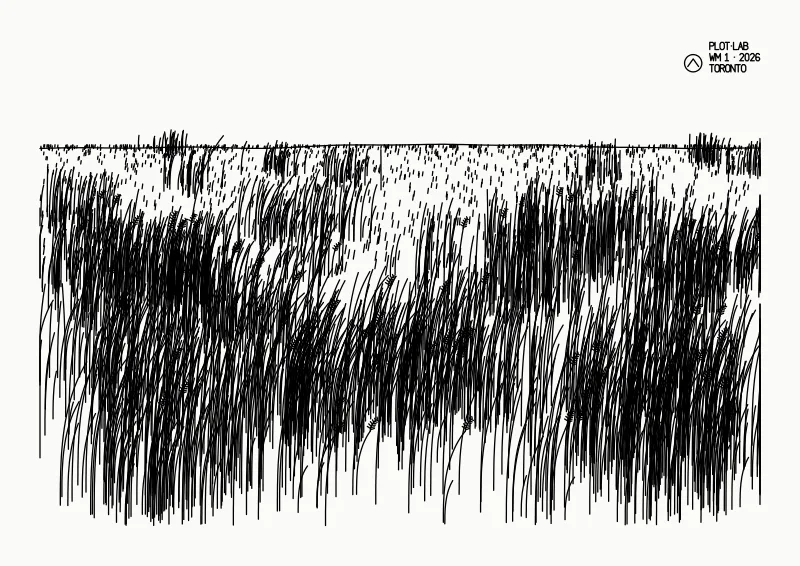
Every blade answers to the same wind, which is why the whole field combs one way instead of scattering. The pen stays on the paper the better part of an hour.
About 68 m of line, drawn in about 32 minutes.
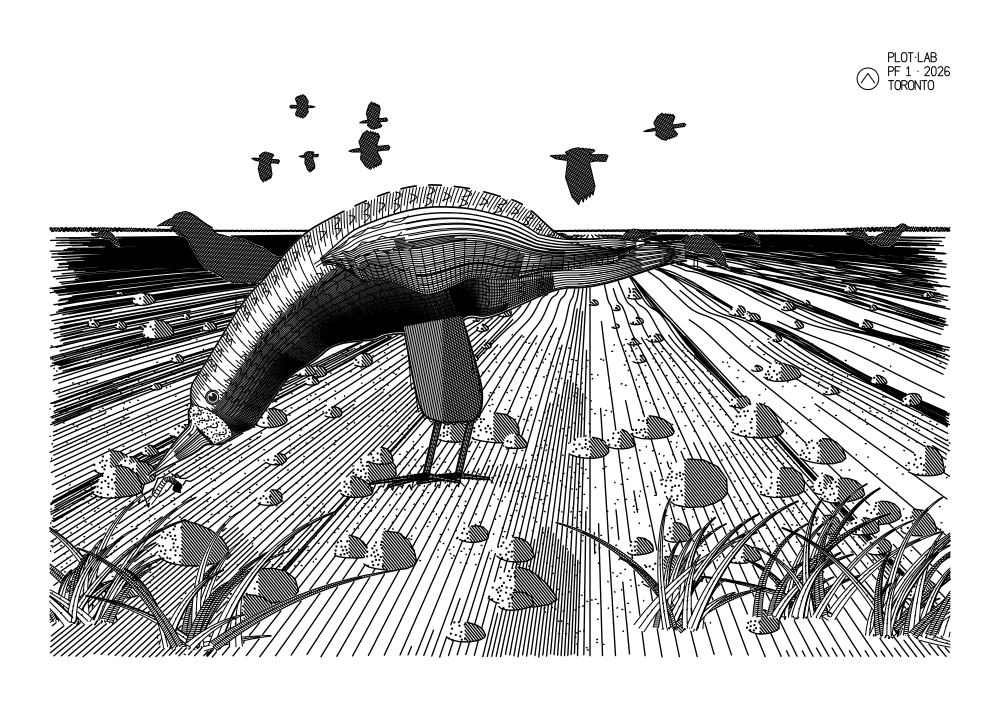
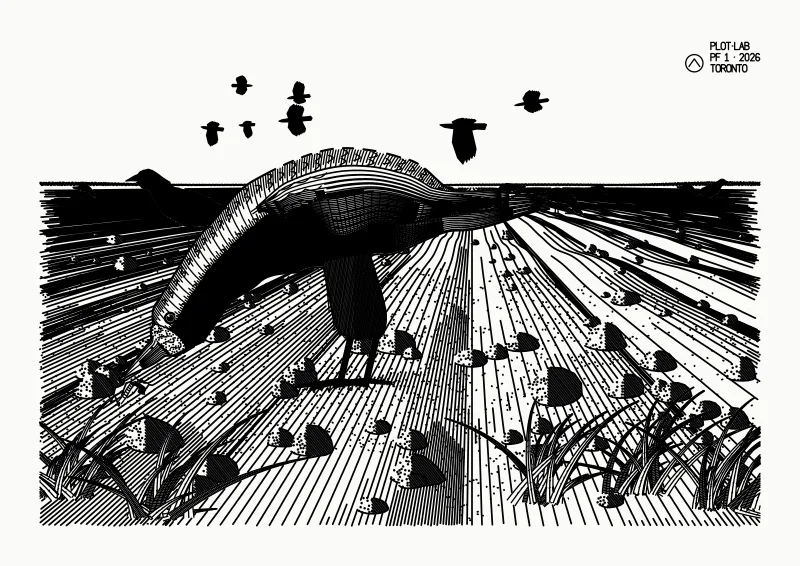
The furrows are the perspective: they converge, and everything else is placed on them. The near bird is drawn feather by feather; the far ones are silhouettes.
About 54 m of line, drawn in about 25 minutes.
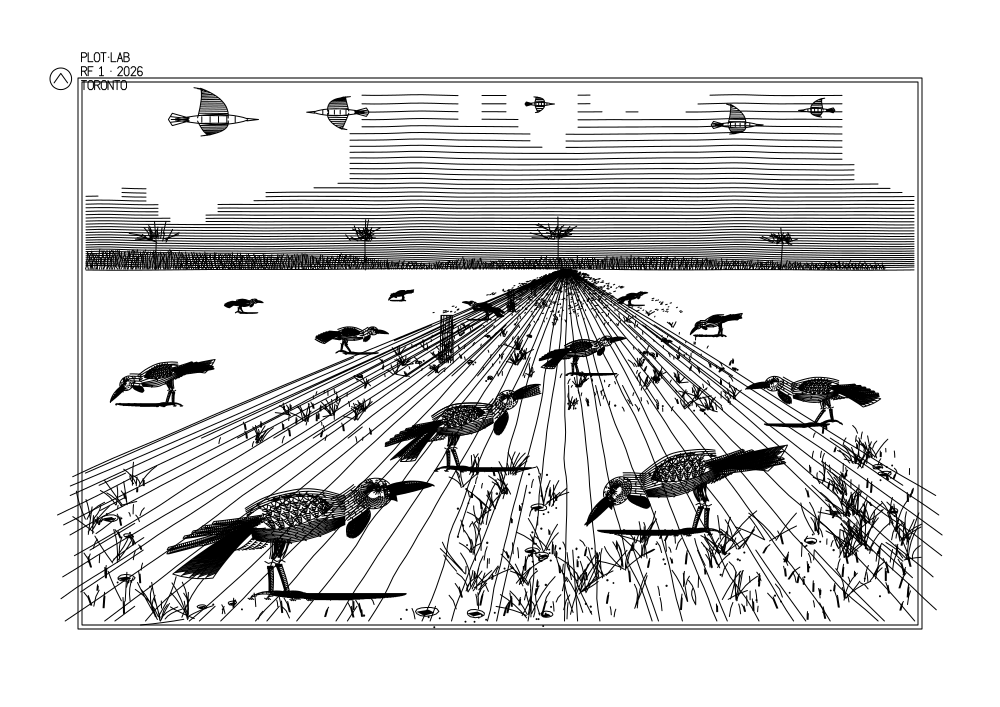
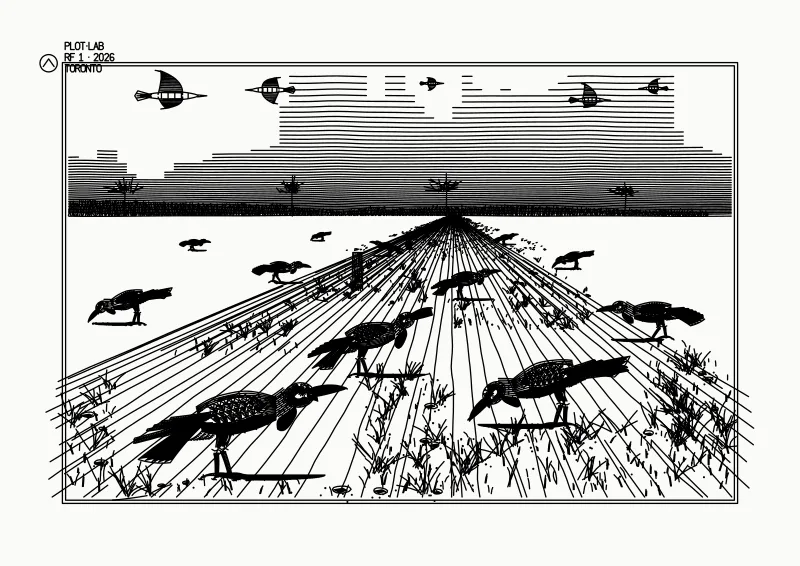
The sky is drawn as horizontal bands that break for the clouds, the way an engraver would rule it. The ravens are the only black shapes.
About 43 m of line, drawn in about 20 minutes.
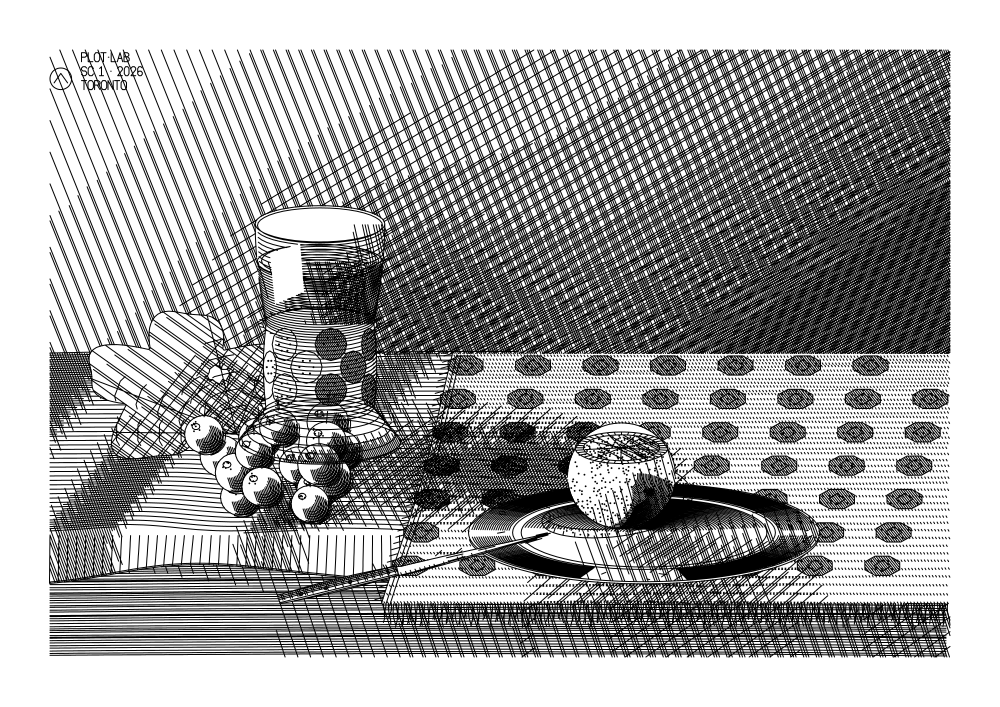
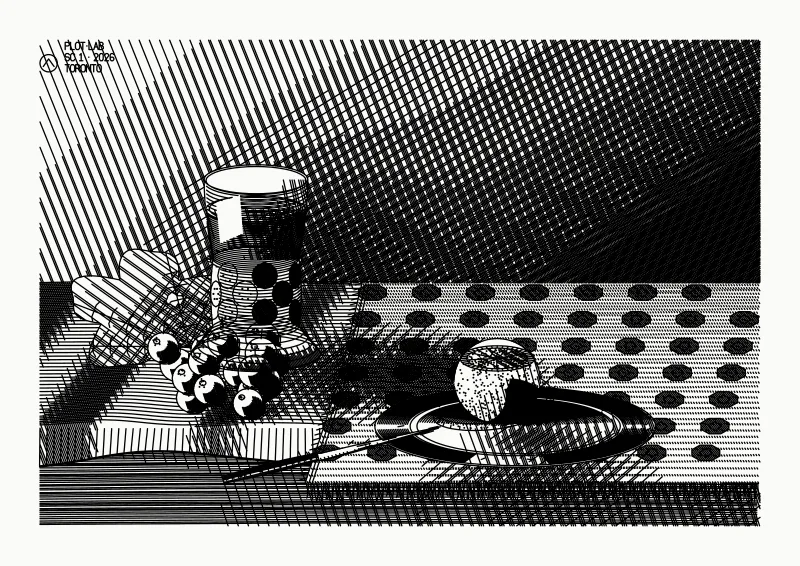
The wall is drawn in crosshatching so dense it becomes a tone, and the objects sit in front of it in single-direction shading. The spots on the cloth are drawn one by one.
About 91 m of line, drawn in about 42 minutes.
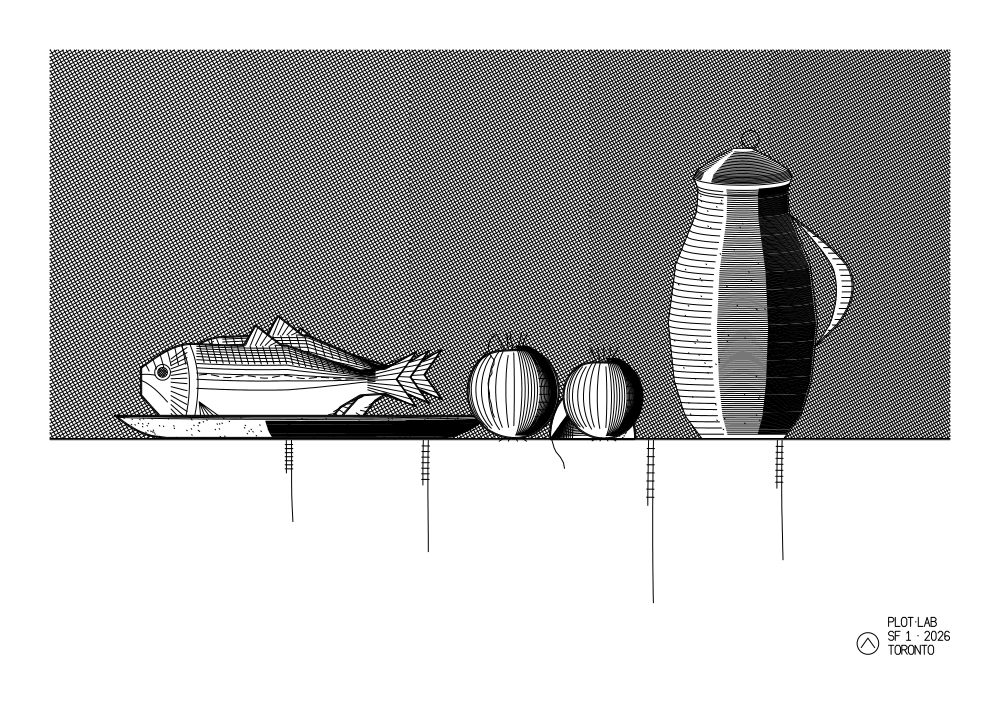
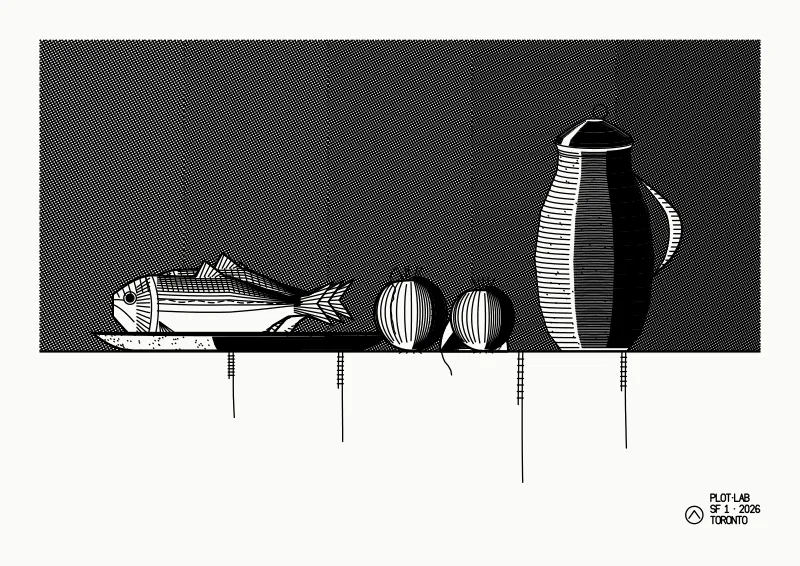
The jug is shaded around its curve and the fish along its scales, so each object is hatched in the direction of its own surface. The table is left almost white.
About 68 m of line, drawn in about 31 minutes.
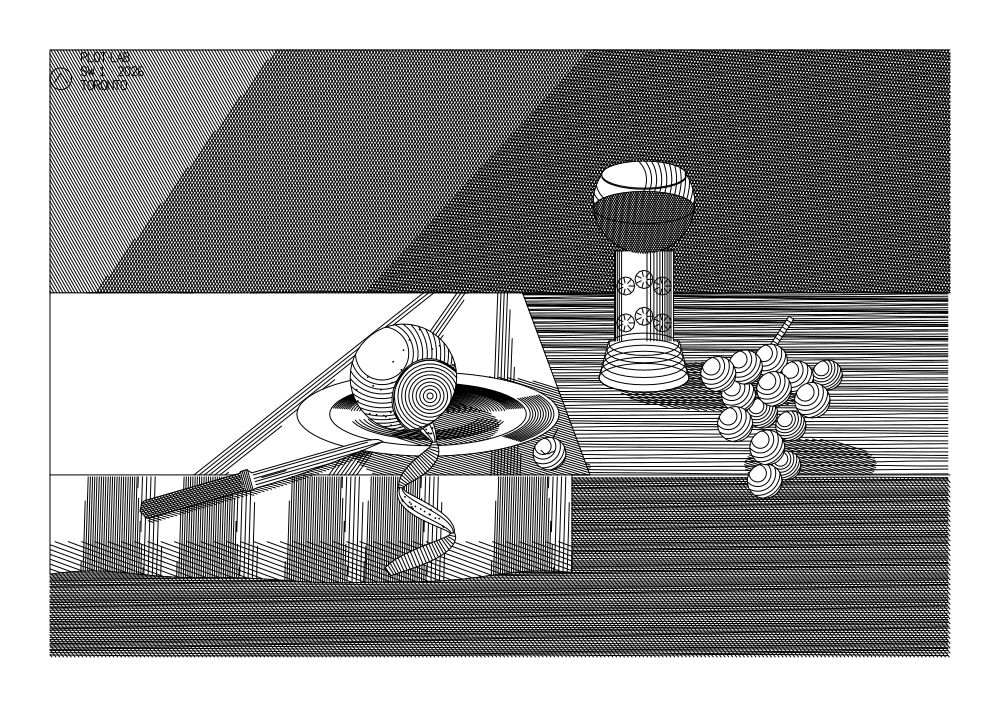
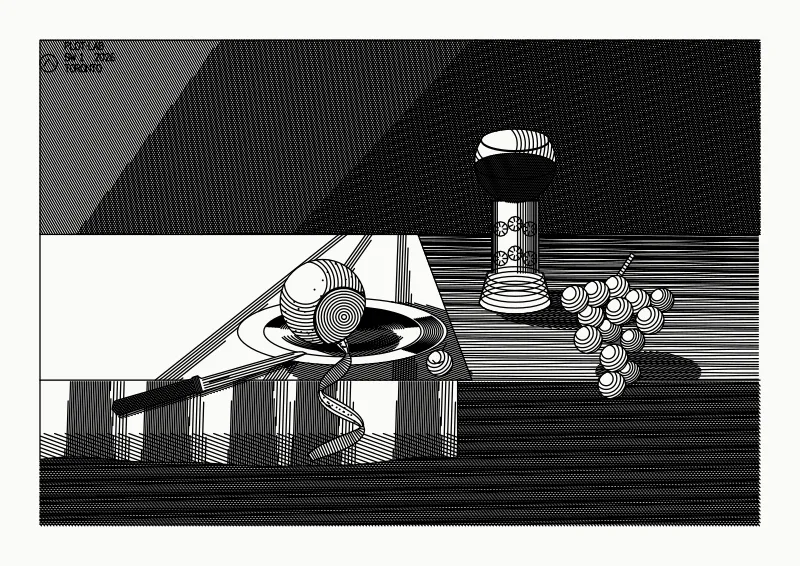
The lemon peel is one continuous spiral line. The light comes from one side, and every shadow on the sheet agrees about where.
About 103 m of line, drawn in about 48 minutes.
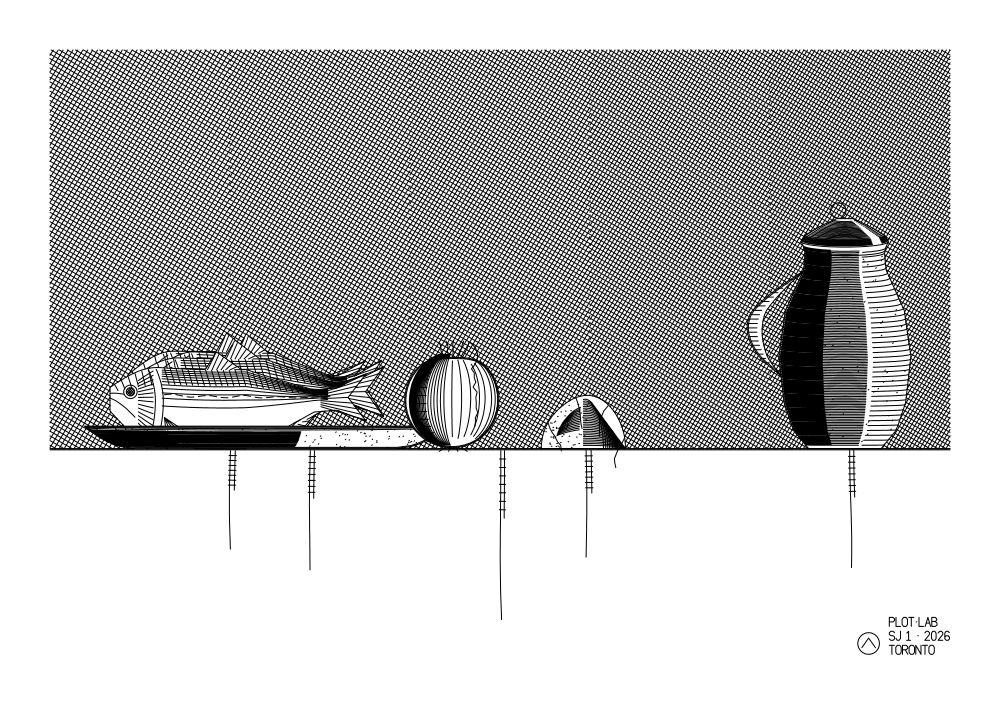
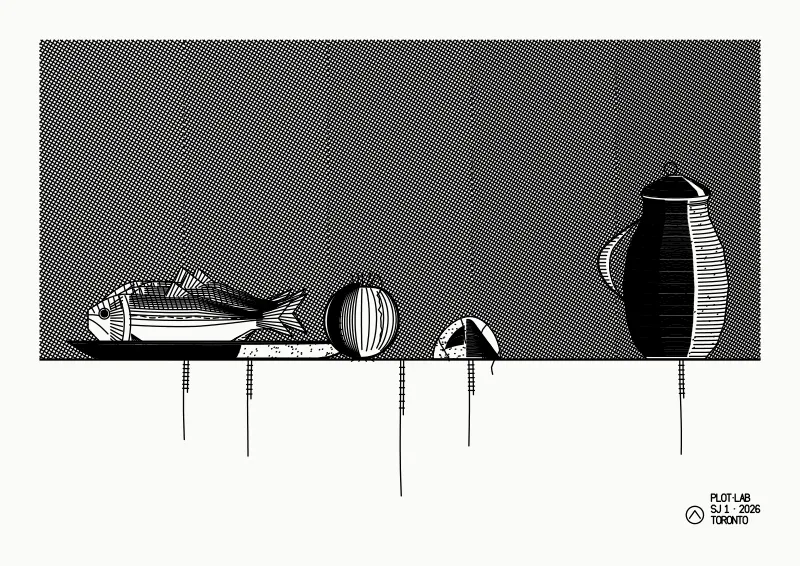
The second of the fish tables, arranged more sparsely. The stripes on the jug follow its curve, which is what makes it round.
About 58 m of line, drawn in about 27 minutes.
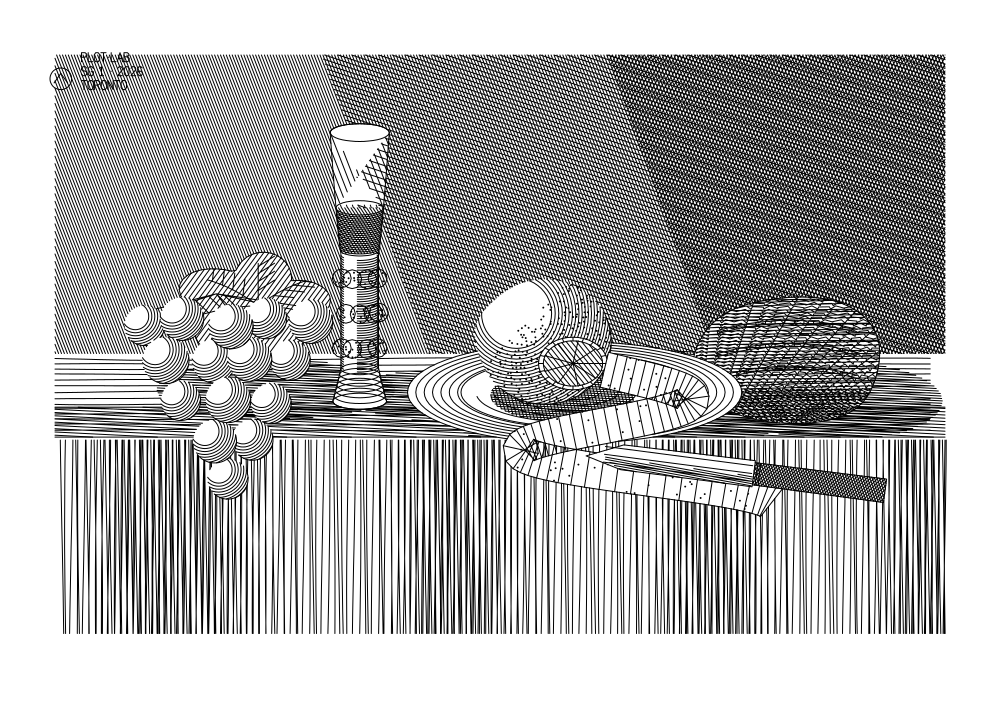
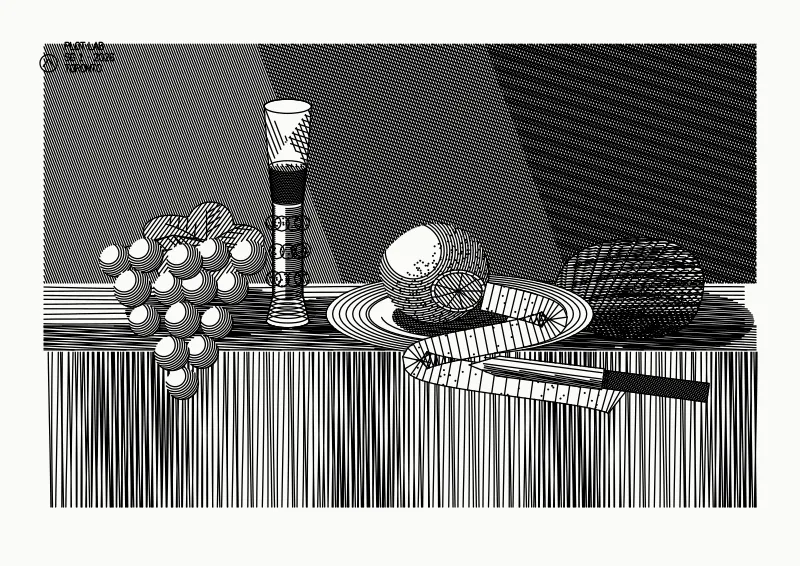
The grapes are each a small shaded sphere and the loaf is hatched across its crust. The whole table is drawn in one direction, which holds the objects together.
About 76 m of line, drawn in about 35 minutes.
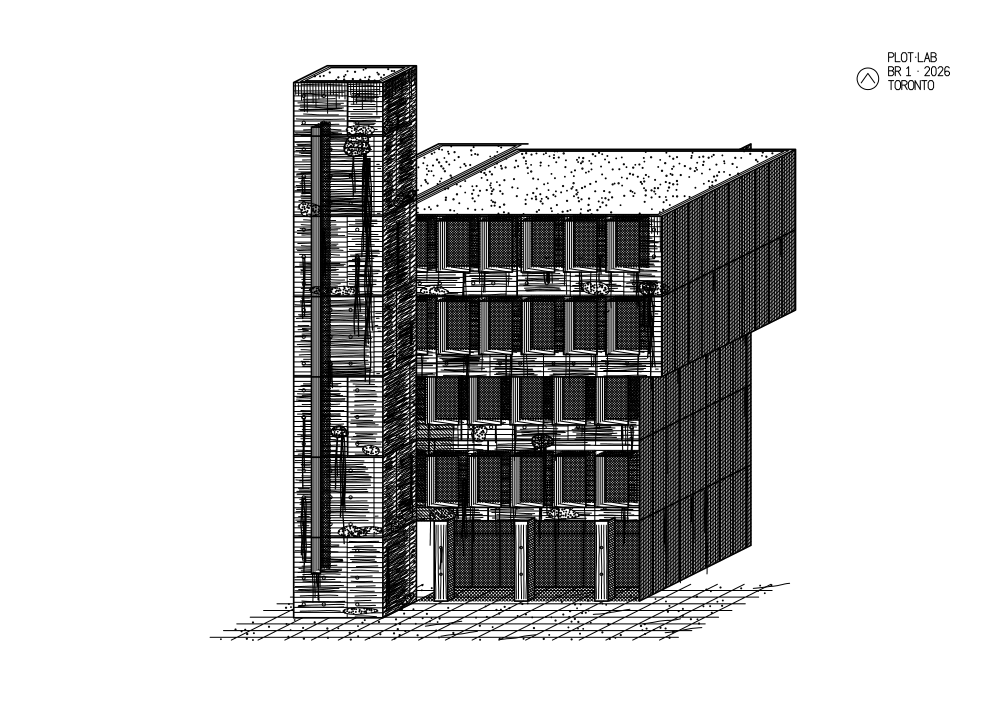
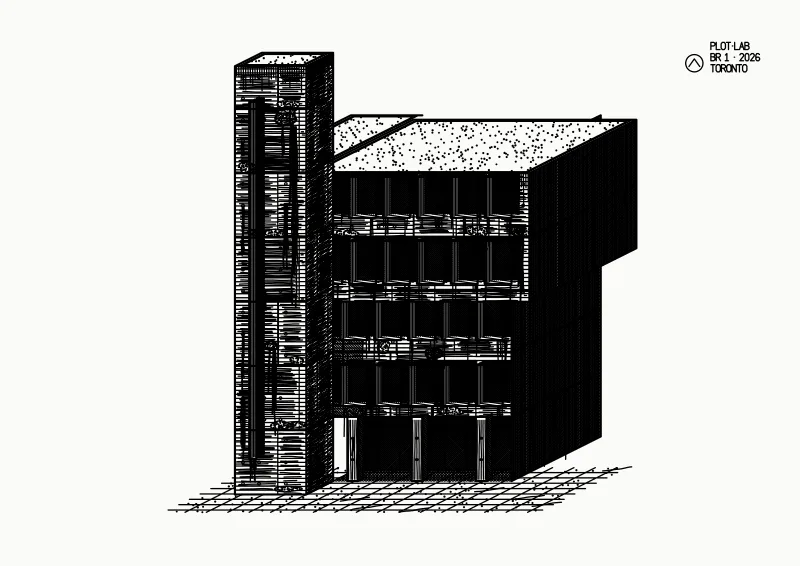
The concrete is stippled and the recesses are hatched dark, so the building reads as poured rather than built. Three pens, the heaviest for the shadow.
About 66 m of line, drawn in about 31 minutes.
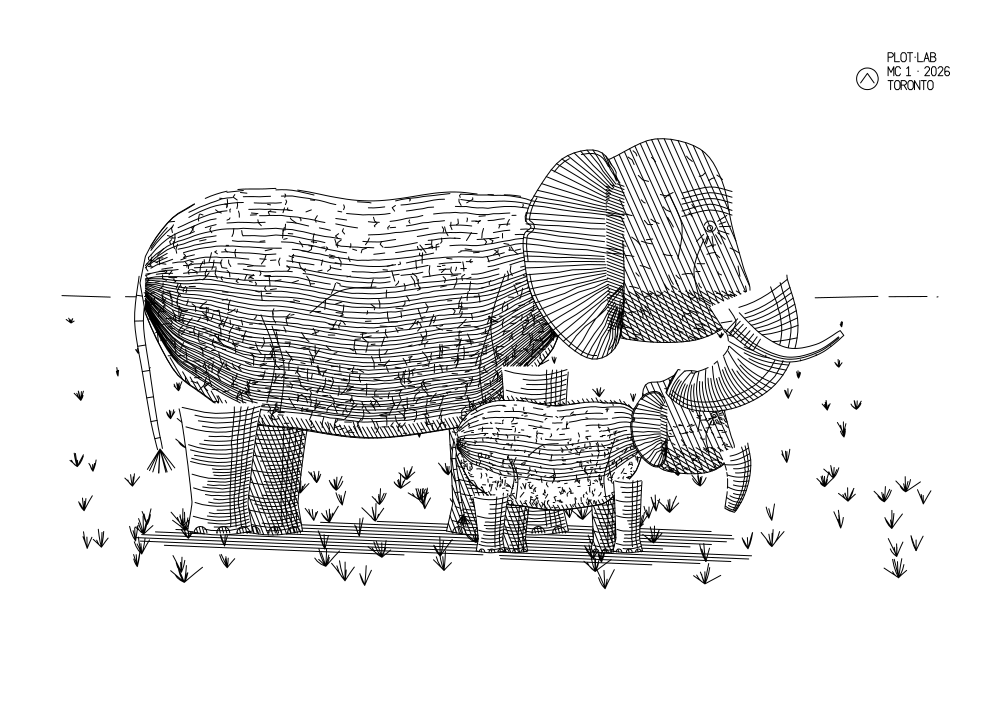
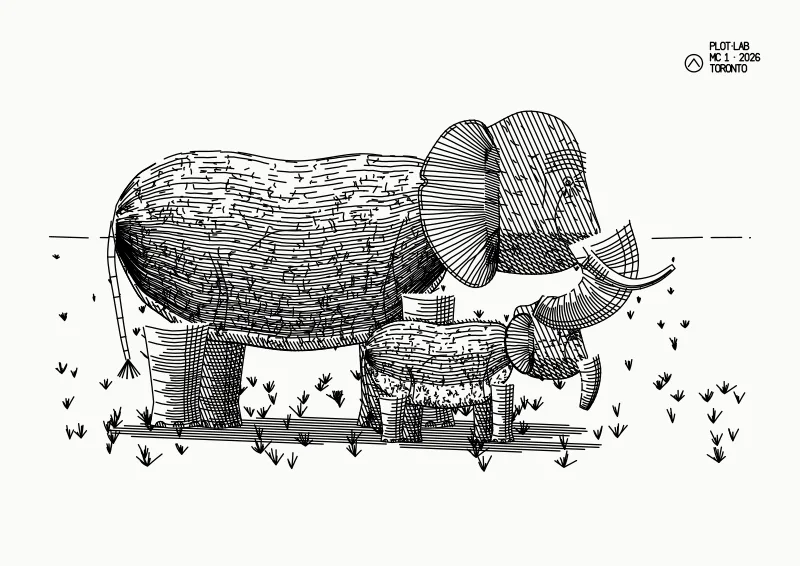
The hide is drawn as a field of short strokes that wrinkle around the joints, and the two animals overlap so that the calf is partly hidden — which is how it walks.
About 21 m of line, drawn in about 10 minutes.
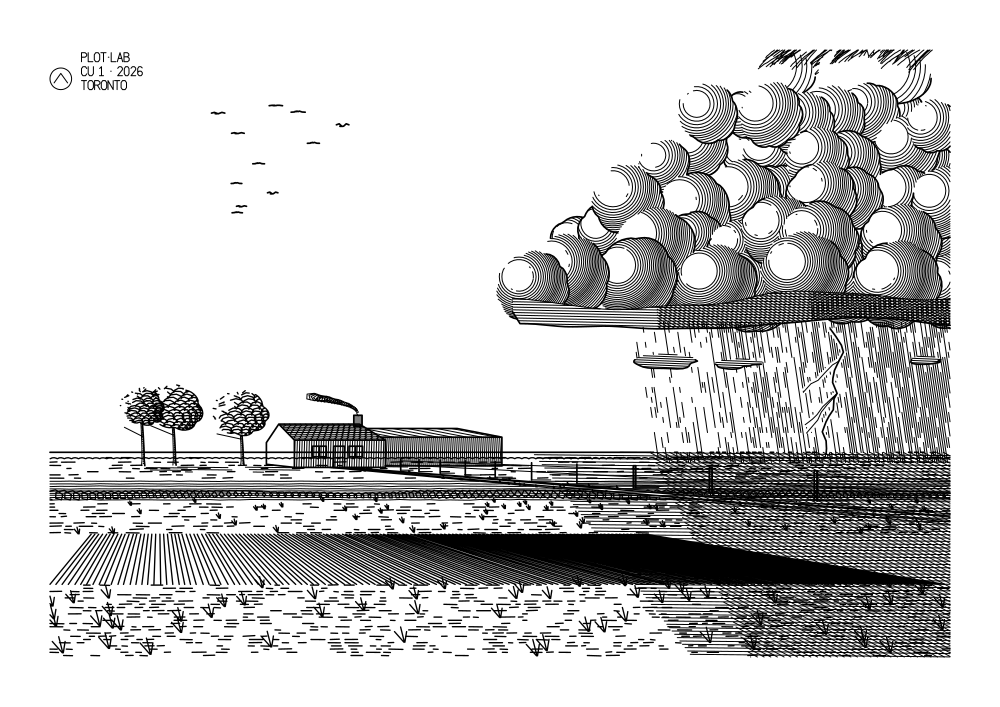
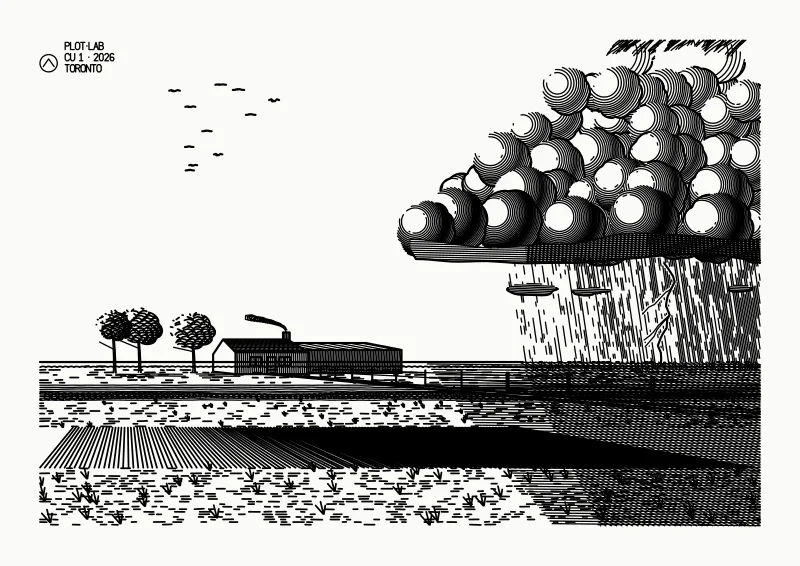
The cloud is drawn as round masses shaded on one side and left white on the other, and the rain as slanting lines beneath. The farmhouse is tiny, and that is the point.
About 43 m of line, drawn in about 20 minutes.
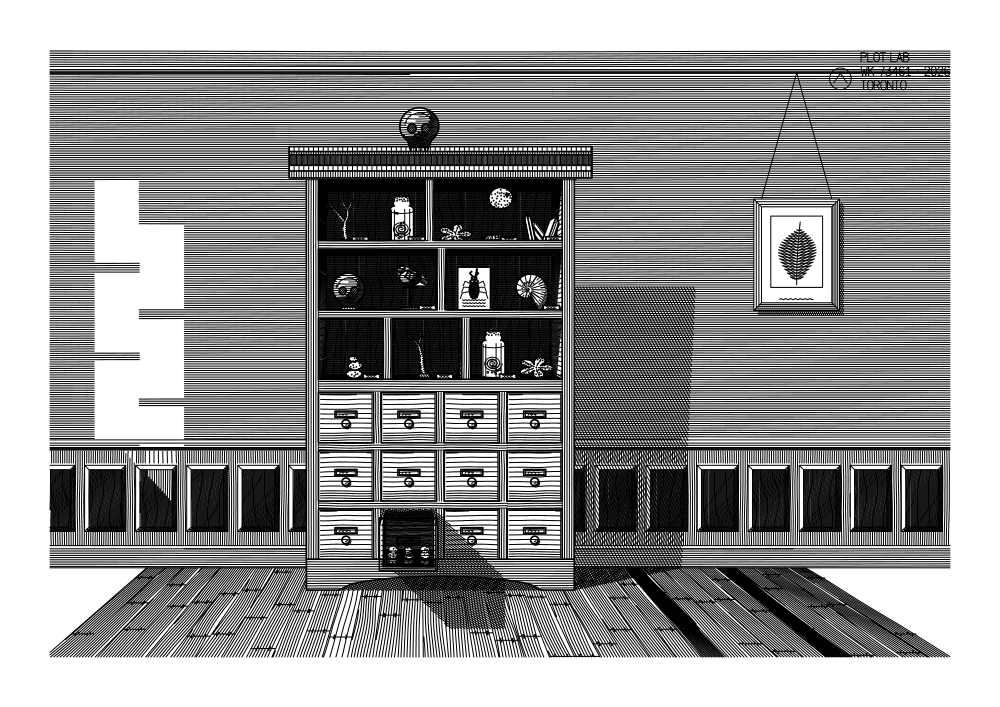
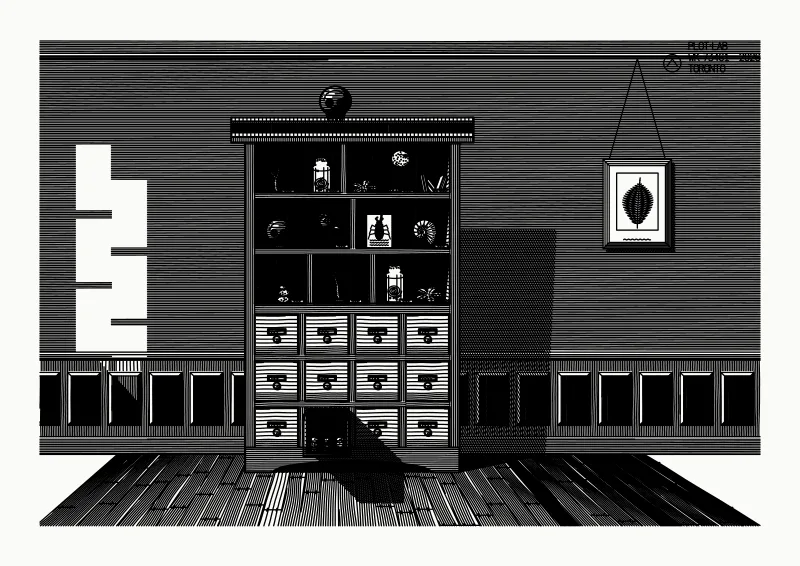
The room is drawn in perspective with the floorboards leading in, and the wall is hatched so the light from the window reads as a lighter patch. Every jar has something in it.
About 114 m of line, drawn in about 53 minutes.
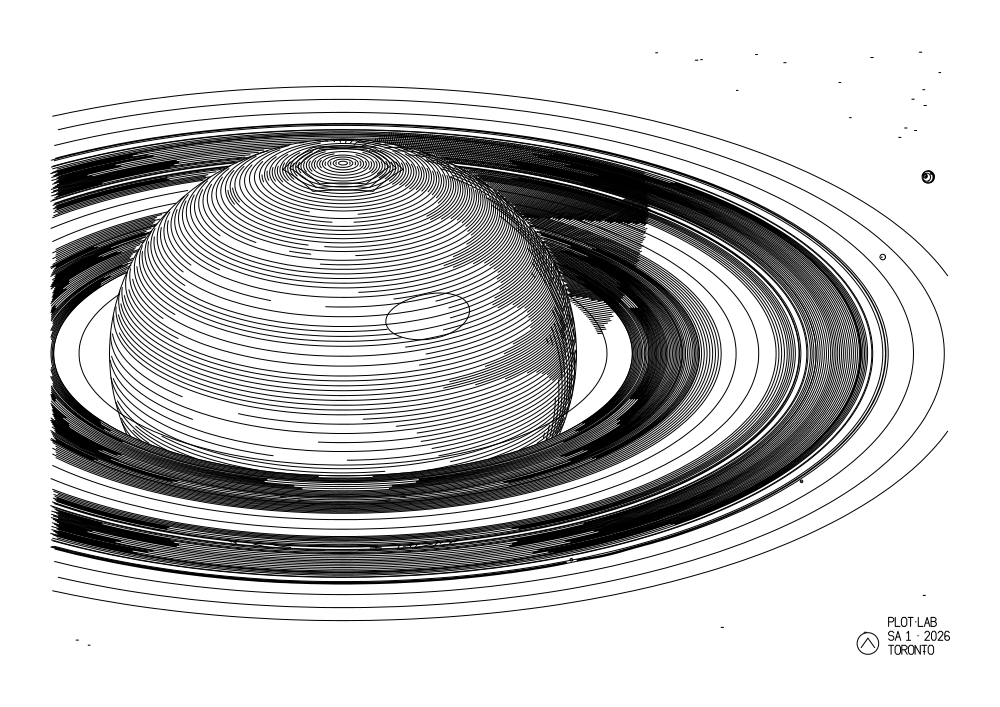
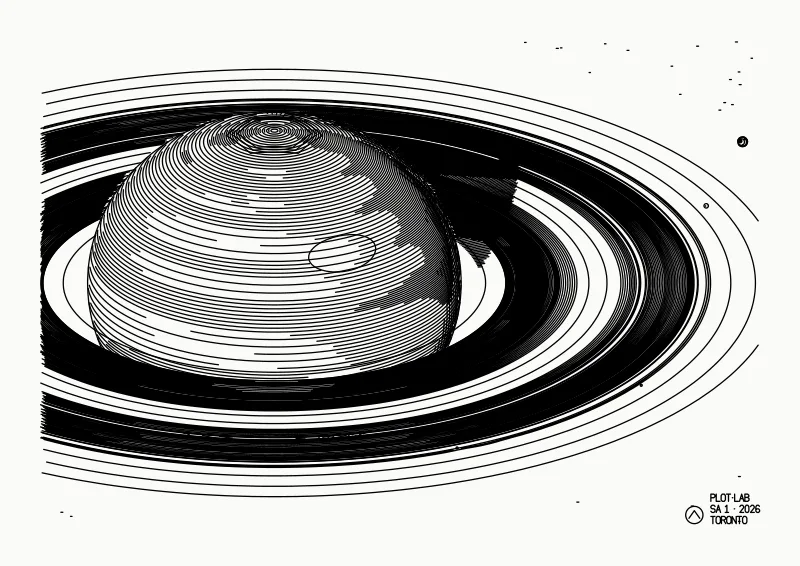
The rings are drawn as concentric lines whose spacing sets the tone, so the dense bands read dark and the gaps read as gaps. The planet’s shadow falls across them.
About 51 m of line, drawn in about 24 minutes.
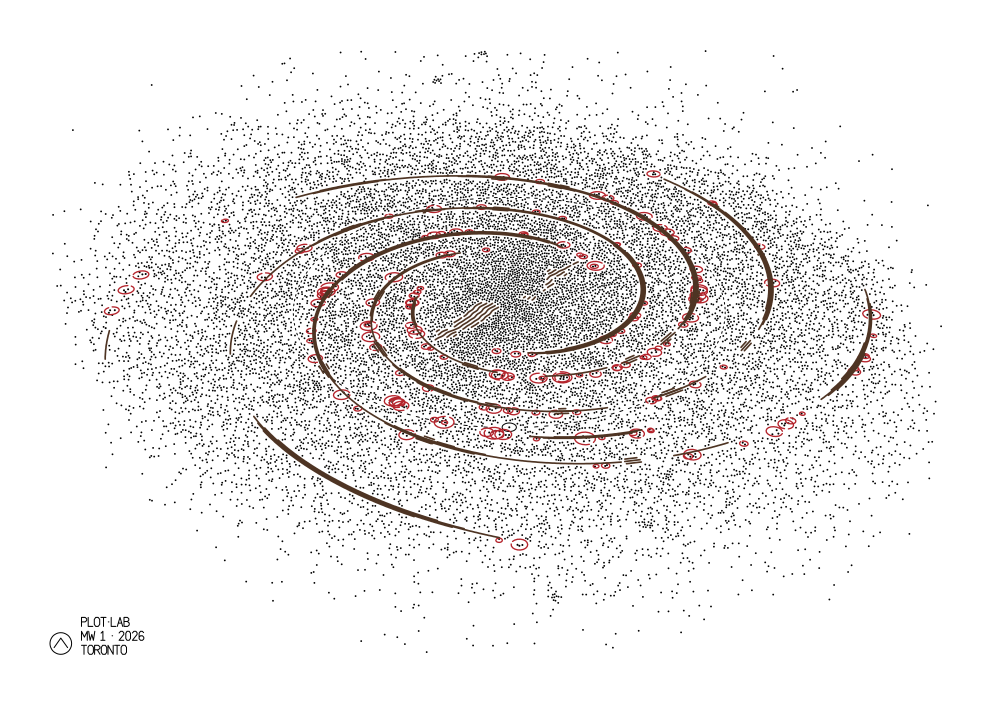
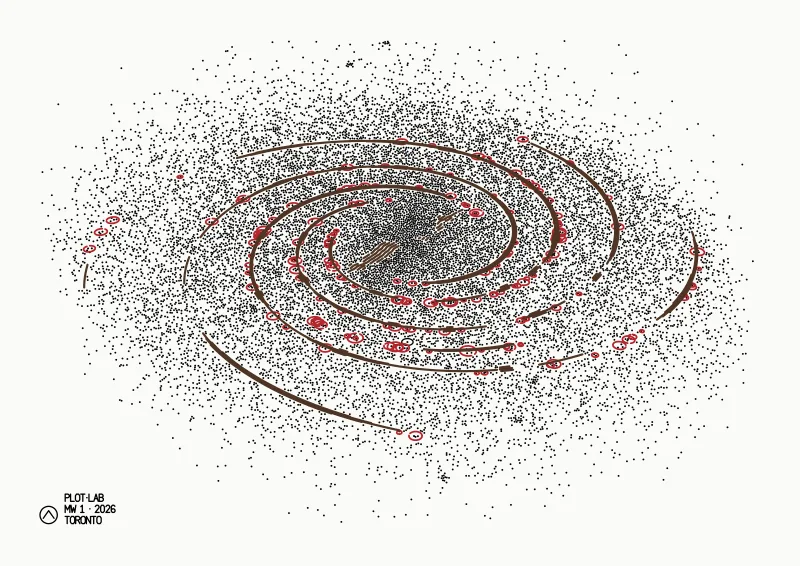
Nothing here is a line except the arms. The tone is made entirely of dots, closer together toward the centre, until the paper disappears.
About 16 m of line, drawn in about 8 minutes.
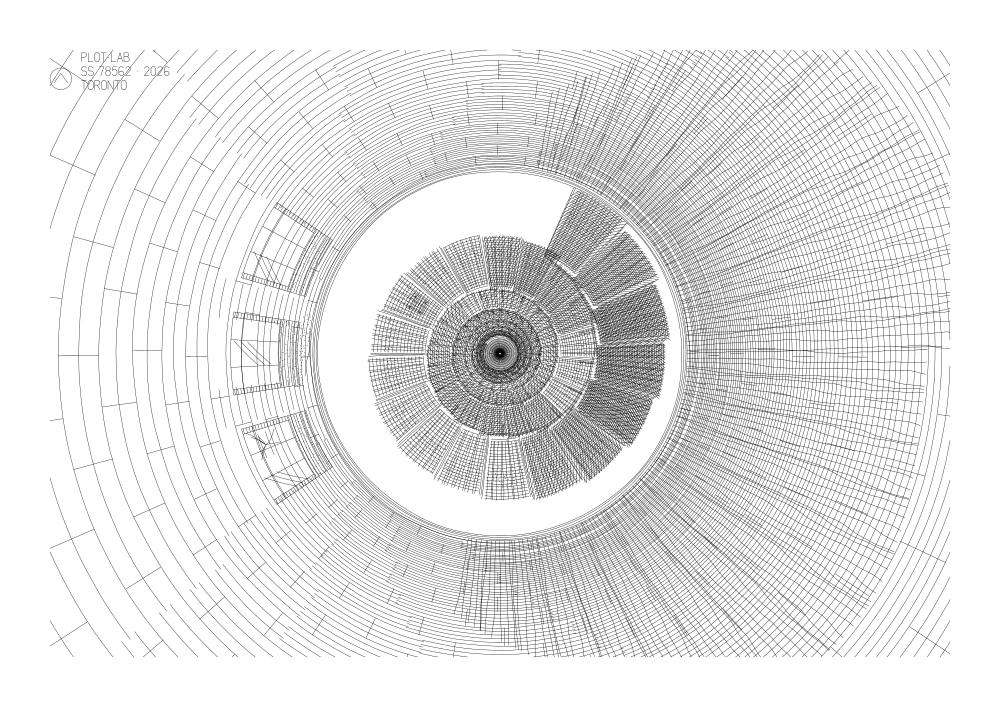
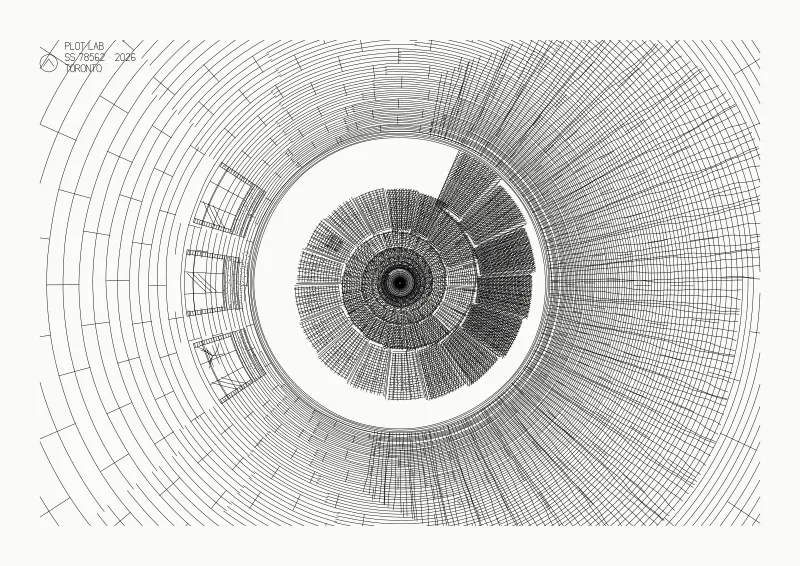
Drawn with one fine pen only, so the treads and the walls are all the same weight and the depth comes from spacing alone.
About 66 m of line, drawn in about 30 minutes.
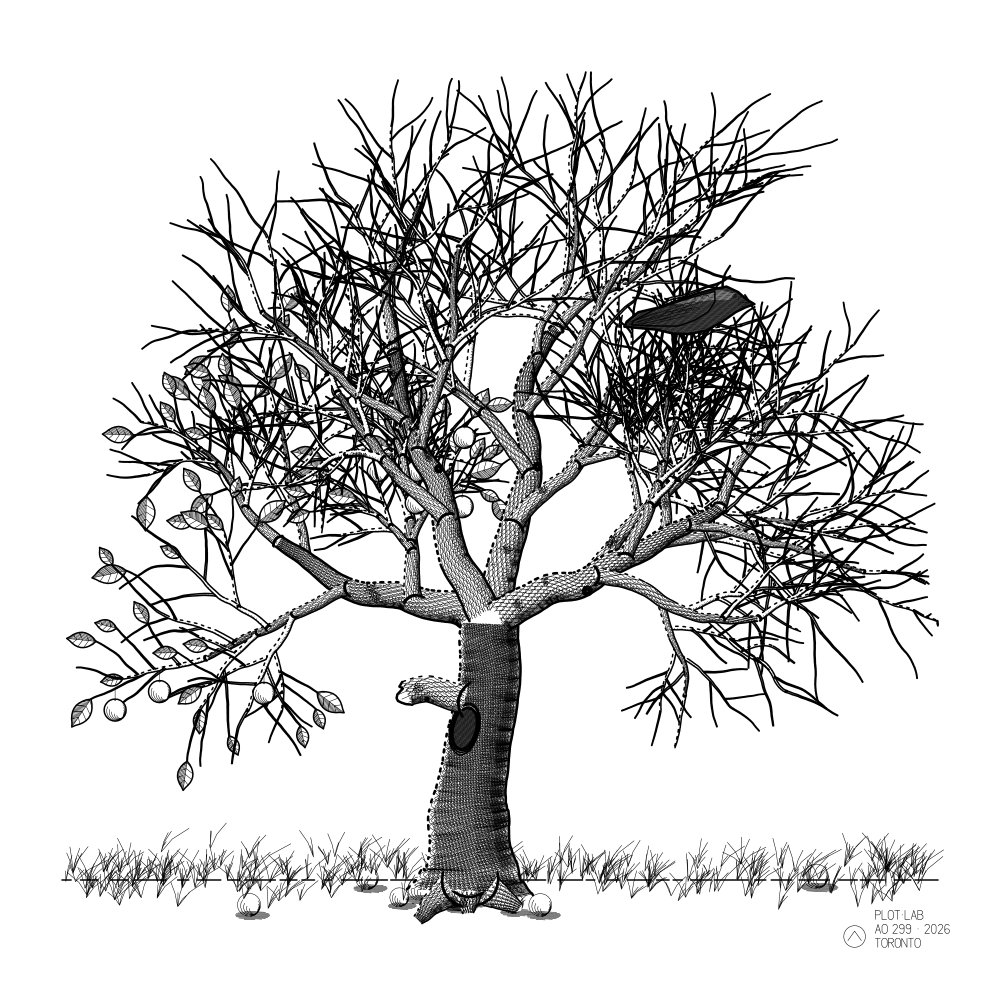
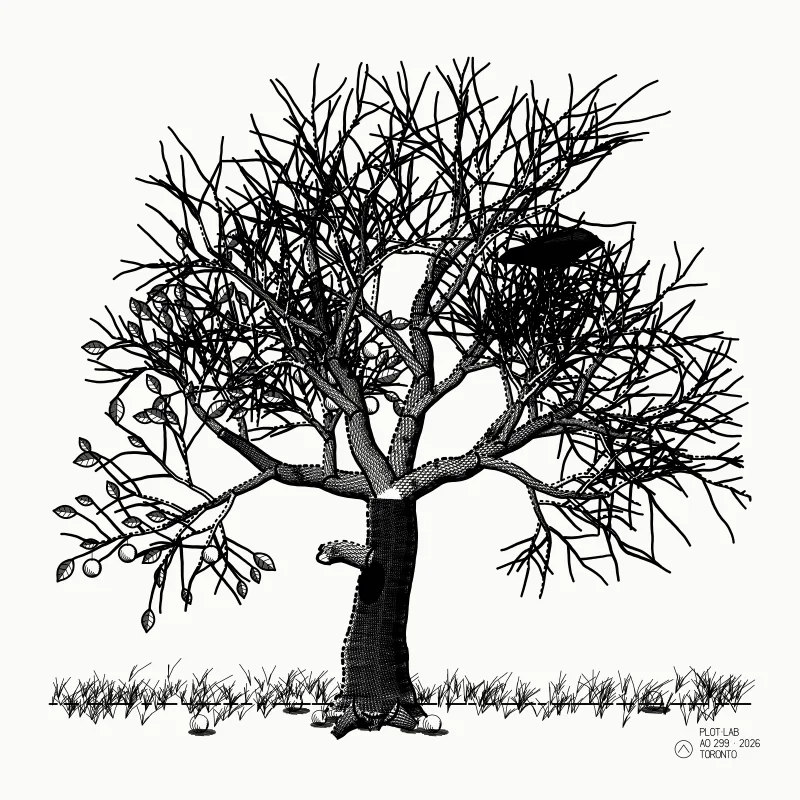
The bark is hatched along the grain of the trunk, the last leaves and apples hang in the outer twigs, and the crow sits dark against them.
About 47 m of line, drawn in about 22 minutes.
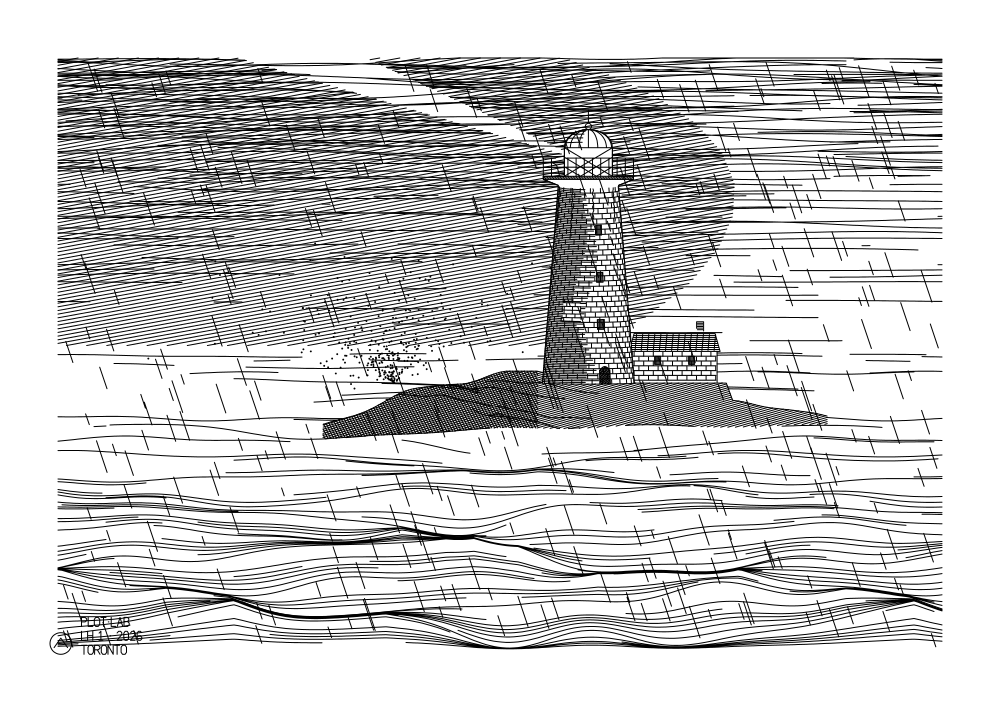
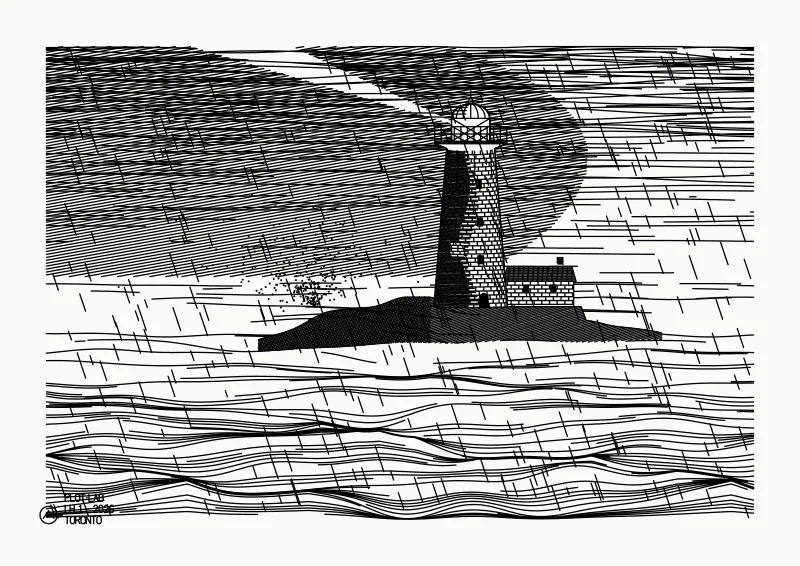
The sea is built from long level strokes and the weather from short slanted ones; the beam is the clearest space on the sheet.
About 48 m of line, drawn in about 22 minutes.
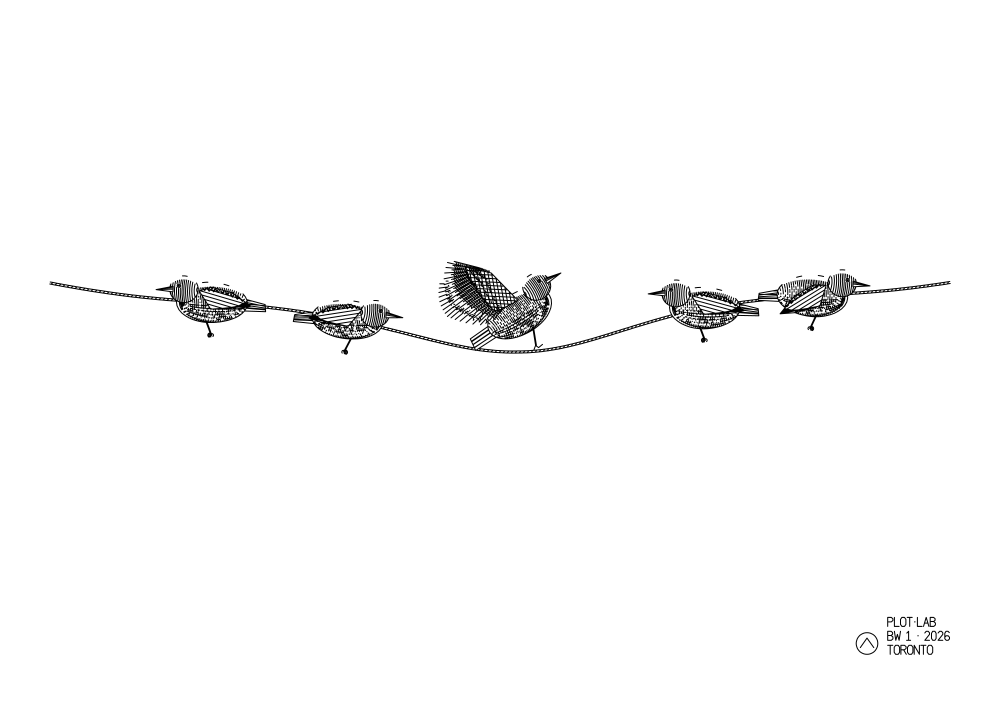
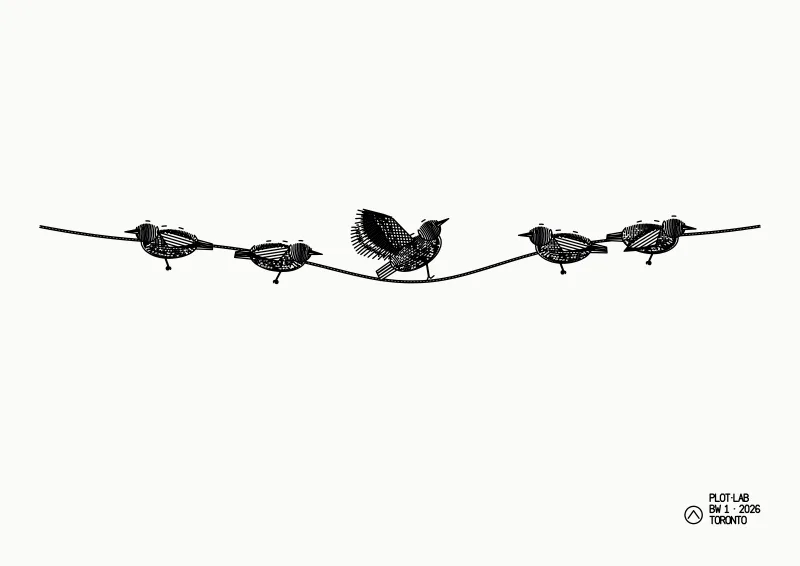
Almost the whole sheet is left empty; the wire carries the drawing from edge to edge and the birds sit on it like notes.
About 4 m of line, drawn in about 2 minutes.
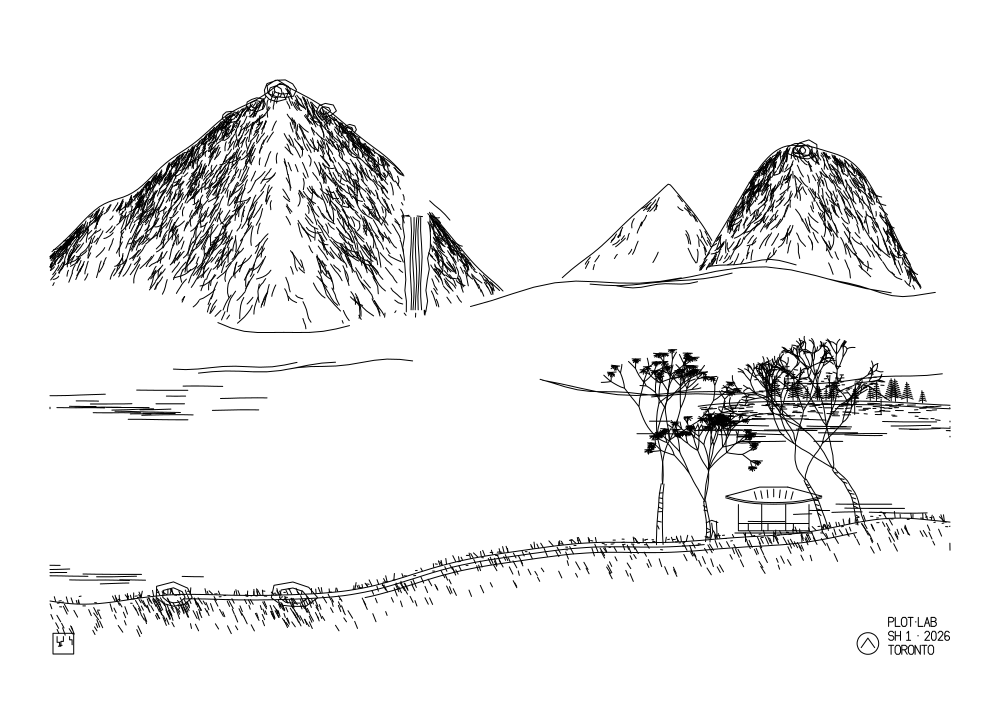
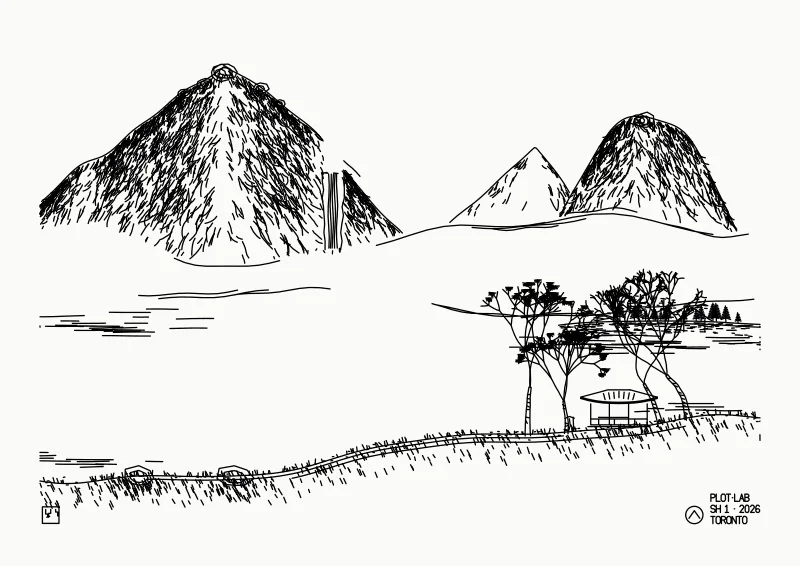
The far mountain is drawn with the fewest lines and the near trees with the most, so the distance comes from how much ink each part is given.
About 16 m of line, drawn in about 7 minutes.
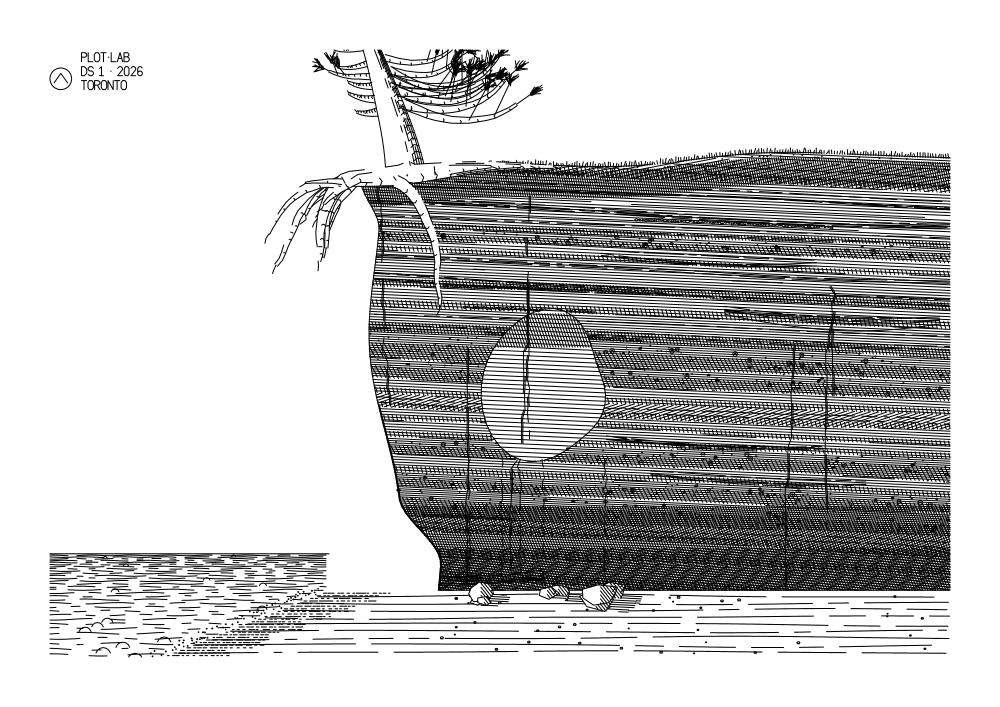
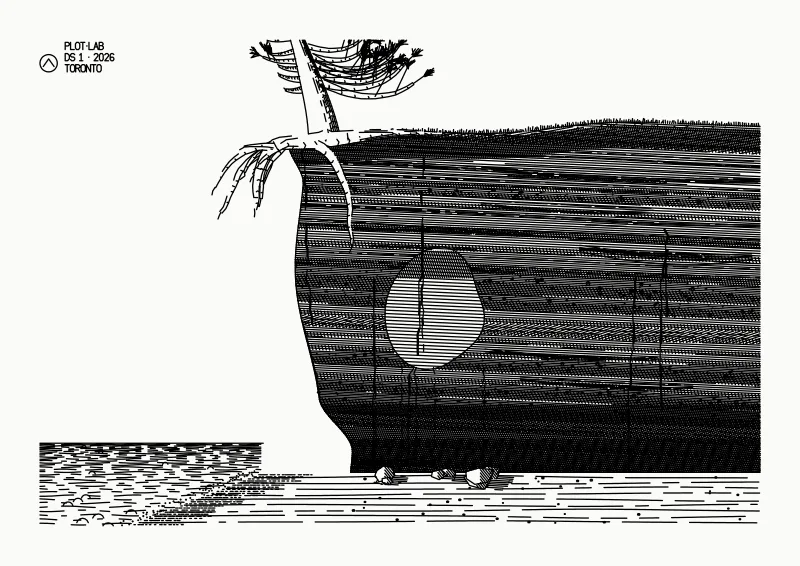
The cliff face is a wall of close horizontal hatching; the tree is the only thing drawn in open line.
About 57 m of line, drawn in about 27 minutes.
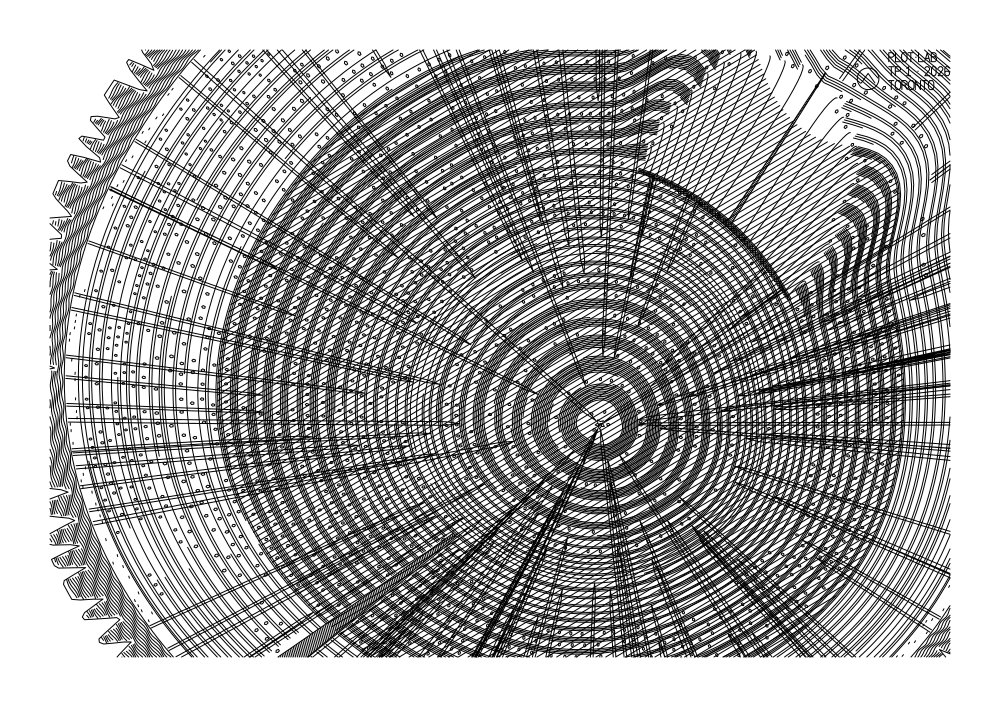
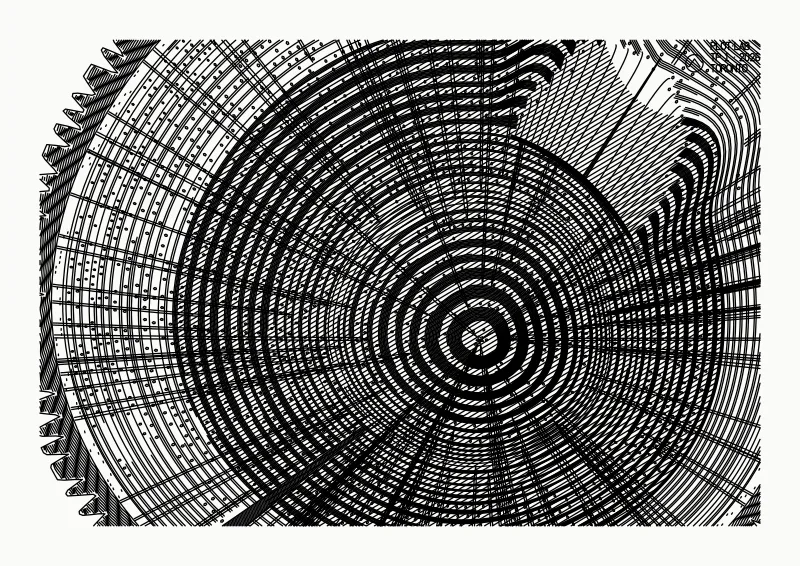
Radial strokes cut across the rings like the hands of a clock run fast; the sheet has no edge where the pattern stops.
About 82 m of line, drawn in about 38 minutes.
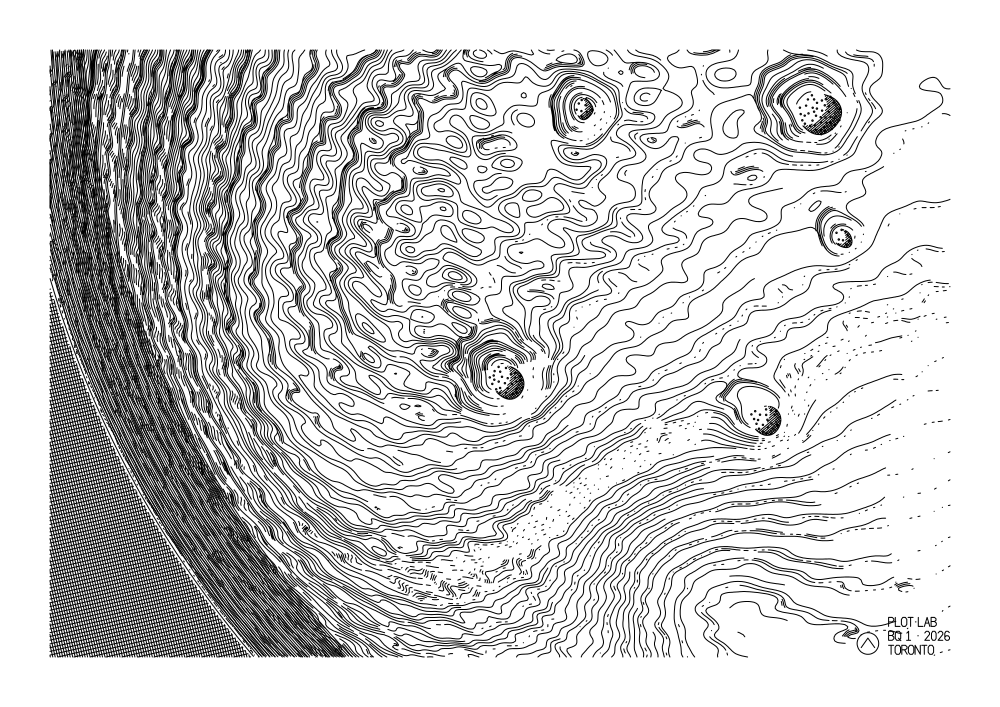
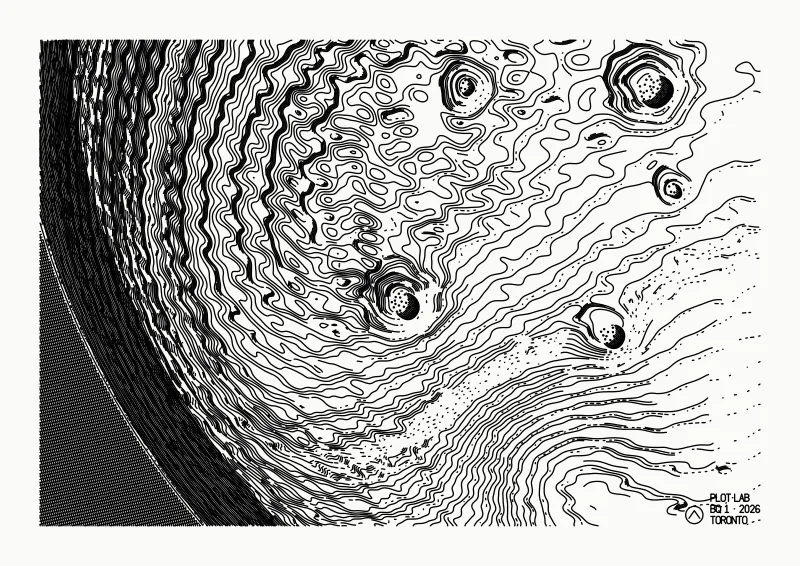
Every line is the edge of a level; where they crowd, the surface plunges, and the hollows are stippled where the light does not reach.
About 43 m of line, drawn in about 20 minutes.
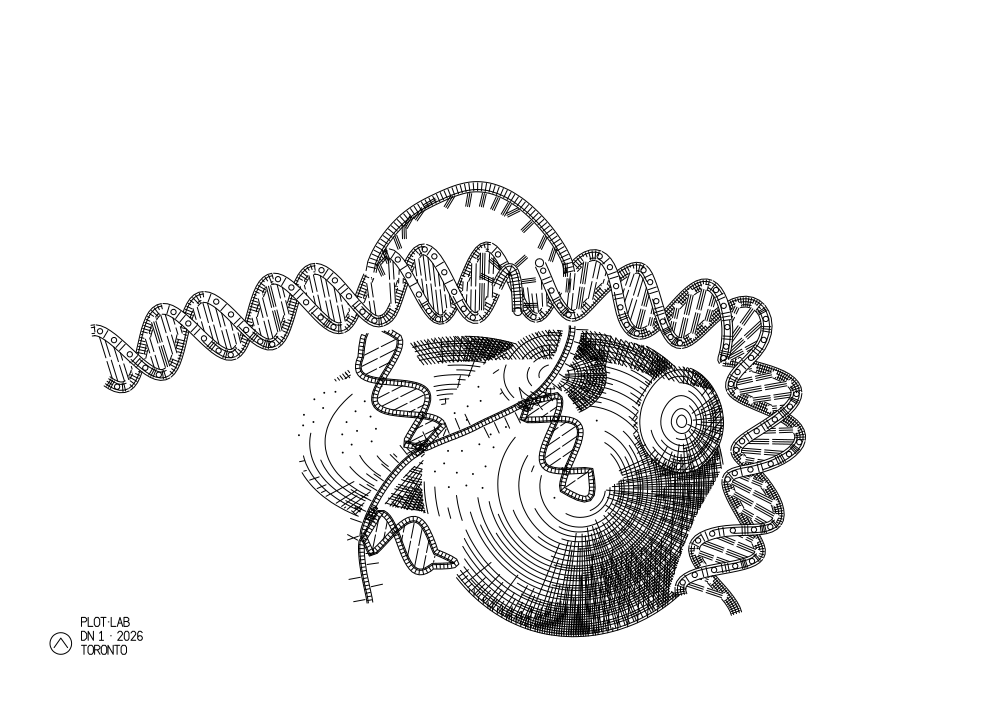
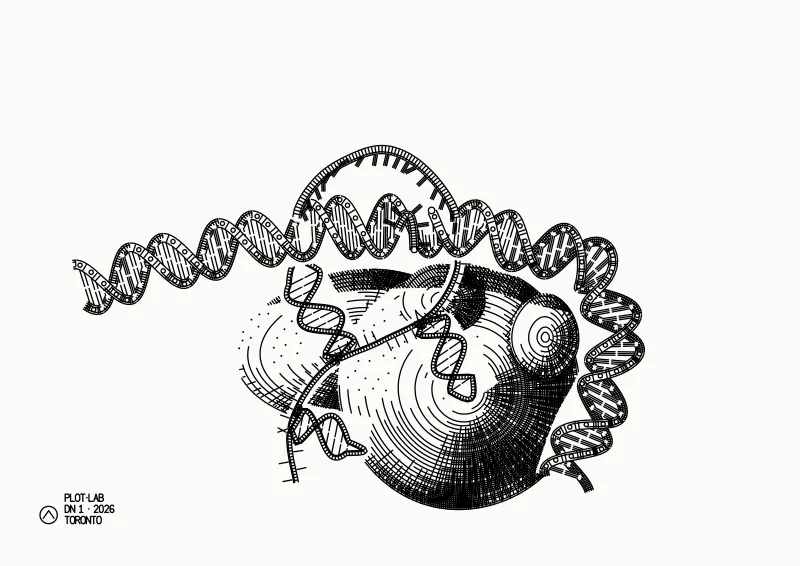
The seed is shaded in crossing hatches and the helix is drawn as a ribbon, rung by rung, passing in front of it and behind.
About 18 m of line, drawn in about 8 minutes.
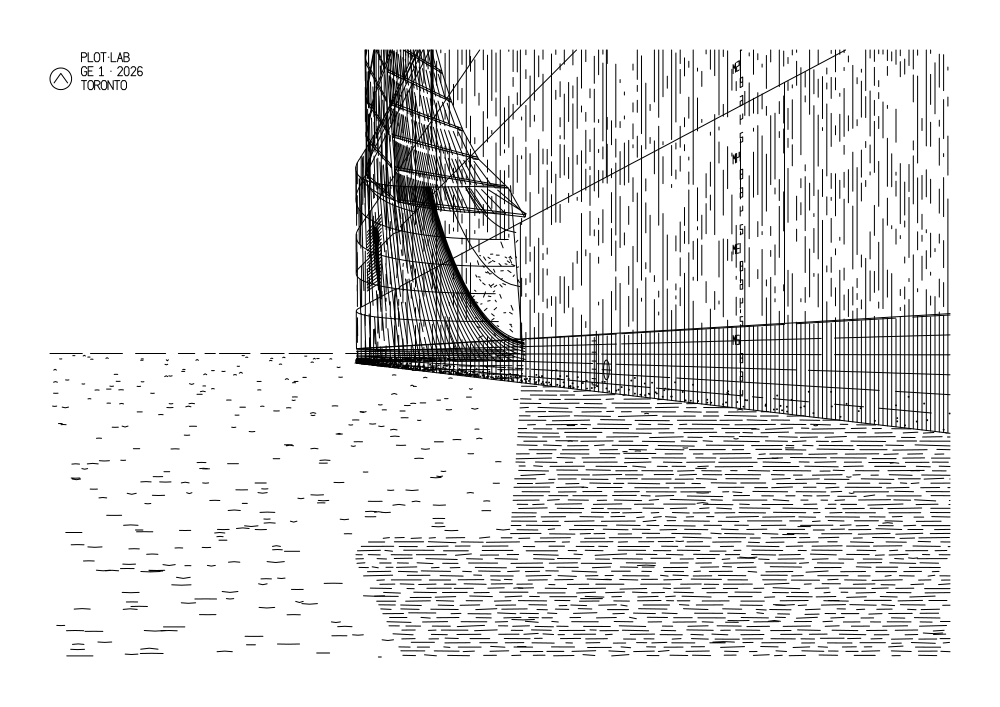
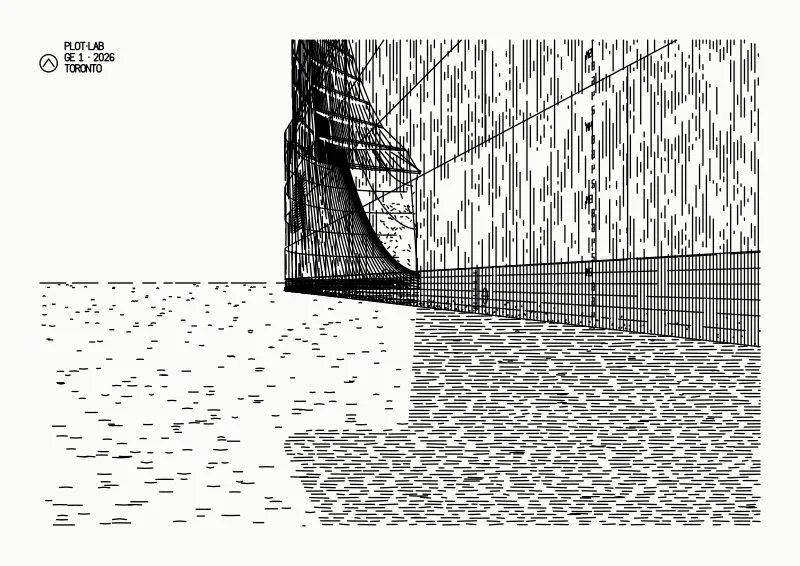
The hull is drawn in vertical strokes and the water in short level ones; the scale comes from how little of the ship fits on the sheet.
About 25 m of line, drawn in about 12 minutes.
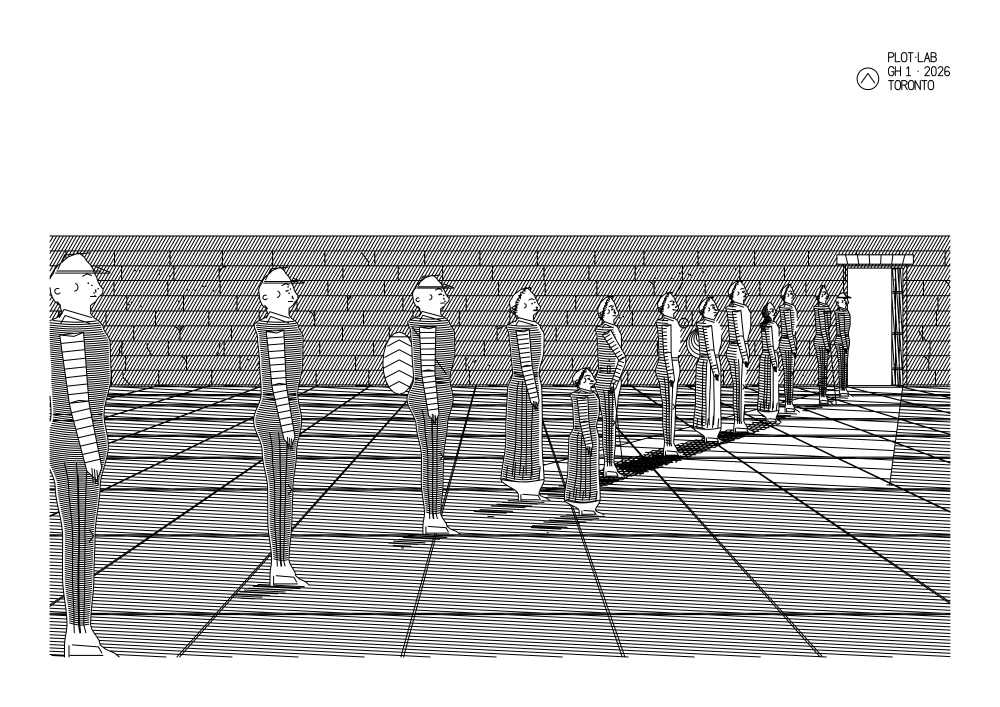
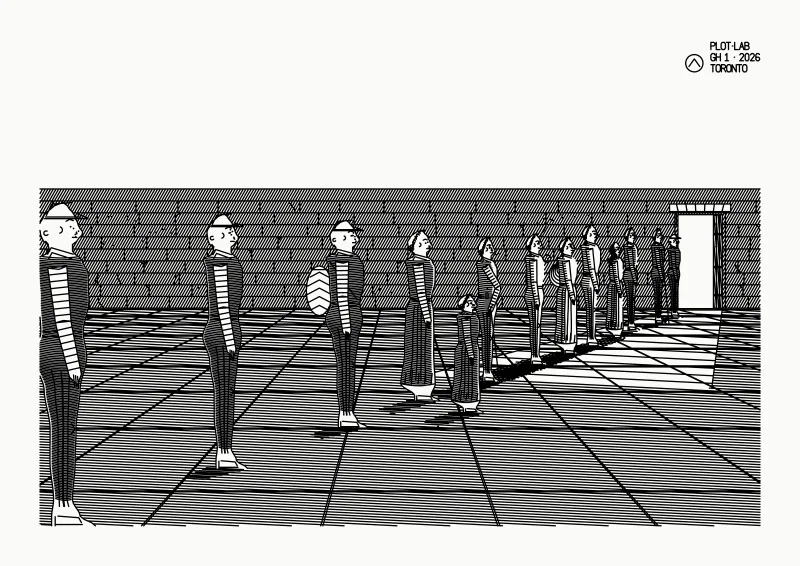
The figures stand in single file and grow smaller toward the door; the floor tiles carry the perspective the whole length of the room.
About 47 m of line, drawn in about 22 minutes.
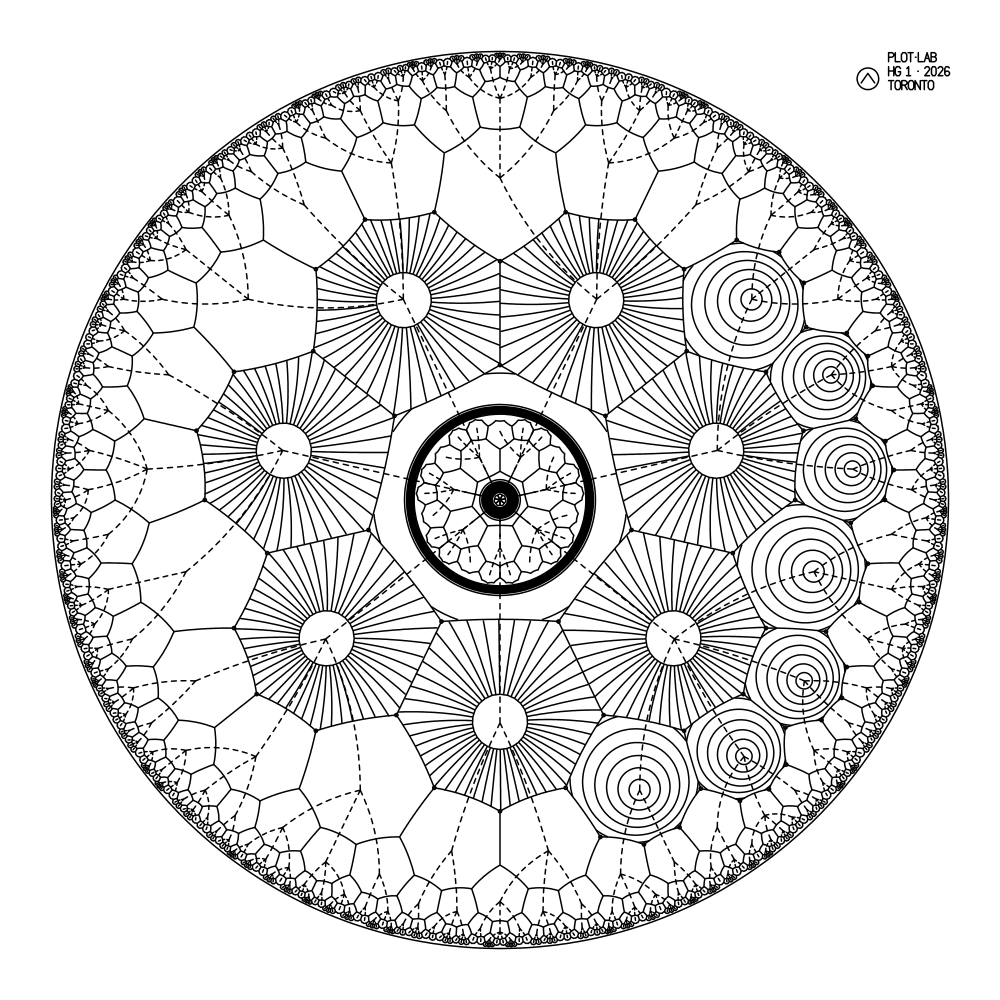
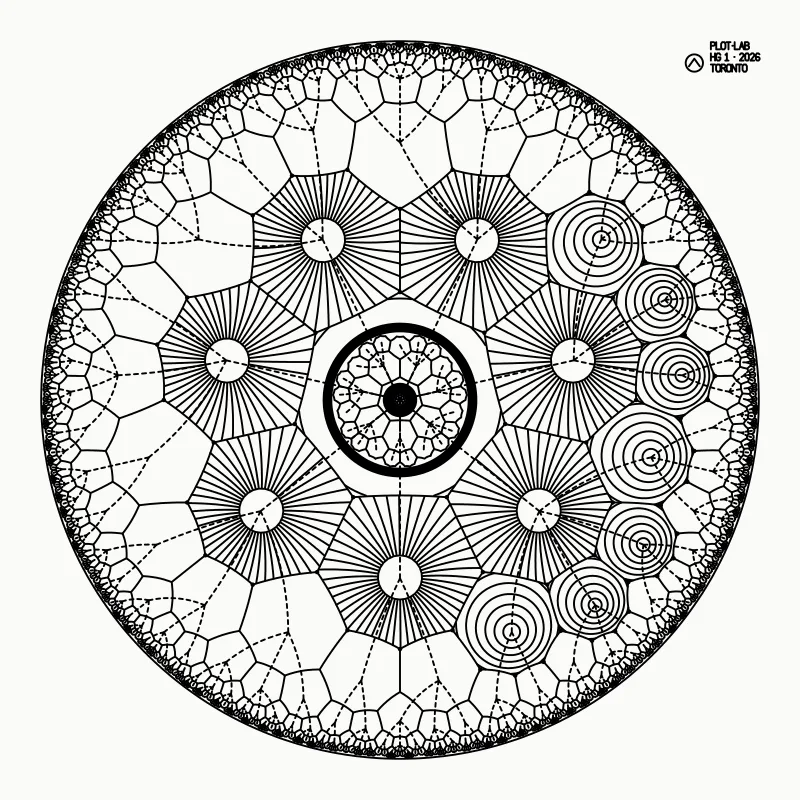
Nothing here is drawn twice. Each cell is the same construction at a smaller scale, so the drawing rewards a close look as much as a step back.
About 16 m of line, drawn in about 7 minutes.
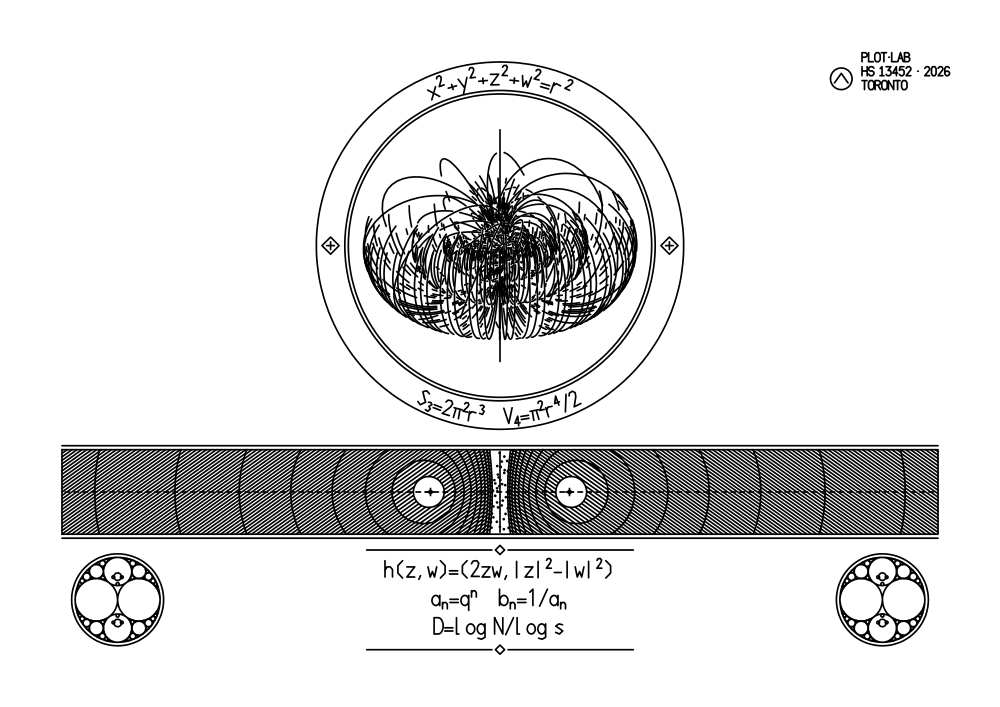
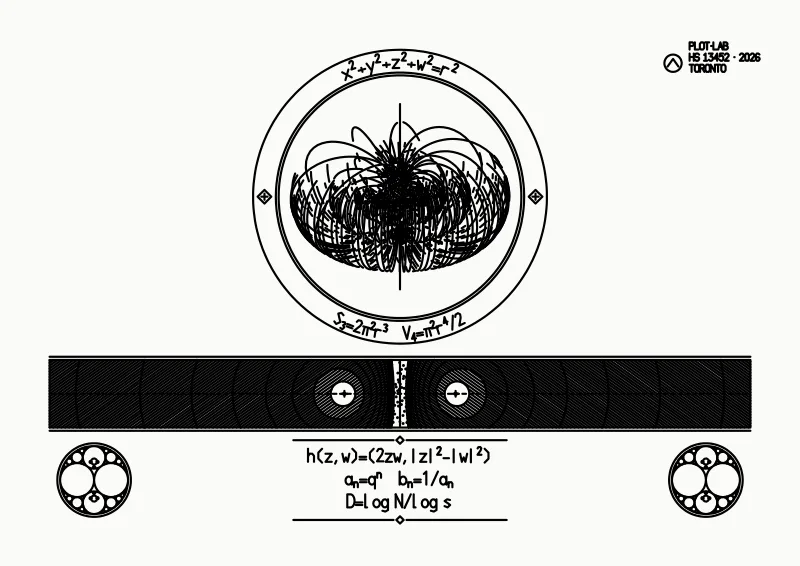
The lettering is drawn stroke by stroke like everything else. The strip is hatched across its width so that it reads as a tube seen edge-on.
About 16 m of line, drawn in about 8 minutes.
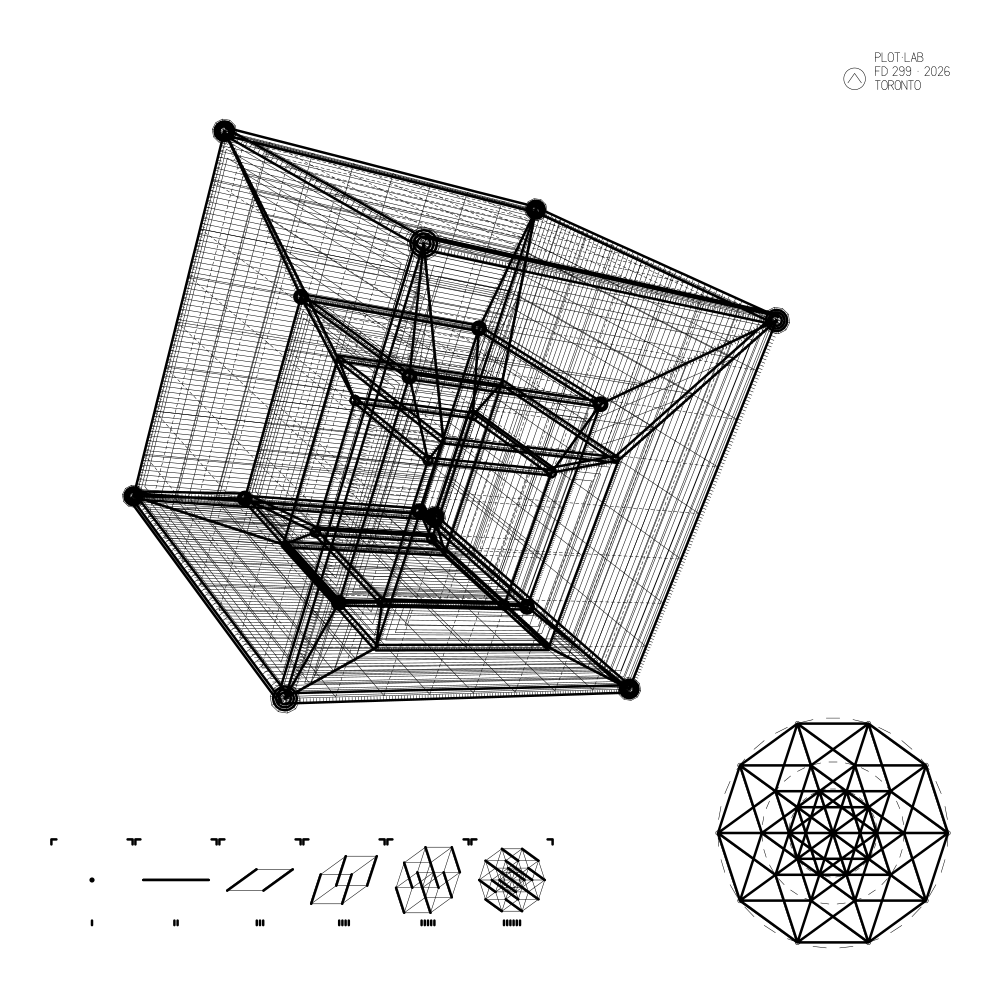
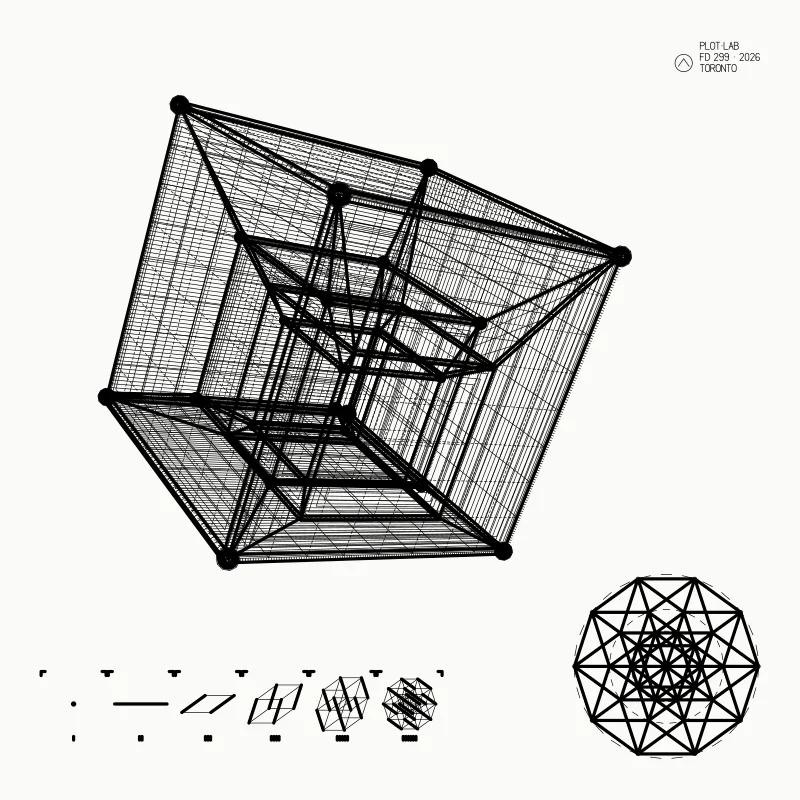
Drawn as wire: edges only, every one of them, so the nested cubes read through each other. The rosette below is the same object rotated until it becomes a star.
About 36 m of line, drawn in about 17 minutes.
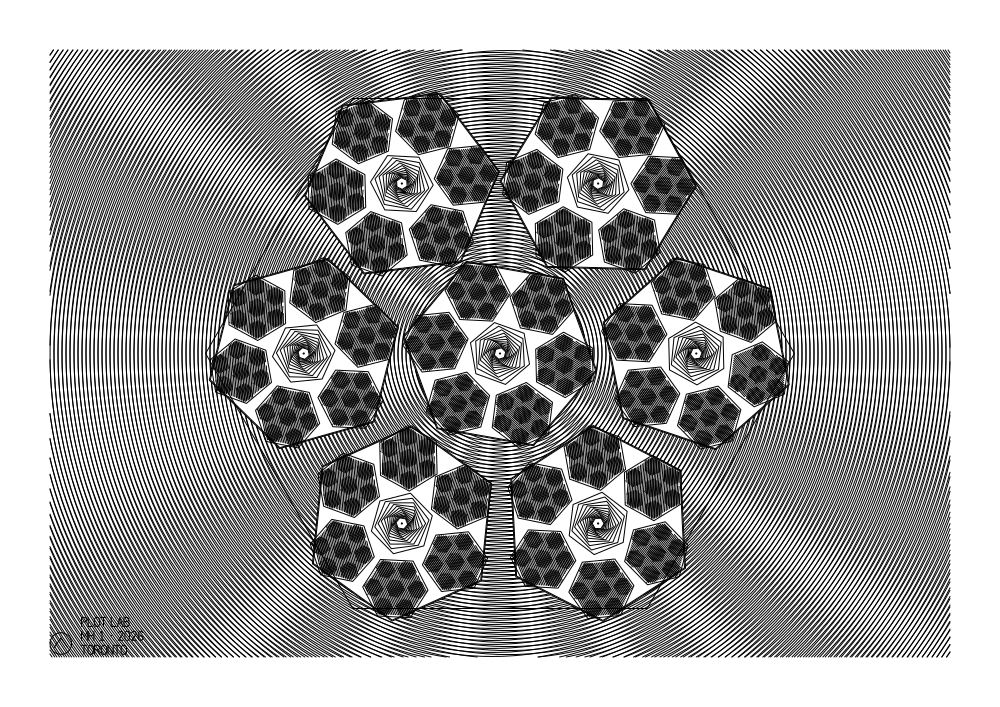
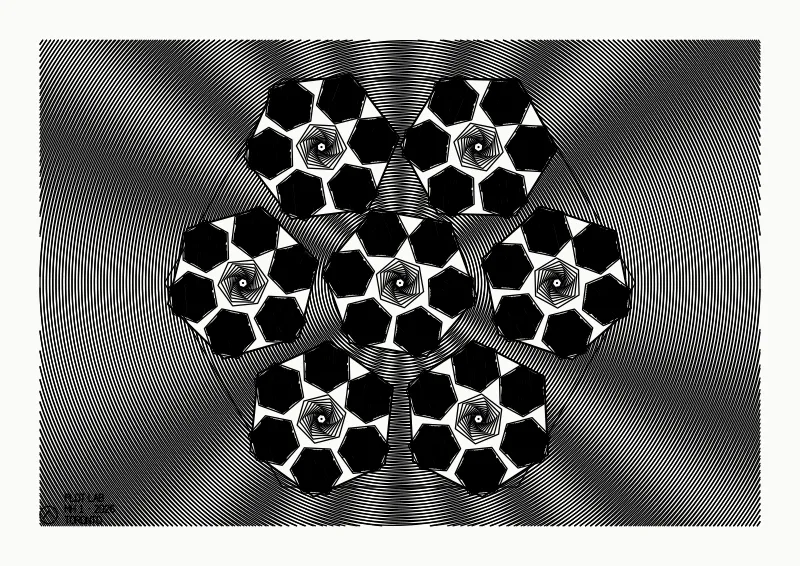
Two pens of the same width in two directions, so the background lines and the hexagons interfere and shimmer where they cross. The shimmer is the drawing.
About 94 m of line, drawn in about 44 minutes.
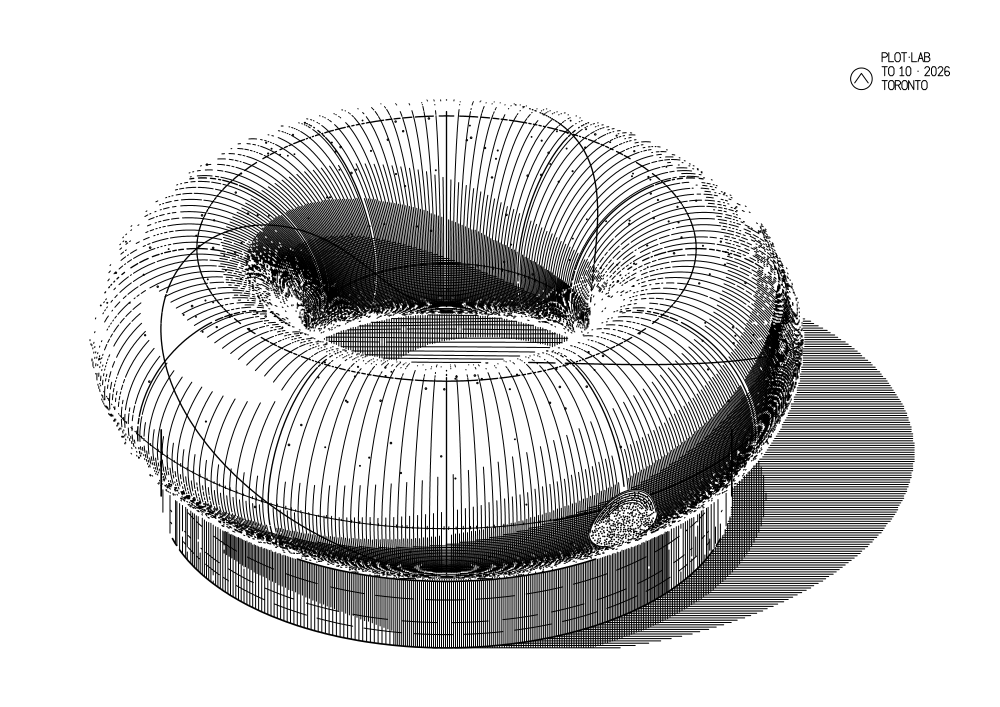
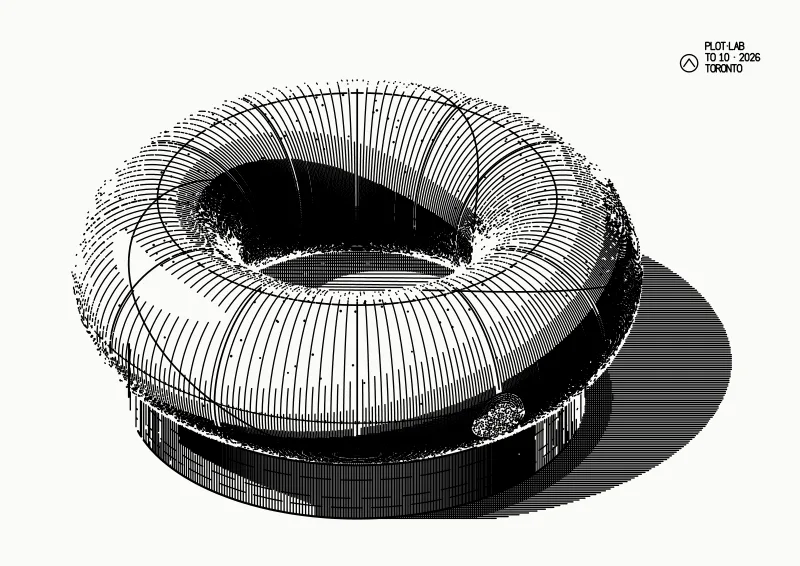
The lines wrap around the tube and around the ring at once, which is what makes it look solid. Three pens: the heaviest only for the shadow.
About 40 m of line, drawn in about 18 minutes.
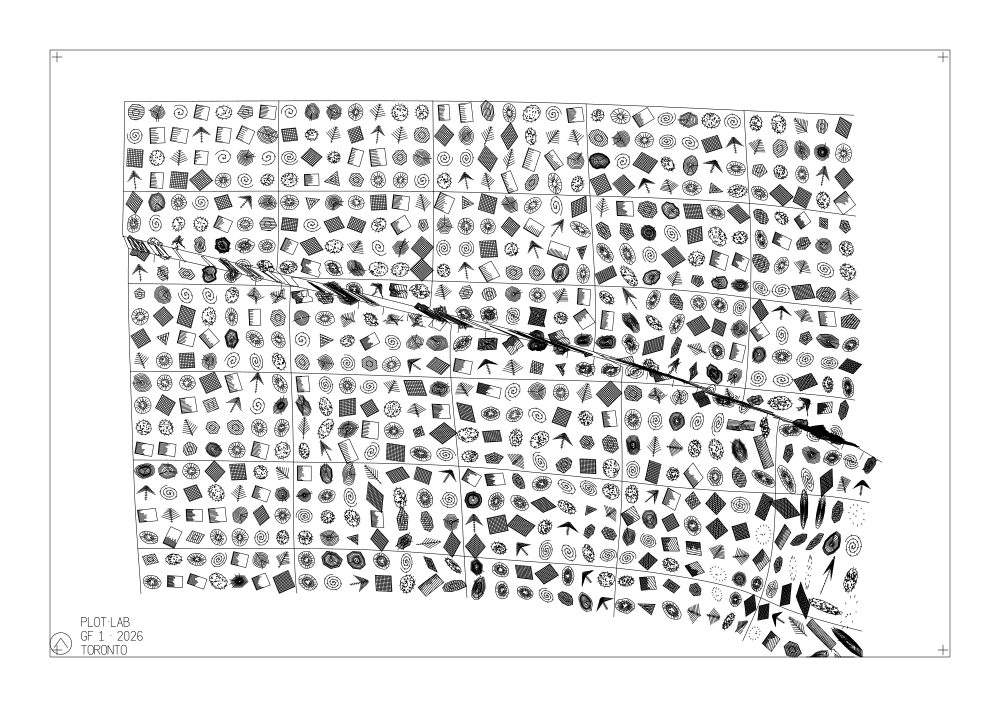
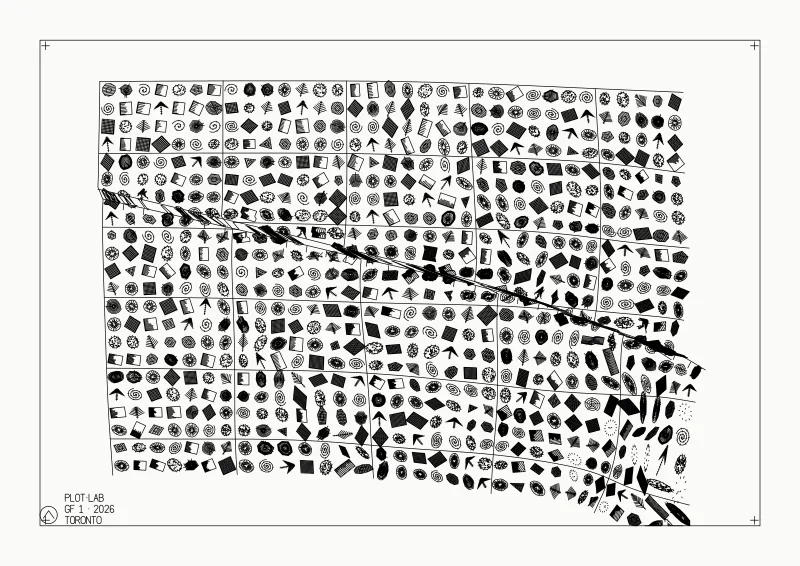
Every cell follows the same rule with its own variation, so the order holds at the top left and gives way by the bottom right, where the grid buckles like cloth.
About 53 m of line, drawn in about 25 minutes.
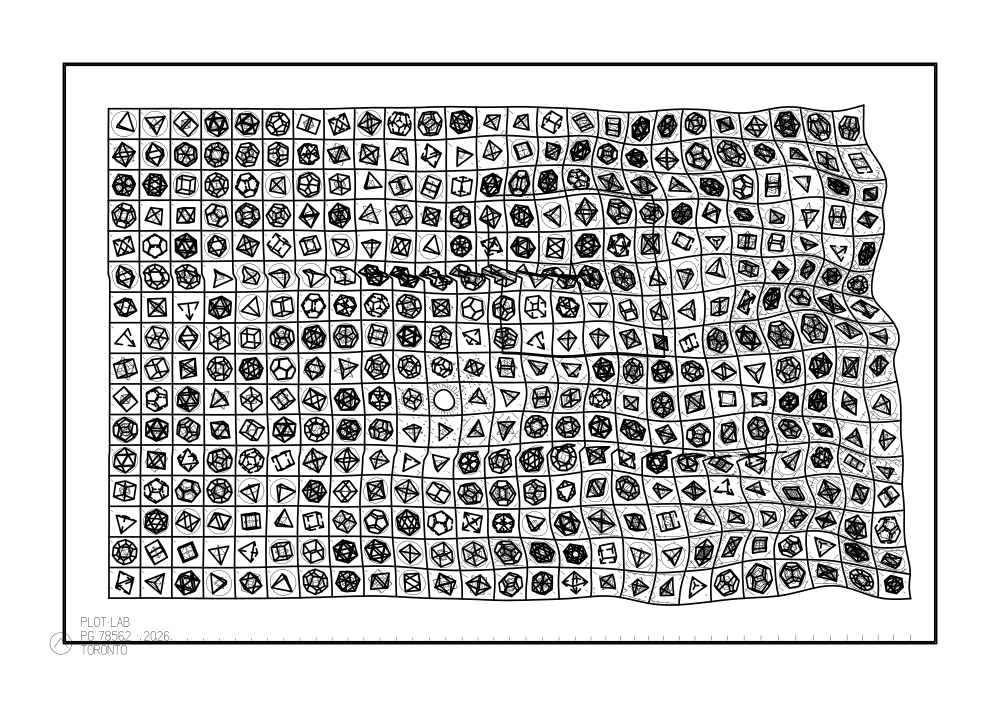
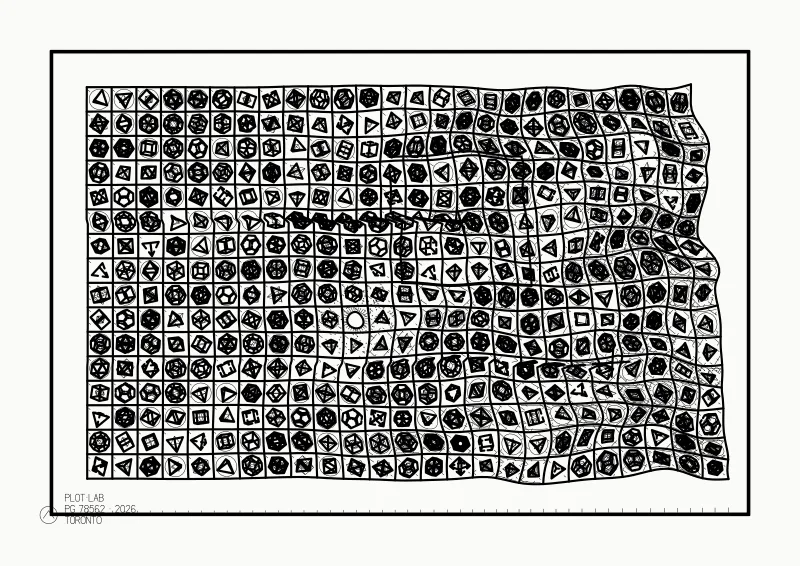
The figures work through the Platonic solids and their variations; the further across the sheet, the more the lattice that holds them is pulled out of square.
About 55 m of line, drawn in about 26 minutes.
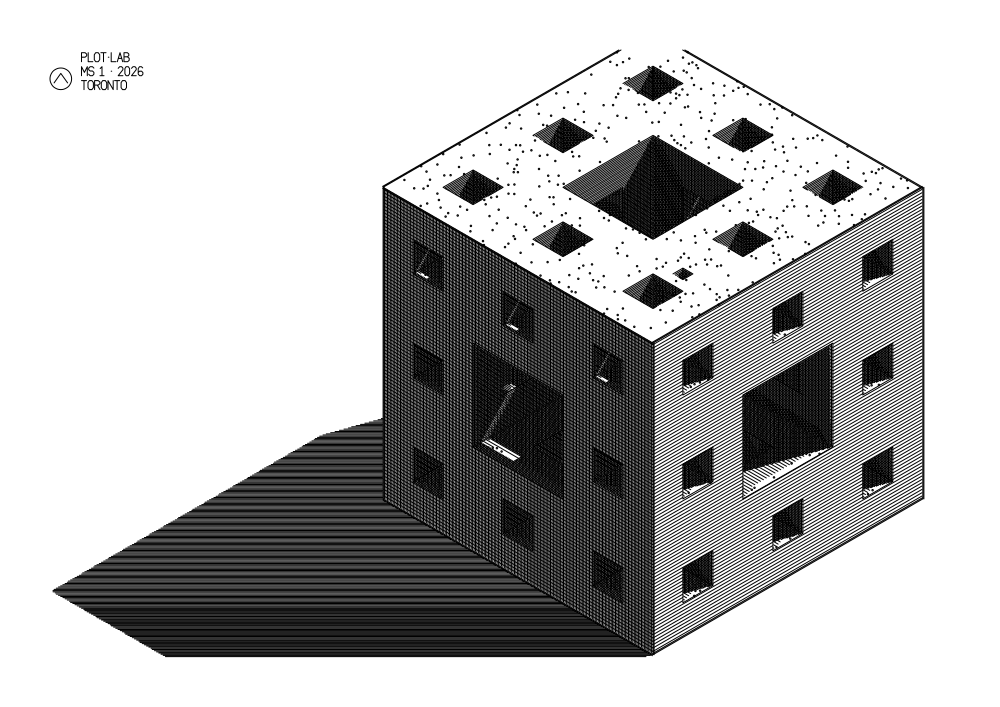
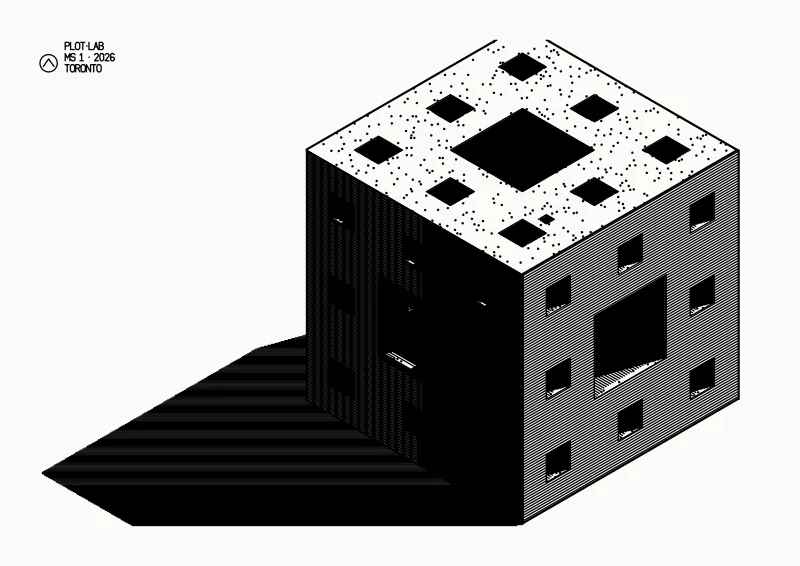
Each face is stippled and hatched by its angle to the light; the holes go three generations deep before they are smaller than the pen.
About 71 m of line, drawn in about 33 minutes.
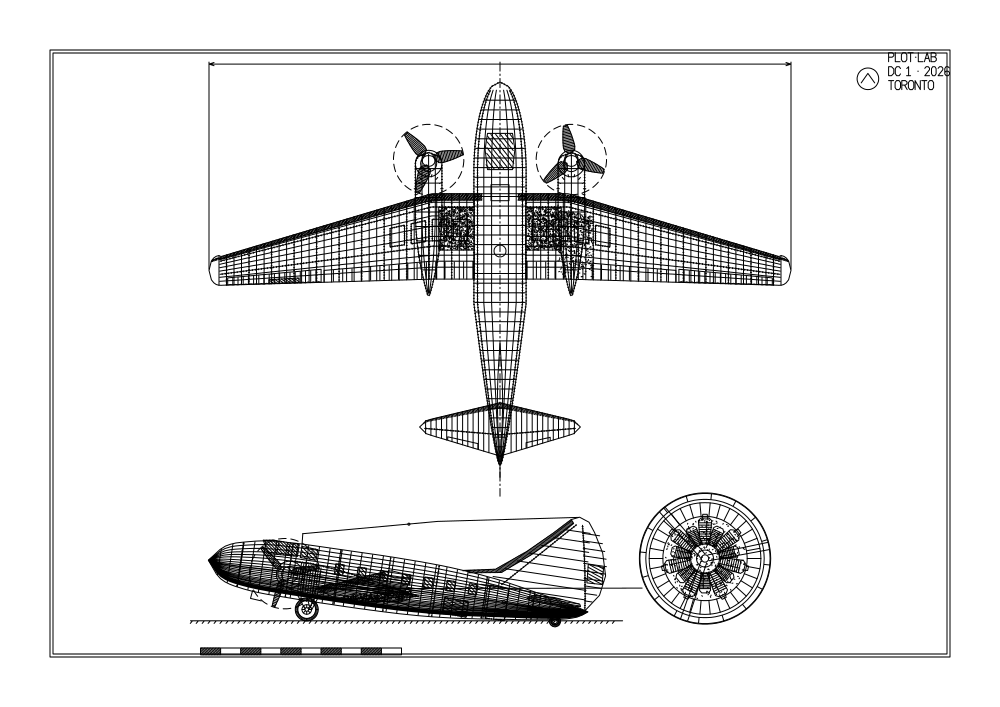
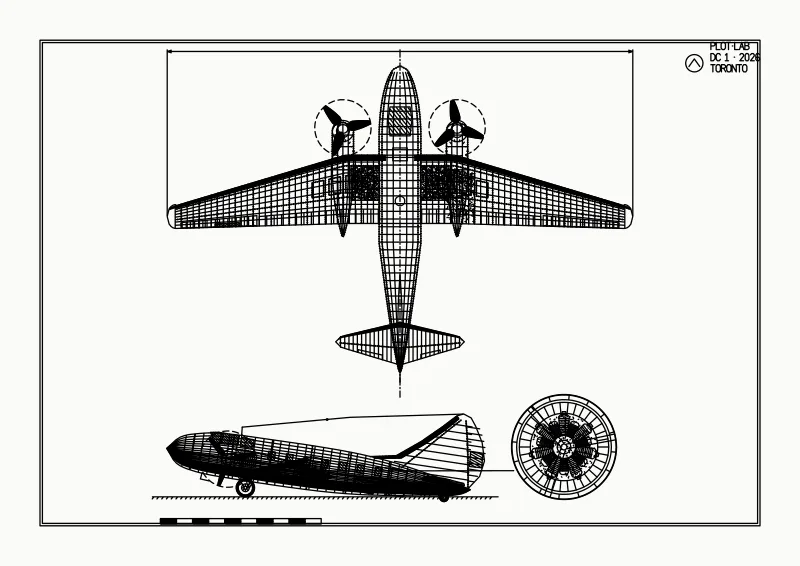
Every panel line and control surface is in its place across all three views, so the same aeroplane is recognisable from any of them.
About 20 m of line, drawn in about 9 minutes.
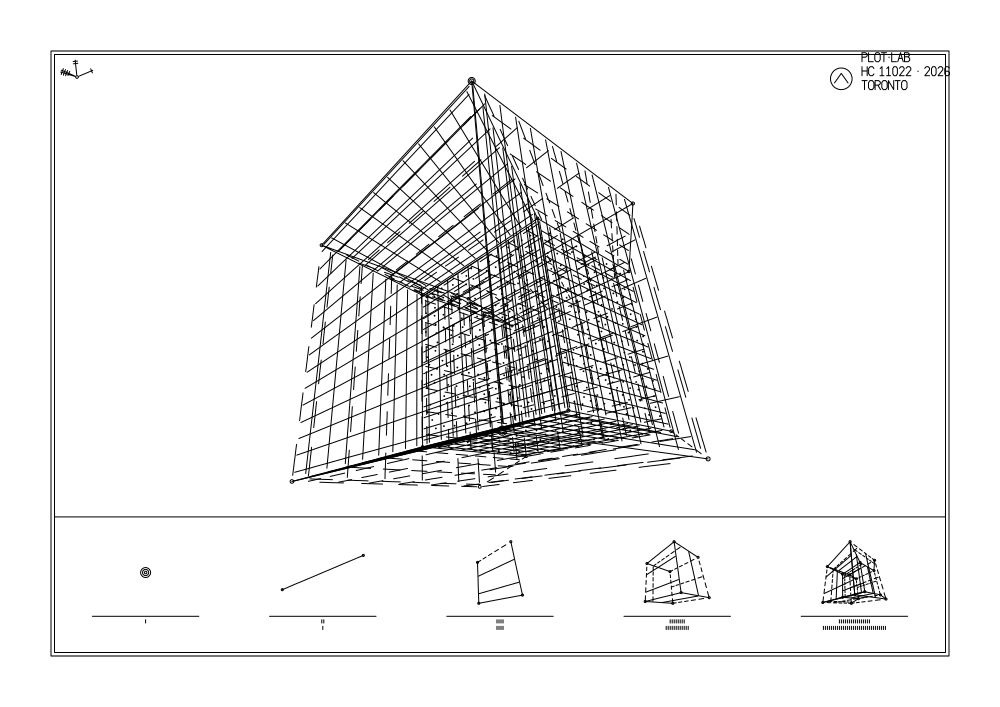
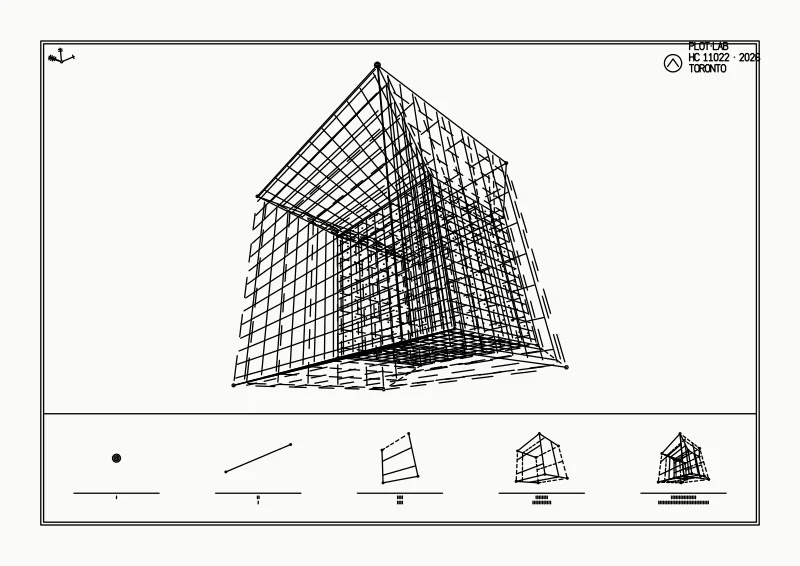
Plain lines and nothing else, so it prints crisp at any size. The legend strip reads the figure back to you: point, edge, face, cell, and the whole.
About 14 m of line, drawn in about 7 minutes.
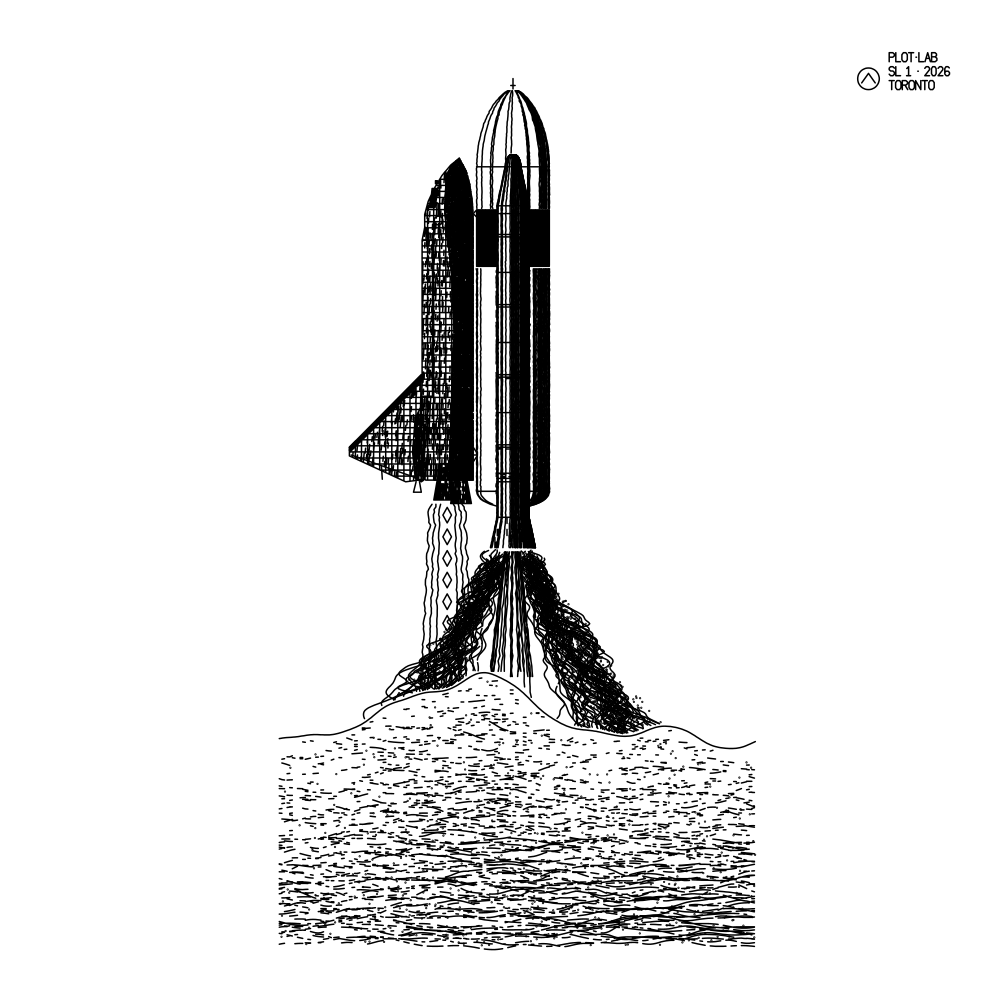
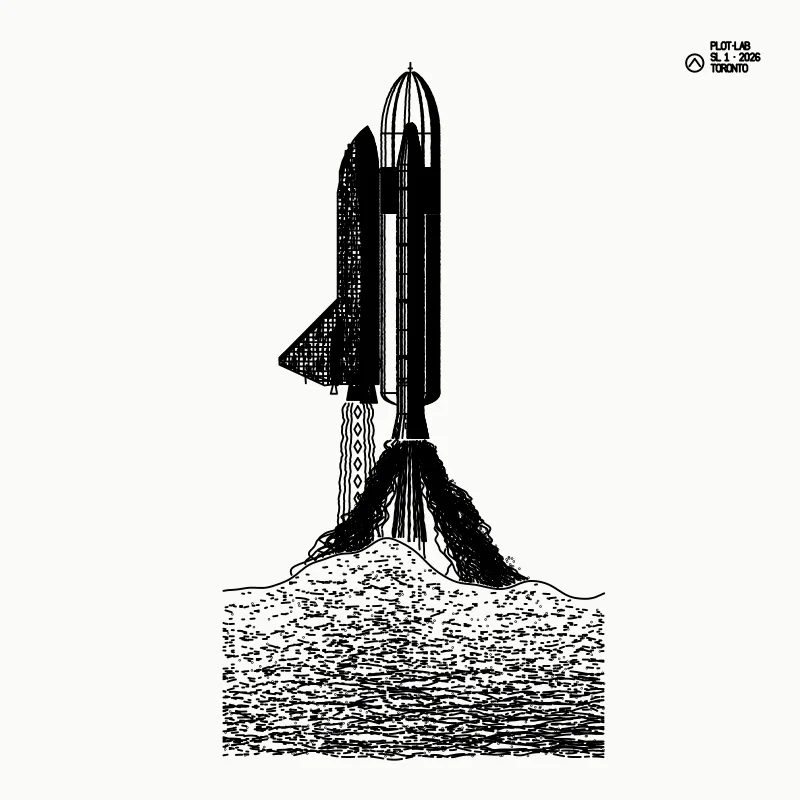
The cloud is drawn as thousands of short strokes that thin toward its edges, so it reads as vapour lit from inside rather than as a shape with an outline.
About 25 m of line, drawn in about 12 minutes.
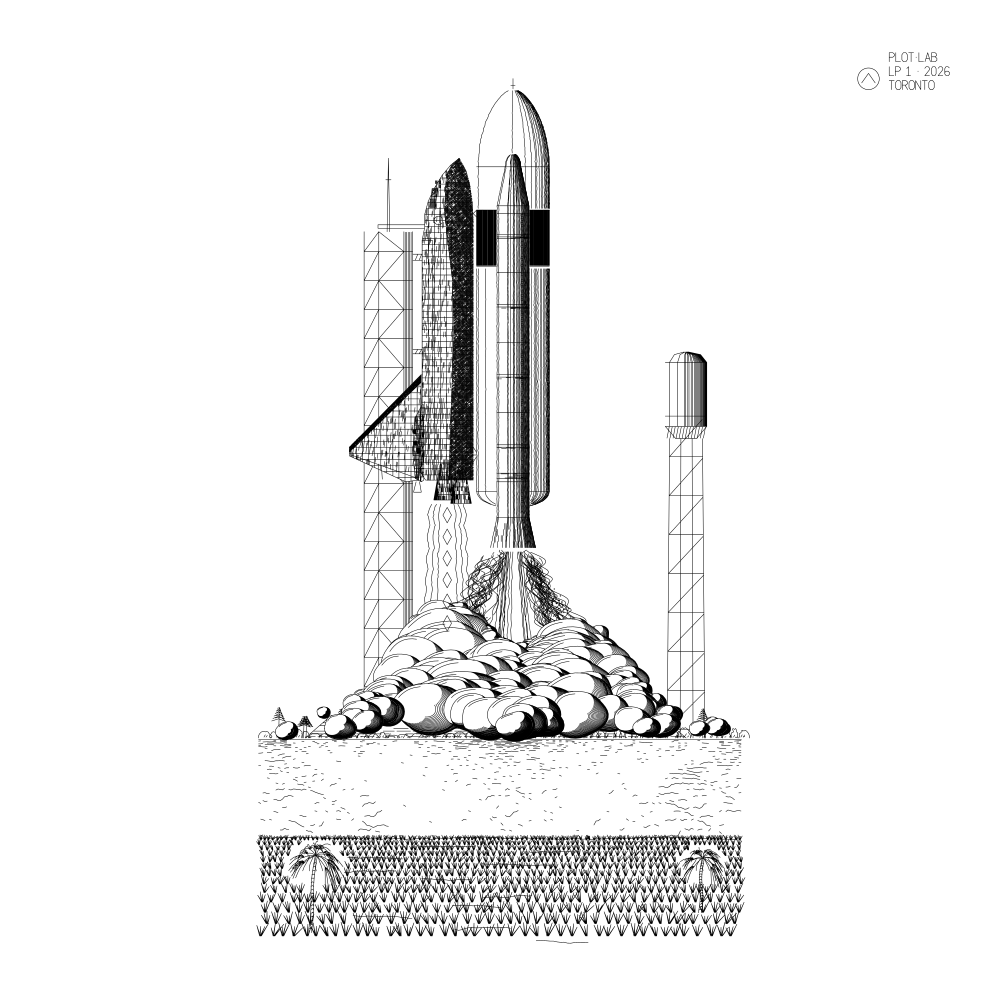
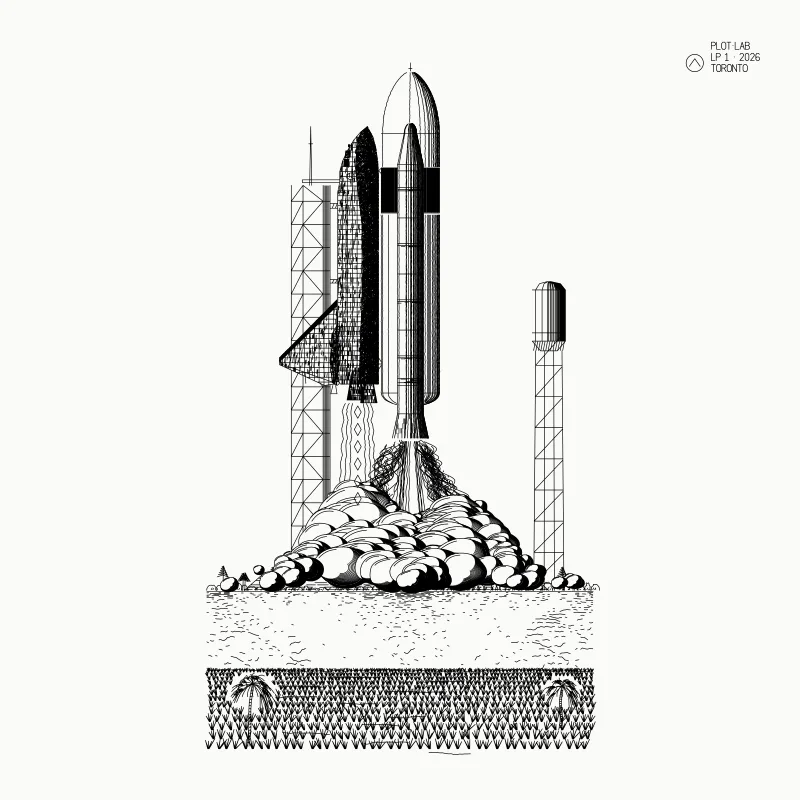
Where Launch is all vapour, this one is all structure: the tower is drawn strut by strut, and the cloud in round shaded lobes. Two pens.
About 34 m of line, drawn in about 16 minutes.
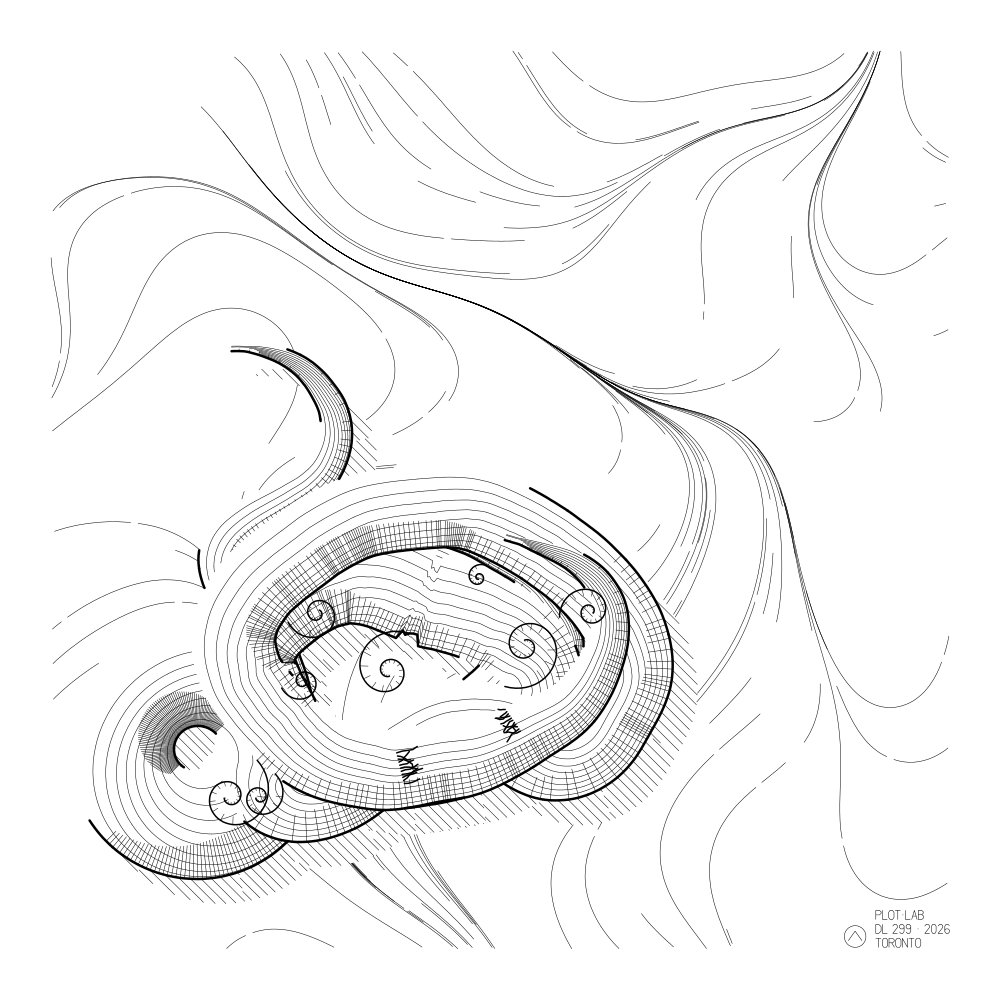
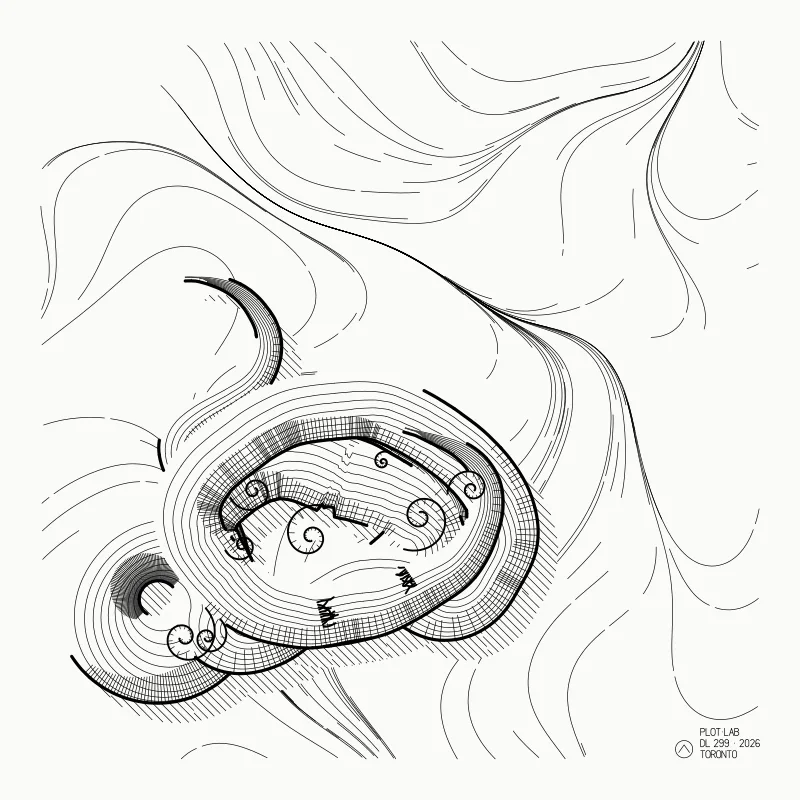
Three pens, so the same line changes weight as it travels: heavy where it curls, hair-fine where it drifts. There is no subject, only the travel.
About 13 m of line, drawn in about 6 minutes.
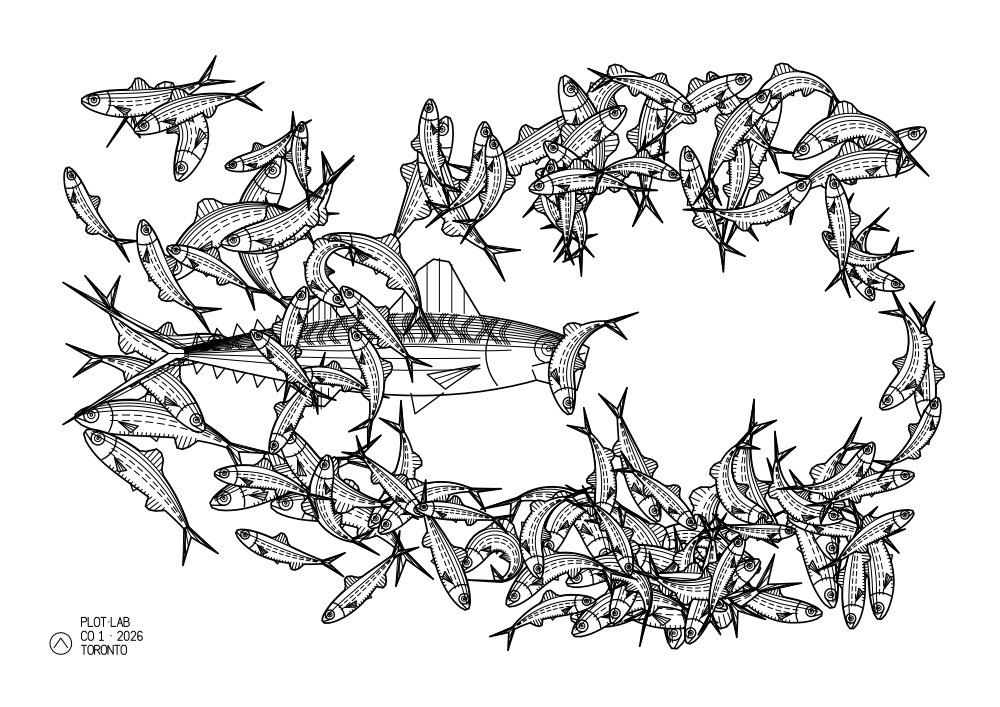
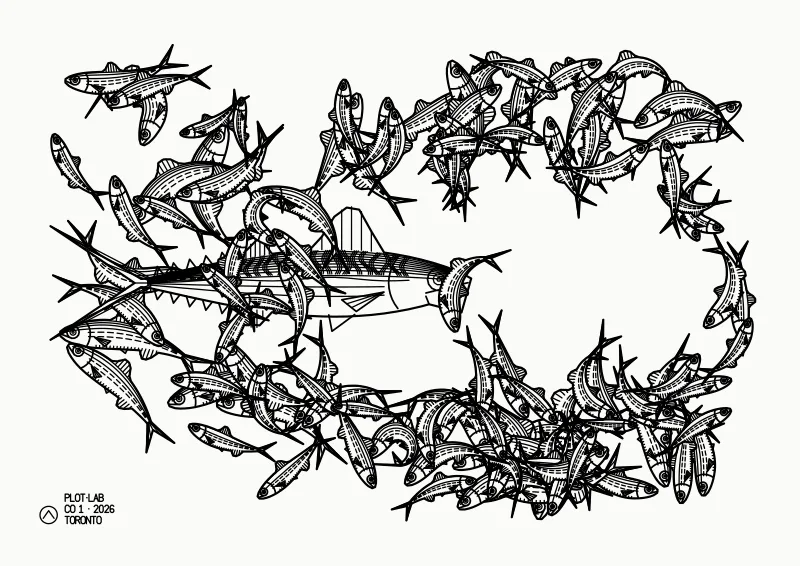
Every fish is drawn the same way, scaled and turned; the confusion is in the turning. Three pens, the heaviest for the one that faces the other way.
About 29 m of line, drawn in about 13 minutes.